Author: kpopthroughtime

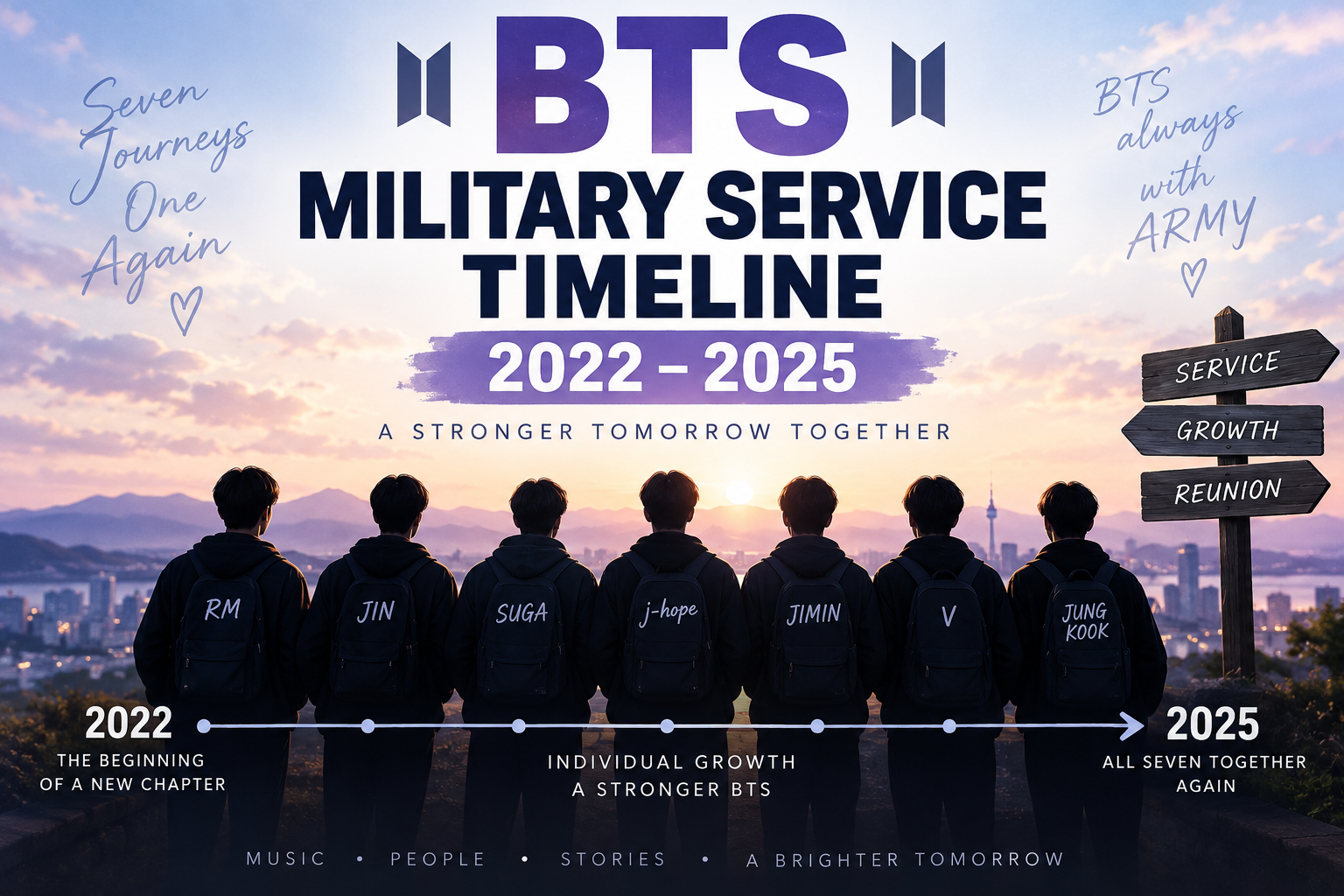
  • BTS Military Service Dates: All 7 Members (2022–2025)

    BTS Military Service Dates: All 7 Members (2022–2025)

    All seven BTS members have now completed their military service. Jin enlisted first on December 13, 2022, and SUGA became the final member to complete his service on June 21, 2025.

    Between 2022 and 2025, all seven BTS members — RM, Jin, SUGA, j-hope, Jimin, V, and Jung Kook — completed their mandatory service obligations in South Korea. For ARMY around the world, this period became an important part of the BTS story, filled with solo projects, temporary goodbyes, and long-awaited returns.

    In this guide, we’ll follow the BTS military service timeline from the group’s early years through 2026, including when each member enlisted, when they completed their service, and what happened as BTS entered a new chapter together.

    Whether you are a longtime ARMY or a new fan discovering BTS, this timeline will help you understand one of the most significant periods in the group’s history.

    Why BTS Had to Complete Military Service

    In South Korea, most able-bodied men are required to complete mandatory military service. For years, BTS’s global success led to widespread discussion about how the country’s military service rules would apply to the group.

    In 2020, South Korea revised its laws to allow certain pop culture artists who had received government recognition to postpone enlistment until age 30. This allowed eligible BTS members to delay their service, but it did not provide a full exemption.

    The next major turning point came in October 2022, when BIGHIT MUSIC announced that the BTS members would move forward with plans to fulfill their military service obligations. Jin, the group’s oldest member, became the first to enlist in December 2022.

    His enlistment marked the beginning of a new era in BTS history — one in which the seven members would temporarily focus on military service and individual activities before eventually returning as a complete group.

    BTS Military Service Timeline: All Seven Members

    MemberEnlistedCompletedService Type
    JinDec 13, 2022Jun 12, 2024Active duty
    j-hopeApr 18, 2023Oct 17, 2024Active duty
    SUGASep 22, 2023Jun 21, 2025Social service
    RMDec 11, 2023Jun 10, 2025Active duty
    VDec 11, 2023Jun 10, 2025Active duty
    JiminDec 12, 2023Jun 11, 2025Active duty
    Jung KookDec 12, 2023Jun 11, 2025Active duty

    BTS completed its military service chapter step by step, beginning with Jin in December 2022 and ending when SUGA completed his alternative service in June 2025.

    Jin
    Jin became the first BTS member to enlist, entering military service on December 13, 2022. He served as an active-duty soldier and was discharged on June 12, 2024. His return was especially meaningful for ARMY because he became the first member to complete his service.

    j-hope
    j-hope enlisted on April 18, 2023. After serving as an active-duty soldier and working as an assistant instructor, he was discharged on October 17, 2024.

    SUGA
    SUGA began his service obligation on September 22, 2023. Due to circumstances related to a previous shoulder injury, he fulfilled his duty as a social service worker rather than an active-duty soldier. He completed his service on June 21, 2025.

    RM and V
    RM and V enlisted on December 11, 2023. Both completed their military service and were discharged on June 10, 2025.

    Jimin and Jung Kook
    Jimin and Jung Kook enlisted together on December 12, 2023. They were discharged on June 11, 2025, leaving SUGA as the final BTS member still completing his service obligation.

    By June 21, 2025, all seven BTS members had officially completed their military service obligations, closing a major chapter in the group’s history.

    What Happened to BTS During the Military Service Period?

    BTS did not simply disappear while the members completed their military service. Instead, this period became one of the most important eras for their individual careers.

    Before and during their enlistments, the members released solo albums, singles, documentaries, and other projects that allowed each artist to show a different musical identity.

    Jin released solo music surrounding his military-service period, while j-hope continued expanding his solo career through music and special projects. RM explored a more experimental side of his artistry, and SUGA developed his Agust D catalog further through his solo album and tour.

    Jimin, V, and Jung Kook also achieved major international success with their individual releases. Their solo projects introduced different sides of BTS to listeners who may not previously have followed the group closely.

    This strategy helped BTS remain visible globally even while group activities were limited. Instead of becoming an empty period in BTS history, the military-service era became a bridge between the group’s first decade and the next stage of their career.

    BTS Reunites: A New Chapter After Military Service

    June 2025 became a historic month for BTS and ARMY. With RM, V, Jimin, Jung Kook, and finally SUGA completing their service obligations, all seven members were once again free to pursue group activities.

    The end of military service did not simply represent a return to the past. BTS entered a different stage of its career: all seven members had experienced years of solo work, personal growth, and time away from full-group promotions.

    That made the next chapter especially significant. Fans around the world began looking toward new group music, performances, and opportunities to see RM, Jin, SUGA, j-hope, Jimin, V, and Jung Kook together again.

    For new fans, the military-service timeline is therefore more than a collection of enlistment and discharge dates. It marks the transition between two major eras of BTS — the extraordinary rise of the group before enlistment and the beginning of their post-military era.

    Frequently Asked Questions About BTS Military Service

    When did BTS begin military service?
    Jin became the first BTS member to enlist when he entered military service on December 13, 2022.

    Who was the first BTS member to finish military service?
    Jin was the first member to complete his service, returning on June 12, 2024.

    Who was the last BTS member to complete military service?
    SUGA was the final member to complete his service obligation, finishing his alternative service on June 21, 2025.

    Did all seven BTS members serve at the same time?
    No. Their service periods overlapped, but the members enlisted on different dates between December 2022 and December 2023.

    When did all BTS members finish military service?
    All seven members had completed their respective service obligations by June 21, 2025.

    Is BTS together again after military service?
    With all seven members having completed their service obligations, BTS entered its post-military chapter with the members able to resume full-group activities.

    Final Thoughts

    BTS’s military service period was a unique chapter in the group’s remarkable journey. From Jin’s enlistment in December 2022 to SUGA’s completion of alternative service in June 2025, ARMY waited as each of the seven members fulfilled his obligation and returned.

    At the same time, the members continued building their individual musical identities, helping BTS remain a major presence in global music even without regular full-group promotions.

    Now, the military-service chapter is complete. For BTS and millions of fans around the world, the focus has shifted from waiting for seven individual returns to discovering what RM, Jin, SUGA, j-hope, Jimin, V, and Jung Kook will create together in the next era of BTS history.

  • How Much Does It Cost to Be a K-Pop Fan in 2026? Albums, Concerts, Merch, Fan Clubs and More

    How Much Does It Cost to Be a K-Pop Fan in 2026? Albums, Concerts, Merch, Fan Clubs and More

    How Much Does It Cost to Be a K-Pop Fan in 2026?

    Being a K-pop fan can be completely free.

    You can watch music videos, listen to songs, follow your favorite artists on social media, and enjoy performances without buying anything.

    But once albums, photocards, lightsticks, concerts, fan memberships, merchandise, and even trips to Korea enter the picture, K-pop can become an expensive hobby surprisingly quickly.

    So, how much does it actually cost to be a K-pop fan in 2026?

    There is no single answer.

    A casual fan may spend almost nothing, while a dedicated collector or international concert traveler can spend hundreds—or even thousands—of dollars a year.

    This guide breaks down the major expenses so new fans can understand where the money goes and decide what is actually worth buying.

    Quick Answer: How Much Does a K-Pop Fan Spend?

    Your annual K-pop budget could look something like this:

    Casual fan: $0–$100+ per year
    Regular fan: $100–$500+ per year
    Active collector or concert fan: $500–$1,500+ per year
    Dedicated international fan: $1,500–$5,000+ per year

    These are not official industry averages.

    They are practical examples showing how dramatically spending can vary depending on albums, concerts, collecting, travel, and the number of groups you follow.

    And there is no amount of money you need to spend to be considered a “real fan.”

    Let’s look at where those costs come from.

    1. K-Pop Albums

    Albums are often the first physical products new K-pop fans buy.

    Unlike a basic CD, a physical K-pop album frequently comes as a collectible package containing items such as:

    • Photobook
    • CD
    • Photocard
    • Poster
    • Stickers
    • Postcards
    • Lyrics book
    • Other limited inclusions

    This makes the album both a music product and a collectible.

    But there is another factor that can increase spending significantly:

    multiple versions.

    One comeback may have several album versions with different concepts, covers, photocards, or bonus items.

    A fan who wants only one copy may spend relatively little.

    A collector who wants every version can spend several times more.

    The Hidden Cost: Shipping

    International fans also need to consider shipping.

    An album that appears affordable at first can become considerably more expensive after:

    • International shipping
    • Local delivery charges
    • Import taxes
    • Customs duties

    This is why fans sometimes use group orders or local K-pop retailers rather than ordering individual albums directly from Korea.

    2. Photocards

    For many fans, photocards start as a fun bonus inside an album.

    Then collecting begins.

    Photocards usually feature individual members and are randomly included in albums.

    That randomness creates a collecting challenge.

    If you want a particular member, you might:

    • Buy another album
    • Trade with another fan
    • Purchase the photocard separately
    • Join a group order

    Some common photocards can be inexpensive.

    Rare, limited, event-exclusive, or highly demanded photocards can cost much more on resale markets.

    This means photocard collecting can become one of the least predictable K-pop expenses.

    Why Do Fans Buy Multiple Albums?

    Photocards are one reason.

    But fans may also buy multiple copies because of:

    • Different album versions
    • Pre-order benefits
    • Store-exclusive photocards
    • Fan-sign entry opportunities
    • Collecting goals
    • Supporting chart performance

    This is why album spending can vary enormously between two fans of the same group.

    3. Official Lightsticks

    The K-pop lightstick is much more than a glowing concert accessory.

    For many fandoms, it is a symbol of membership and identity.

    Official lightsticks often feature a design associated specifically with an artist or fandom.

    At concerts, modern lightsticks may also synchronize with the venue’s lighting system to create coordinated colors and effects throughout the audience.

    For a fan attending several concerts by the same artist, buying an official lightstick may feel worthwhile.

    For someone who mainly streams music at home, it may be unnecessary.

    And because each group generally has its own official design, fans who follow several groups can quickly accumulate multiple lightsticks.

    4. Concert Tickets

    Concerts can become one of the largest expenses in K-pop fandom.

    Ticket prices depend heavily on:

    • Artist
    • Country
    • Venue
    • Seat location
    • Tour
    • VIP package
    • Additional benefits

    Standard seats may already represent a significant purchase.

    Premium packages can cost considerably more.

    VIP benefits may include things such as:

    • Soundcheck access
    • Early entry
    • Premium seating
    • Exclusive merchandise
    • Special check-in benefits

    The exact package varies by tour.

    But the ticket itself is often only the beginning.

    5. The Real Cost of Attending a K-Pop Concert

    Suppose the concert is in another city.

    Now you may need:

    Concert ticket

    • transportation
    • hotel
    • food
    • lightstick
    • concert merchandise

    For international concerts, airfare may become the biggest expense of all.

    A fan could therefore spend much more on the trip than on the actual concert ticket.

    This is an important distinction when calculating a realistic fandom budget.

    Don’t ask only:

    “How much is the ticket?”

    Ask:

    “How much will the entire concert experience cost?”

    6. K-Pop Merchandise

    K-pop merchandise has expanded far beyond albums.

    Official products can include:

    • T-shirts
    • Hoodies
    • Hats
    • Bags
    • Keychains
    • Dolls
    • Character merchandise
    • Photocard holders
    • Posters
    • Photobooks
    • Season’s Greetings
    • Tour merchandise
    • Anniversary merchandise
    • Collaboration products

    One item may not seem expensive.

    The difficulty is frequency.

    There can be new merchandise for tours, birthdays, anniversaries, pop-up stores, fan meetings, album releases, and collaborations.

    Following several groups multiplies those opportunities.

    7. Fan Club and Membership Costs

    Many artists operate official fan memberships through dedicated platforms.

    Membership can offer benefits such as:

    • Presale opportunities
    • Membership-only content
    • Exclusive merchandise
    • Fan-club events
    • Special digital content
    • Member-specific purchasing opportunities

    For fans who want concert presale access, membership may be particularly attractive.

    However, membership does not necessarily guarantee that you will successfully purchase a concert ticket.

    Demand for popular artists can still be extremely high.

    Before paying, read the current membership terms and benefits carefully.

    8. Fan-Sign Events

    Fan-sign events are one of the most distinctive parts of K-pop fan culture.

    Fans may have an opportunity to briefly interact with idols through an in-person or video-call event.

    But participation can become expensive.

    For some album-based events, purchasing an eligible album provides an entry into a drawing.

    That creates an incentive for some fans to purchase multiple albums to increase the number of entries.

    However:

    Buying more albums does not guarantee winning unless the event explicitly uses a different selection system.

    This can make fan-sign spending particularly risky for fans on a limited budget.

    Set a spending limit before entering rather than chasing a result after repeated purchases.

    9. Paid Digital Content and Subscriptions

    Physical products are not the only expenses.

    Depending on the artist and platform, fans may encounter paid:

    • Membership content
    • Livestreams
    • Concert streams
    • Messaging services
    • Exclusive videos
    • Digital fan communities
    • Subscription services

    Each individual subscription may seem small.

    But multiple recurring subscriptions can quietly become a meaningful yearly expense.

    A useful habit is to review recurring fan subscriptions every few months.

    Ask yourself:

    Am I actually using this enough to keep paying for it?

    10. Music Streaming

    K-pop itself does not require a special music subscription.

    Fans commonly listen through mainstream streaming services.

    If you already subscribe to a music service for everyday listening, following K-pop may not add any extra expense.

    But some dedicated fans may use more than one platform or purchase digital music separately.

    Again, this is optional.

    Enjoying an artist does not require participating in every form of chart support.

    11. Traveling to Korea as a K-Pop Fan

    This is where fandom spending can enter an entirely different category.

    Some international fans eventually plan a trip to South Korea connected partly or heavily to their interest in K-pop.

    Potential expenses include:

    • Flights
    • Hotels
    • Transportation
    • Concert tickets
    • Pop-up stores
    • Cafes
    • Merchandise
    • Entertainment-company destinations
    • Exhibitions
    • Fan events

    A trip to Korea can therefore cost far more than a year of casual album collecting.

    But for some fans, it becomes a combined music, culture, food, and travel experience rather than simply a fandom purchase.

    12. Pop-Up Stores and Limited Merchandise

    K-pop pop-up stores are another increasingly visible part of fan spending.

    They may appear around:

    • Comebacks
    • Concert tours
    • Anniversaries
    • Character collaborations
    • Brand partnerships

    Limited availability creates urgency.

    Fans know that a product may disappear when the event ends.

    That can encourage impulse purchases.

    A simple rule can help:

    Decide your maximum budget before entering the store.

    Otherwise, small purchases can add up quickly.

    13. The Cost of Following Multiple Groups

    Following one artist and following ten artists are financially very different hobbies.

    Suppose several favorite groups release:

    • Two albums each year
    • New merchandise
    • Fan memberships
    • Concert tours

    Your potential spending opportunities multiply rapidly.

    This is why many experienced fans eventually prioritize.

    They may have:

    One group they actively collect

    while casually following many others.

    You do not need to purchase merchandise from every artist you enjoy.

    A Sample K-Pop Budget

    Consider a hypothetical regular fan.

    During one year, they might buy:

    4 albums × $30 = $120

    1 lightstick = $60

    1 concert ticket = $180

    Concert merchandise = $100

    Fan membership = $30

    Other merchandise = $150

    That totals approximately:

    $640 per year

    Now add transportation and a hotel for the concert and the total could easily rise further.

    On the other hand, another fan might spend only $50 all year.

    Both are equally capable of enjoying K-pop.

    Budget Example 1: The Casual Fan

    A casual fan might:

    • Stream music
    • Watch YouTube content
    • Follow artists on social media
    • Buy one favorite album

    Possible yearly spending:

    $0–$100+

    This is one of the easiest ways to enjoy K-pop without financial pressure.

    Budget Example 2: The Regular Fan

    A regular fan might buy:

    • Several albums
    • One lightstick
    • Some merchandise
    • One membership
    • One concert ticket

    Possible yearly spending:

    $100–$500+

    Concert travel can push the total higher.

    Budget Example 3: The Collector

    Collectors may spend significantly more because they purchase:

    • Multiple album versions
    • Photocards
    • Limited merchandise
    • Pre-order benefits
    • Season’s Greetings
    • Tour merchandise

    Possible yearly spending can easily reach:

    $500–$1,500+

    For serious collectors, it can go considerably beyond that.

    Budget Example 4: The International Concert Fan

    Now imagine traveling internationally to see an artist.

    Expenses could include:

    • Airfare
    • Hotel
    • Concert ticket
    • Local transportation
    • Food
    • Merchandise
    • Lightstick

    A single trip could potentially cost:

    $1,000–$3,000+

    depending heavily on the destination, flight distance, accommodation, and ticket type.

    That is why international concert travel should be treated as a travel budget, not merely a fandom purchase.

    What K-Pop Purchases Are Actually Worth It?

    There is no universal answer.

    Value depends on how you personally enjoy fandom.

    If you love physical collecting, albums may be worth it.

    If live performance is your favorite part of K-pop, saving for concerts may make more sense.

    If you enjoy community access, membership may be valuable.

    If you mostly enjoy music, you may need almost none of these things.

    The important question is not:

    “What do other fans buy?”

    It is:

    “What improves my own experience enough to justify the cost?”

    How to Enjoy K-Pop Without Overspending

    K-pop marketing can create a strong sense of urgency.

    Limited editions, random photocards, pre-order benefits, concert presales, and temporary pop-up stores can make fans feel they need to buy immediately.

    A few simple rules can help.

    Set a Monthly Fandom Budget

    Choose an amount you can comfortably spend after essential expenses and savings.

    Once the budget is used, wait until the next month.

    Don’t Collect Everything

    You can choose:

    • One member
    • One album version
    • One group
    • Only favorite releases

    A smaller collection can still be meaningful.

    Separate Concert Savings

    If concerts matter most to you, create a separate concert budget.

    Saving $30 or $50 each month can be more useful than spending the same money on merchandise you do not really want.

    Compare the Final Price

    Always check:

    Product + shipping + tax + customs

    before ordering internationally.

    Be Careful With Resale Prices

    Limited photocards and merchandise can become expensive on resale markets.

    Scarcity does not automatically mean something is worth the asking price.

    Why K-Pop Is So Effective at Turning Fans Into Customers

    K-pop combines several business models in one ecosystem.

    An artist is not selling only recorded music.

    Fans may encounter:

    Music → albums → collectibles → membership → concerts → merchandise → digital content → brand collaborations

    Each part reinforces the others.

    A comeback can generate album sales.

    The album creates collectible photocards.

    The new era produces merchandise.

    The music leads to a tour.

    The tour creates ticket and merchandise sales.

    The fandom relationship supports memberships and other products.

    This helps explain why the modern K-pop business extends far beyond streaming revenue.

    Where Does All That Fan Spending Go?

    Not every dollar spent by a fan goes directly to an idol.

    Revenue may be distributed among many parties depending on the product and contract.

    These can include:

    • Entertainment companies
    • Artists
    • Songwriters
    • Producers
    • Distributors
    • Concert promoters
    • Venues
    • Merchandise manufacturers
    • Retailers
    • Ticketing companies
    • Digital platforms

    The exact distribution differs enormously depending on contracts and products.

    This is one reason K-pop entertainment companies have developed multiple revenue streams rather than relying only on music sales.

    Albums vs Concerts vs Merch: Which Matters Most?

    There is no universal answer because revenue structures differ by company and artist.

    Albums can generate large sales volumes.

    Concerts can produce significant ticket and venue-related revenue.

    Merchandise can expand the commercial value of tours and fandoms.

    Memberships and digital platforms can create ongoing relationships with fans between major releases.

    The important business lesson is that K-pop monetization is diversified.

    A successful artist can generate revenue across several interconnected categories.

    The K-Pop Fandom Economy

    This larger ecosystem is sometimes described as part of the fandom economy.

    Fans do more than consume music.

    They may:

    • Collect
    • Travel
    • Attend events
    • Buy fashion
    • Join memberships
    • Visit pop-up stores
    • Purchase branded products
    • Participate in fan communities

    This creates economic activity far beyond the original song.

    It also helps explain why global K-pop growth has attracted attention not only from music companies but also from tourism, fashion, beauty, technology, retail, and entertainment businesses.

    Frequently Asked Questions

    Is K-pop an expensive hobby?

    It can be, but it does not have to be.

    You can enjoy K-pop almost entirely for free or spend thousands of dollars on collecting and travel.

    Do I need to buy albums to be a real K-pop fan?

    No.

    There is no required purchase that makes someone a legitimate fan.

    Why do K-pop fans buy multiple copies of the same album?

    Reasons can include multiple versions, photocards, pre-order benefits, fan-sign entries, collecting, and chart support.

    Are K-pop concerts expensive?

    They can be.

    The total cost depends on ticket type, artist, venue, location, transportation, accommodation, and merchandise.

    Do I need an official lightstick for a concert?

    Not necessarily.

    Rules vary by event, but owning a lightstick is not a universal requirement for enjoying a concert.

    Is K-pop fan membership worth paying for?

    It depends on the benefits you use.

    Fans interested in presales, exclusive content, or official membership benefits may find it valuable, while casual fans may not need it.

    How much should I spend on K-pop each month?

    There is no ideal amount.

    Your K-pop budget should come from discretionary money after essential expenses and financial priorities are covered.

    Final Thoughts

    So, how much does it cost to be a K-pop fan in 2026?

    The answer can range from almost nothing to several thousand dollars a year.

    That huge range is part of what makes K-pop fandom unusual.

    You can participate casually through music and videos, or dive deeply into albums, photocards, concerts, merchandise, memberships, and travel.

    The key is remembering that fandom is supposed to add enjoyment to your life—not financial pressure.

    Buy what genuinely matters to you.

    Skip what does not.

    And if you are curious about why entertainment companies offer so many different products in the first place, the answer lies in the fascinating business model behind the global K-pop industry.


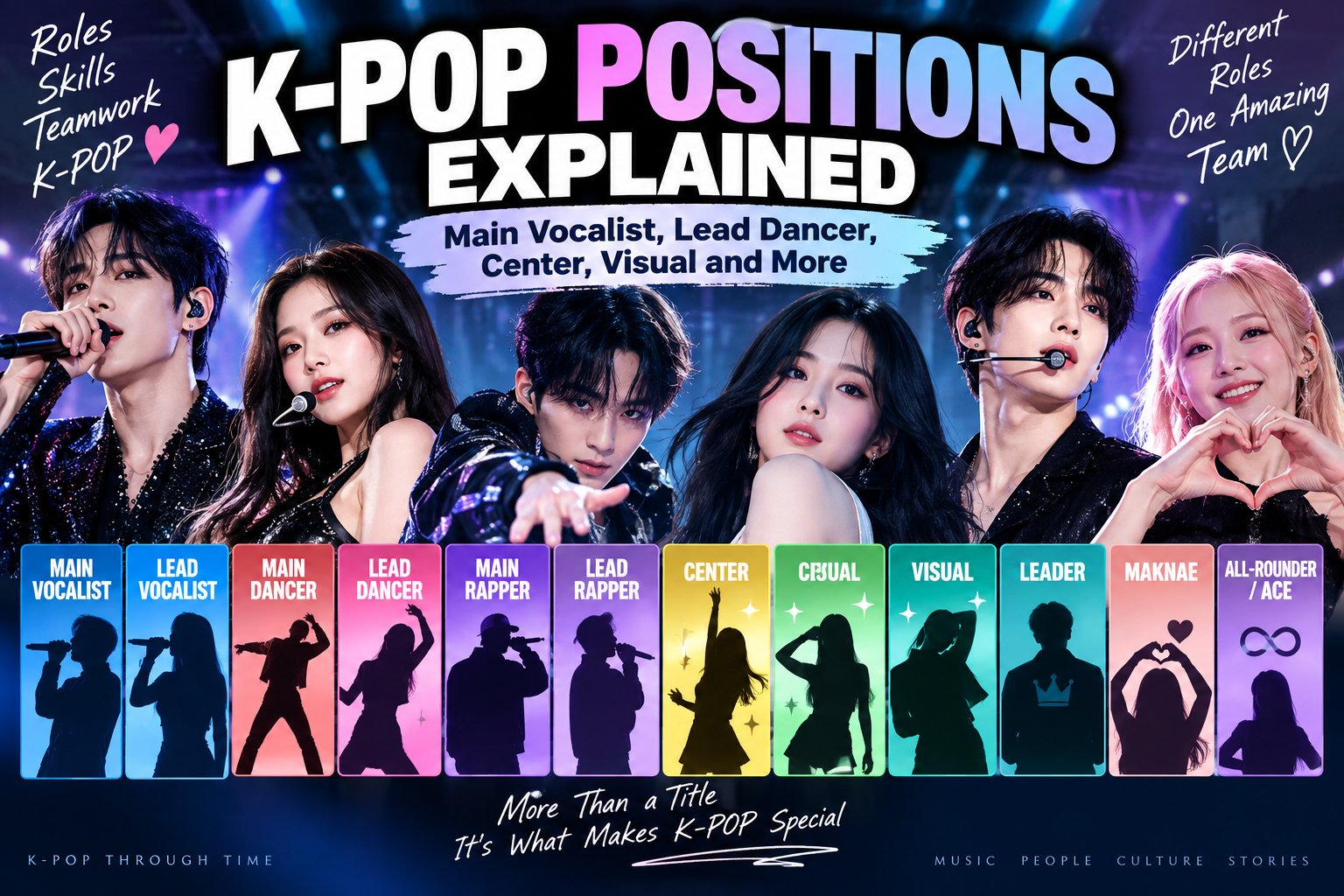
  • K-Pop Positions Explained: Main Vocalist, Lead Dancer, Center, Visual and More

    K-Pop Positions Explained: Main Vocalist, Lead Dancer, Center, Visual and More

    K-Pop Positions Explained: Why Do Idols Have Different Roles?

    K-pop positions describe the roles members typically take within a group. Main vocalists, dancers, and rappers often handle the most demanding parts of their specialties, while lead members also take important supporting or featured parts. A center draws attention during key performance moments, a visual is traditionally associated with the group’s public image, a leader helps coordinate the team, and the maknae is the youngest member. These roles can overlap, and not every group assigns fixed positions.

    If you are new to K-pop, group profiles can sometimes feel like they come with their own vocabulary.

    You may see one member described as the main vocalist, another as the lead dancer, and someone else as the visual or center.

    Then there are terms such as leader, rapper, maknae, all-rounder, and ace.

    What do all these K-pop positions actually mean?

    K-pop positions are labels used to describe the different strengths and responsibilities members may have within a group. Some positions focus on singing, dancing, or rapping, while others describe leadership, age, image, or prominence during performances.

    However, there is one important thing new fans should understand:

    K-pop positions are not always rigid rules.

    A member can have several positions, roles can overlap, and some newer groups use fewer fixed position labels than earlier generations.

    Here is a beginner-friendly guide to the most common K-pop positions and how they work.

    Quick Guide to the Most Common K-Pop Positions

    Here is the simple version:

    Main Vocalist — usually one of the strongest singers in the group
    Lead Vocalist — an important vocalist who supports the main vocal line
    Main Dancer — usually one of the strongest technical dancers
    Lead Dancer — a strong dancer who often receives prominent choreography
    Main Rapper — usually handles major or technically demanding rap sections
    Lead Rapper — supports the main rapper and performs important rap parts
    Leader — helps represent and coordinate the group
    Center — frequently becomes the visual focal point of performances
    Visual — a member highlighted strongly for the group’s visual image
    Maknae — the youngest member
    All-Rounder / Ace — commonly used for idols considered strong in several areas

    Now let’s look at each position more carefully.

    1. Main Vocalist

    The main vocalist is generally one of the group’s strongest singers.

    Main vocalists are often trusted with technically demanding sections of songs.

    These may include:

    • High notes
    • Vocal climaxes
    • Ad-libs
    • Difficult melodic passages
    • Important live singing moments

    Being the main vocalist does not necessarily mean singing the greatest number of seconds in every song.

    Line distribution can change depending on the song, concept, vocal range, and producer’s decisions.

    Instead, the position usually indicates that the member plays an especially important role in the group’s vocal performance.

    Main Vocalist vs Lead Vocalist

    This is one of the most confusing parts of K-pop terminology for English-speaking fans.

    In everyday English, the word lead can sound like the highest position.

    In traditional K-pop terminology, however, main vocalist usually refers to the primary vocal specialist, while a lead vocalist is another strong singer who handles significant vocal sections.

    The difference should not be interpreted as a simple ranking of who is “better.”

    Both can be essential to a group’s sound.

    2. Lead Vocalist

    A lead vocalist is an important member of the vocal line who supports the group’s overall melody.

    Lead vocalists may sing:

    • Verses
    • Pre-choruses
    • Choruses
    • Harmonies
    • Bridges
    • Other prominent melodic sections

    Some groups have multiple lead vocalists.

    And in modern K-pop, the distinction between main and lead vocalist can sometimes become less obvious because different members may receive major singing moments depending on the song.

    3. Main Dancer

    The main dancer is usually one of the group’s strongest dance performers.

    Main dancers often receive prominent moments during choreography-heavy sections.

    They may be featured during:

    • Dance breaks
    • Difficult choreography
    • Performance introductions
    • Solo dance moments
    • Special stages

    A main dancer may also help create the overall performance identity of a group.

    However, being the main dancer does not mean the member must always stand in the center.

    That brings us to another commonly misunderstood position.

    4. Lead Dancer

    The lead dancer is another highly capable dancer who supports the group’s performance line.

    Lead dancers may frequently appear near the front during choreography and receive important performance moments.

    The distinction between main dancer and lead dancer can vary considerably between groups.

    Some groups use both titles clearly.

    Others simply have a dance line without emphasizing a strict hierarchy.

    5. Main Rapper

    The main rapper usually handles some of the group’s most prominent or technically demanding rap sections.

    Depending on the group and artist, the role can involve:

    • Flow
    • Rhythm
    • Delivery
    • Diction
    • Stage presence
    • Lyric writing
    • Rap composition

    Not every K-pop rapper writes every rap they perform, so being a rapper and being a songwriter are not automatically the same thing.

    Some idol rappers, however, become deeply involved in writing and producing their own music.

    6. Lead Rapper

    The lead rapper supports the group’s rap line and often handles significant rap sections.

    As with vocal and dance positions, the distinction between main and lead rapper depends on the group.

    A member can also hold several positions at once.

    For example, an idol might simultaneously be a rapper, dancer, and leader.

    This overlap is extremely common in K-pop.

    7. Leader

    The leader has a different type of responsibility.

    Rather than describing a specific performance skill, the position usually relates to communication and group coordination.

    A leader may:

    • Represent the group in interviews
    • Speak during important public moments
    • Help communicate between members
    • Support teamwork
    • Help maintain group morale
    • Take responsibility during schedules

    The leader is sometimes the oldest member, but the oldest member does not automatically become the leader.

    Leadership may instead depend on personality, experience, communication ability, or the company’s decision.

    8. Visual

    The visual is one of the K-pop terms that often surprises new international fans.

    Traditionally, the visual is a member highlighted for fitting the group’s image and prevailing beauty ideals.

    Visual members may receive particular attention in:

    • Promotional photographs
    • Advertisements
    • Fashion content
    • Close-up shots
    • Brand activities

    However, the visual position should not be interpreted as meaning that other members are not attractive.

    It is primarily a role associated with the way an entertainment company presents and markets the group.

    And importantly:

    Visual and center do not mean exactly the same thing.

    9. Center

    The center is the member who becomes a focal point during important moments of a performance or promotion.

    You may notice the center standing prominently during:

    • Chorus choreography
    • Opening formations
    • Group photographs
    • Ending poses
    • Signature dance moments

    Some groups have a recognizable fixed center.

    Others rotate the center depending on the song, choreography, or concept.

    The center may also be the visual, but this is not required.

    Center vs Visual: What Is the Difference?

    The easiest way to remember it is:

    Visual = image-related role

    Center = performance or formation focal point

    One member can hold both positions, but they describe different functions.

    10. Maknae

    Maknae (막내) is a Korean word meaning the youngest person in a group.

    It is not actually a K-pop-specific word.

    Koreans use the term in many social situations to describe the youngest member of a family, workplace, team, or other group.

    In K-pop, the maknae is simply the youngest member.

    Being the maknae does not describe talent or ability.

    A maknae can simultaneously be:

    • Main vocalist
    • Main dancer
    • Rapper
    • Center
    • Visual

    or hold several other roles.

    The special attention given to the youngest member also reflects the importance of age relationships in Korean social culture.

    11. All-Rounder

    Fans frequently use the term all-rounder for an idol who is considered strong across several performance areas.

    An all-rounder may be skilled at combinations of:

    • Singing
    • Dancing
    • Rapping
    • Performing
    • Songwriting
    • Producing

    Unlike positions such as leader or main vocalist, “all-rounder” is not necessarily an official company-assigned position.

    It is often a description used by fans and media.

    12. What Does “Ace” Mean in K-Pop?

    Another term you may hear is ace.

    Fans often describe an idol as an ace when they believe that member performs at a particularly high level across multiple skills.

    The words ace and all-rounder are sometimes used interchangeably, although fans may debate the exact distinction.

    Because these labels are often informal, there is no universal official definition.

    Main vs Lead vs Sub: The Easy Way to Understand It

    For beginners, this is probably the most useful distinction to learn.

    Traditionally:

    Main — primary specialist in a particular area

    Lead — strong supporting specialist with important responsibilities

    Sub — contributes in that area without being the primary specialist

    For example:

    Main Vocalist → Lead Vocalist → Sub Vocalist

    or

    Main Rapper → Lead Rapper → Sub Rapper

    But these labels should not be treated like permanent rankings.

    K-pop performances are collaborative, and individual roles can change depending on the song.

    Can One K-Pop Idol Have Multiple Positions?

    Absolutely.

    In fact, this is normal.

    One member could simultaneously be:

    Leader + Main Rapper + Dancer

    while another could be:

    Main Vocalist + Center

    and another:

    Lead Dancer + Vocalist + Maknae

    Positions describe different aspects of what a member contributes.

    They are not mutually exclusive job titles.

    Who Decides K-Pop Positions?

    Traditionally, entertainment companies have played a major role in assigning positions when groups are formed.

    Decisions can reflect factors such as:

    • Vocal ability
    • Dance ability
    • Rap ability
    • Stage presence
    • Image
    • Personality
    • Age
    • Leadership qualities
    • The overall concept of the group

    But fans should be careful when reading online profiles.

    Not every position listed on fan websites is necessarily an officially announced company position.

    Different websites may even list different positions for the same idol.

    Are K-Pop Positions Still Important in 2026?

    Yes—but the system is becoming more flexible.

    Traditional K-pop groups often had clearly defined positions such as main vocalist, lead vocalist, main dancer, and lead rapper.

    Some newer groups, however, emphasize versatility rather than strict titles.

    A member may sing more in one comeback, receive a major dance moment in another, and become the center for a particular concept.

    This reflects a broader shift toward idols being presented as multi-skilled performers.

    For new fans, this means positions are best understood as a guide to a member’s strengths and responsibilities, not an unchangeable ranking system.

    Why Do K-Pop Groups Use Positions?

    Positions historically helped organize groups containing members with different specialties.

    A song and performance require many different strengths:

    Strong vocals.

    Rap delivery.

    Dance technique.

    Stage presence.

    Leadership.

    Visual storytelling.

    Public communication.

    Instead of expecting every member to perform every role in exactly the same way, positions helped groups emphasize each person’s strengths.

    This specialization became one of the recognizable features of the idol system.

    Why Fans Debate K-Pop Positions

    Positions can also create intense discussions among fans.

    Fans may disagree about:

    • Who deserves more lines
    • Who should receive a dance break
    • Who should stand in the center
    • Whether someone should be called a main or lead vocalist
    • Whether official positions still reflect a member’s current abilities

    These debates happen partly because idols continue improving after debut.

    Someone who began as a supporting vocalist may become a much stronger singer several years later.

    That is another reason not to treat debut-era positions as permanent judgments of talent.

    K-Pop Positions vs Line Distribution

    A common misunderstanding is assuming a position automatically determines how many lines someone receives.

    It does not.

    Line distribution can depend on:

    • The song
    • Vocal range
    • Concept
    • Producer
    • Arrangement
    • Performance requirements

    A main vocalist may receive fewer lines in one song while another member receives more because their voice fits that particular track.

    The same principle applies to center time and dance highlights.

    Frequently Asked Questions About K-Pop Positions

    What is the highest vocal position in K-pop?

    Traditionally, the main vocalist is considered the group’s primary vocal specialist.

    However, this should not be treated as a permanent ranking of every singer’s ability.

    Is main vocalist higher than lead vocalist?

    In traditional K-pop terminology, “main” usually indicates the primary specialist, while “lead” indicates another important member of that performance line.

    Is the visual always the center?

    No.

    The visual and center are different roles, although the same member can hold both.

    Is the leader always the oldest member?

    No.

    Some leaders are the oldest, while others are selected because of leadership ability, experience, or group dynamics.

    What does maknae mean?

    Maknae is the Korean word for the youngest member of a group.

    Can a K-pop group have more than one main vocalist?

    Yes.

    Some groups have multiple members identified as main vocalists or several members who share major vocal responsibilities.

    Do all K-pop groups have official positions?

    No.

    Some groups use clearly defined positions, while others use broader or more flexible roles.

    This has become increasingly noticeable among newer generations of K-pop groups.

    The Easiest Way to Remember K-Pop Positions

    If all these terms still feel confusing, remember them in four groups.

    Music

    Main Vocalist
    Lead Vocalist
    Main Rapper
    Lead Rapper

    Performance

    Main Dancer
    Lead Dancer
    Center

    Group Identity

    Leader
    Visual

    Age and Versatility

    Maknae
    All-Rounder
    Ace

    Once you understand these categories, K-pop profiles become much easier to read.

    Final Thoughts

    K-pop positions help explain how different members contribute to a group.

    The main vocalist may anchor difficult singing moments.

    The main dancer may shine during choreography.

    The rapper adds another musical texture.

    The leader helps guide the team.

    The center draws attention during key performance moments.

    The visual contributes to the group’s public image.

    And the maknae is simply the youngest member.

    But modern K-pop is increasingly flexible.

    Members grow, skills develop, concepts change, and positions sometimes become less important over time.

    So rather than viewing K-pop positions as a strict ranking, think of them as a useful map.

    They help new fans understand a group—but they never tell the whole story of what an idol can do.


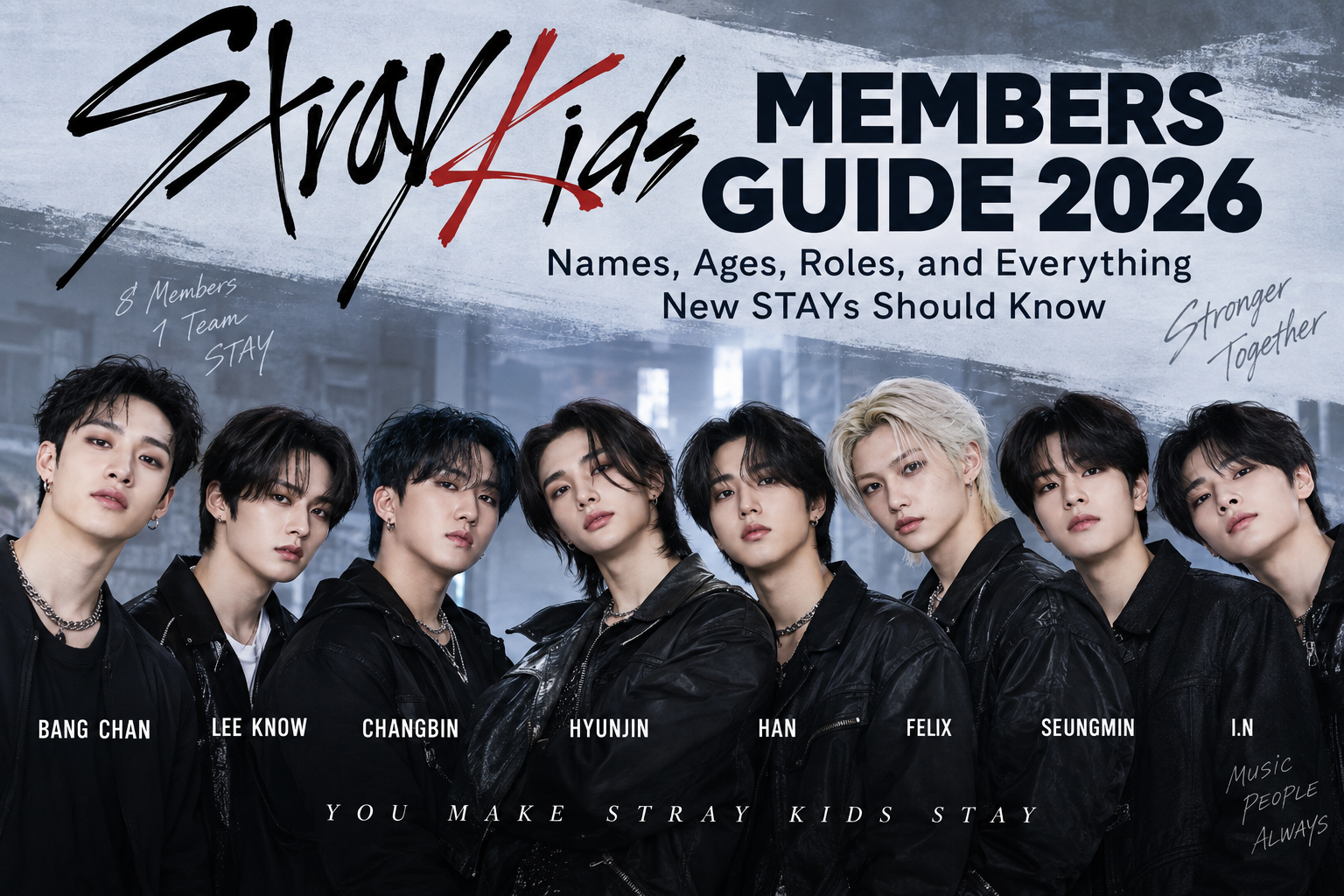
  • Stray Kids Members Guide 2026: Names, Ages, Roles, and Everything New STAYs Should Know

    Stray Kids Members Guide 2026: Names, Ages, Roles, and Everything New STAYs Should Know

    Stray Kids Members Guide 2026: Meet the 8 Members

    Stray Kids is one of the most recognizable K-pop boy groups in the world, known for powerful performances, distinctive music, and strong involvement in creating their own songs.

    For new STAYs, however, learning all eight members can take a little time.

    Who is the leader? Who are the producers? Who is the youngest member? And what makes each member different?

    This beginner-friendly guide introduces the eight Stray Kids members in 2026 and explains their backgrounds, strengths, and roles within the group.

    How Many Members Are in Stray Kids in 2026?

    Stray Kids currently has eight members:

    Bang Chan, Lee Know, Changbin, Hyunjin, Han, Felix, Seungmin, and I.N.

    The group originally debuted with nine members in 2018, but Woojin left the group in 2019. Since then, Stray Kids has continued as an eight-member group.

    Stray Kids Members at a Glance

    MemberBirthdayKnown For
    Bang ChanOctober 3, 1997Leader, producer, performer
    Lee KnowOctober 25, 1998Dance, performance
    ChangbinAugust 11, 1999Rap, songwriting, production
    HyunjinMarch 20, 2000Dance, rap, performance
    HanSeptember 14, 2000Rap, vocals, songwriting
    FelixSeptember 15, 2000Deep voice, dance, performance
    SeungminSeptember 22, 2000Vocals
    I.NFebruary 8, 2001Vocals, youngest member

    Now let’s meet each member individually.

    1. Bang Chan

    Bang Chan is the leader of Stray Kids and one of the central creative forces behind the group.

    Born in South Korea and raised in Australia, he spent many years training at JYP Entertainment before Stray Kids debuted.

    He is also part of 3RACHA, the group’s production unit, together with Changbin and Han.

    Bang Chan is widely associated with songwriting, production, vocals, rap, and leadership. His involvement in the creative process has helped shape the distinctive sound of Stray Kids.

    For new fans, one simple way to remember him is:

    Bang Chan = leader + producer.

    2. Lee Know

    Lee Know is especially known for his dancing and precise performance style.

    Before debuting with Stray Kids, he gained professional dance experience, which is reflected in his strong stage presence and technical ability.

    Although his performances can appear intense, fans also know him for his distinctive sense of humor and personality.

    An easy way for beginners to remember him is:

    Lee Know = powerful dancer.

    3. Changbin

    Changbin is one of the most recognizable rappers in Stray Kids.

    His powerful delivery and distinctive vocal tone make his rap sections easy to identify in many Stray Kids songs.

    He is also a member of 3RACHA, contributing to songwriting and music production alongside Bang Chan and Han.

    Changbin therefore plays an important role not only on stage but also behind the scenes in the group’s music.

    Remember:

    Changbin = powerful rap + songwriting.

    4. Hyunjin

    Hyunjin is widely known for his expressive dancing and charismatic stage presence.

    His performance style often emphasizes dramatic movement and facial expression, making him particularly noticeable in choreography-focused stages and performance videos.

    He also participates in rap and other musical activities within the group.

    For new STAYs:

    Hyunjin = expressive performance + dance.

    5. Han

    Han is one of the group’s most versatile members.

    He is known for rapid and expressive rap, but he is also a capable vocalist and songwriter.

    Along with Bang Chan and Changbin, Han belongs to 3RACHA, the production team closely associated with the musical identity of Stray Kids.

    His ability to move between rap and vocals makes him especially recognizable once new fans begin exploring more of the group’s music.

    Remember:

    Han = rap + vocals + songwriting.

    6. Felix

    Felix is one of the easiest Stray Kids members for many new fans to recognize.

    Born in Australia, he is famous for his unusually deep voice, which often creates memorable moments in Stray Kids songs.

    He is also an important performer and dancer.

    His contrast between a deep vocal tone and energetic stage presence has become one of his most recognizable characteristics.

    For beginners:

    Felix = deep voice + performance.

    7. Seungmin

    Seungmin is particularly associated with the vocal side of Stray Kids.

    His clear and controlled singing voice often provides melodic balance against the group’s powerful rap and performance sections.

    As new fans listen to more Stray Kids songs, his vocal tone becomes increasingly easy to recognize.

    Remember:

    Seungmin = vocals.

    8. I.N

    I.N is the youngest member of Stray Kids.

    In K-pop, the youngest member of a group is commonly called the maknae.

    He is known primarily for his vocals and has developed considerably as a performer since the group’s early years.

    Because he is the youngest member, beginners can remember him as:

    I.N = vocalist + maknae.

    What Is 3RACHA?

    One of the most important things new fans should understand about Stray Kids is 3RACHA.

    3RACHA consists of:

    Bang Chan, Changbin, and Han.

    The trio existed before the official debut of Stray Kids and became an important creative foundation for the group.

    They have participated extensively in songwriting and production, helping Stray Kids develop a musical identity that often combines hip-hop, electronic sounds, powerful performances, and experimental production.

    This creative involvement is one reason Stray Kids is frequently described as a group with a strong self-producing identity.

    Who Is the Leader of Stray Kids?

    The leader of Stray Kids is Bang Chan.

    Beyond performing, he has played an important role in the group’s creative direction and teamwork.

    His long training period and involvement in 3RACHA also make him an important figure in the history and development of the group.

    Who Is the Youngest Member of Stray Kids?

    The youngest member is I.N, born on February 8, 2001.

    That makes him the group’s maknae.

    However, being the youngest does not necessarily mean having a minor role. Like many K-pop maknaes, I.N has developed significantly as a vocalist and performer throughout the group’s career.

    Who Is the Oldest Member of Stray Kids?

    Bang Chan, born on October 3, 1997, is the oldest member.

    He is also the group’s leader.

    This makes the age range among the current members relatively compact, with Bang Chan as the oldest and I.N as the youngest.

    What Is the Stray Kids Fandom Called?

    Stray Kids fans are called STAY.

    The fandom name reflects the connection between Stray Kids and their fans and has become an important part of the group’s global identity.

    If you are just beginning to follow the group, you will frequently see the word STAY used across concerts, fan communities, social media, and official content.

    When Did Stray Kids Debut?

    Stray Kids officially debuted in 2018 under JYP Entertainment.

    The group emerged through the reality program Stray Kids, which documented the process leading toward their debut.

    Over the following years, they developed from a rising K-pop group into a major international touring and recording act.

    Why Is Stray Kids So Popular Internationally?

    Several factors have contributed to the group’s international popularity.

    Their music often combines aggressive rap, electronic production, strong melodies, and highly energetic choreography.

    Another major factor is creative participation. Members—particularly 3RACHA—have been deeply involved in creating much of the group’s music.

    Stray Kids has also built a strong relationship with international fans through performances, touring, digital content, and multilingual communication.

    Together, these elements have helped create a distinctive identity within modern K-pop.

    The Easiest Way to Remember the Stray Kids Members

    If eight names feel overwhelming at first, try learning them through one memorable characteristic:

    Bang Chan — leader and producer
    Lee Know — dancer
    Changbin — powerful rapper
    Hyunjin — expressive performer
    Han — rapper, vocalist, and songwriter
    Felix — deep voice
    Seungmin — vocalist
    I.N — youngest member

    Once you begin watching music videos, performances, interviews, and variety content, recognizing each member becomes much easier.

    Frequently Asked Questions

    How many Stray Kids members are there in 2026?

    There are eight current members: Bang Chan, Lee Know, Changbin, Hyunjin, Han, Felix, Seungmin, and I.N.

    Who is the leader?

    Bang Chan is the leader of Stray Kids.

    Who is the youngest member?

    I.N is the youngest member, or maknae.

    Who are the members of 3RACHA?

    Bang Chan, Changbin, and Han.

    What are Stray Kids fans called?

    Their fandom is called STAY.

    Did Stray Kids originally have nine members?

    Yes. Stray Kids debuted with nine members in 2018. Woojin left the group in 2019, and Stray Kids has continued as eight members.

    Final Thoughts

    Learning the members is one of the best ways to begin exploring Stray Kids.

    Bang Chan, Lee Know, Changbin, Hyunjin, Han, Felix, Seungmin, and I.N each bring different strengths to the group, while their combined performances and creative involvement have helped Stray Kids build a distinctive place in K-pop.

    For new STAYs, there is no need to memorize everything immediately. Start with one or two members, listen to the music, watch performances, and gradually learn the personalities and voices behind the songs.

    Before long, recognizing all eight members will feel natural.


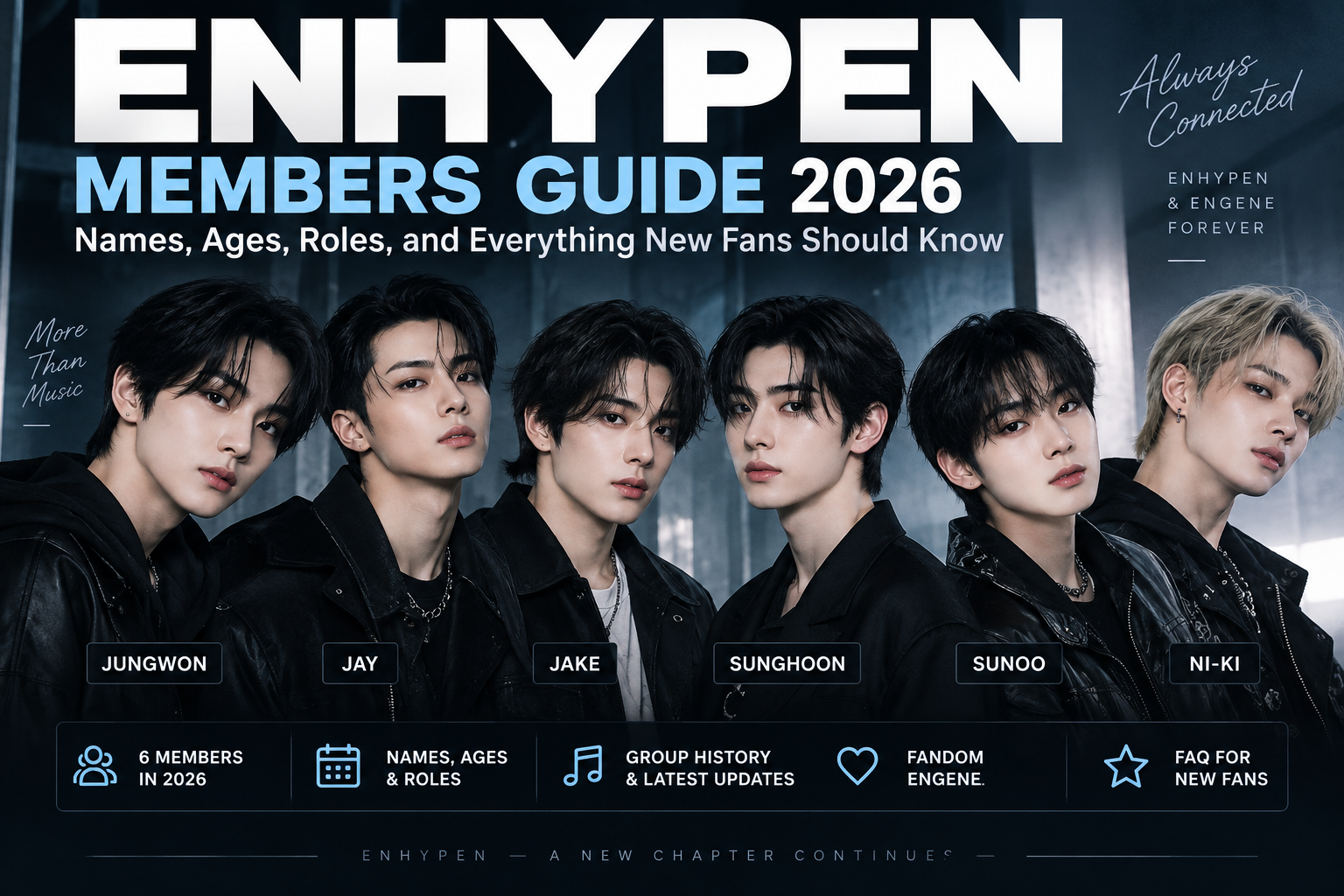
  • ENHYPEN Members Guide 2026: Names, Ages, Roles, and Everything New Fans Should Know

    ENHYPEN Members Guide 2026: Names, Ages, Roles, and Everything New Fans Should Know

    If you are just discovering ENHYPEN, you may come across different answers when searching for the group’s members.

    Some older profiles list seven members, while newer information shows six.

    There is a simple reason for that.

    ENHYPEN originally debuted as a seven-member group, but in 2026 HEESEUNG parted ways with the group to pursue his own musical direction and prepare for solo activities under BELIFT LAB.

    As of 2026, ENHYPEN continues as a six-member group consisting of:

    JUNGWON, JAY, JAKE, SUNGHOON, SUNOO, and NI-KI.

    This guide explains the current ENHYPEN members, their ages, backgrounds, strengths, and what new fans should know about the group in 2026.

    ENHYPEN Members at a Glance

    MemberBirth DateAge in 2026*Nationality / Background
    JUNGWONFebruary 9, 200422South Korean
    JAYApril 20, 200224Korean-American background
    JAKENovember 15, 200223Korean-Australian background
    SUNGHOONDecember 8, 200223South Korean
    SUNOOJune 24, 200323South Korean
    NI-KIDecember 9, 200520Japanese

    *International ages as of September 2026.

    ENHYPEN does not need to be understood only through rigid official positions. Like many modern K-pop groups, the members contribute across vocals, dance, performance, and group chemistry.

    Let’s meet them one by one.

    1. JUNGWON

    Full Name: Yang Jung-won
    Birthday: February 9, 2004
    Nationality: South Korean

    JUNGWON is one of the most recognizable members of ENHYPEN and has played an important leadership role in the group’s history.

    He became known to fans through the survival program I-LAND, where the members who would eventually form ENHYPEN were selected.

    Despite being younger than several other members, JUNGWON has often been associated with a calm and balanced presence within the team.

    What Is JUNGWON Known For?

    Fans often recognize JUNGWON for his distinctive vocal tone, precise performance style, and strong stage presence.

    His ability to balance a youthful image with controlled performances has made him an important part of ENHYPEN’s identity.

    For new fans trying to recognize the members, JUNGWON is often remembered for his expressive eyes and distinctive facial features.

    2. JAY

    Full Name: Park Jong-seong
    Birthday: April 20, 2002
    Nationality / Background: Korean-American background

    JAY is one of ENHYPEN’s older members and is known for his strong personality, performance energy, and direct communication style.

    He spent part of his childhood in the United States, which contributes to his international background.

    What Is JAY Known For?

    JAY brings intensity and confidence to ENHYPEN’s performances.

    Fans also appreciate the contrast between his powerful stage presence and the more humorous or thoughtful moments he shows in variety and behind-the-scenes content.

    His international experience also helps make him approachable to global audiences discovering the group.

    3. JAKE

    Full Name: Sim Jae-yun
    Birthday: November 15, 2002
    Nationality / Background: Korean-Australian background

    JAKE grew up in Australia before moving to South Korea to pursue becoming a K-pop idol.

    His journey is particularly interesting because he had a relatively short training period before appearing on I-LAND.

    He ultimately earned a place in ENHYPEN and has continued developing as a vocalist and performer.

    What Is JAKE Known For?

    JAKE is often associated with a warm, approachable personality.

    His English fluency has also helped ENHYPEN communicate with international audiences during interviews and global promotions.

    On stage, his confidence and performance skills have grown significantly since the group’s early years.

    4. SUNGHOON

    Full Name: Park Sung-hoon
    Birthday: December 8, 2002
    Nationality: South Korean

    SUNGHOON has one of the most unusual pre-debut backgrounds among K-pop idols.

    Before becoming an idol, he competed as a figure skater.

    Years of skating gave him experience performing under pressure long before his K-pop debut.

    From Figure Skating to K-Pop

    SUNGHOON’s transition from competitive figure skating to idol training became one of the most widely discussed parts of his story.

    The two careers may appear completely different, but both require discipline, body control, musical interpretation, and the ability to perform in front of an audience.

    Those qualities translated naturally into his work with ENHYPEN.

    What Is SUNGHOON Known For?

    He is frequently recognized for elegant visuals and controlled performance style.

    For new fans, his figure-skating history is one of the easiest details to remember.

    5. SUNOO

    Full Name: Kim Sun-oo
    Birthday: June 24, 2003
    Nationality: South Korean

    SUNOO became well known during I-LAND for his expressive personality and ability to communicate emotion on stage.

    Within ENHYPEN, he often brings a bright and distinctive energy that contrasts effectively with some of the group’s darker concepts.

    What Is SUNOO Known For?

    SUNOO is particularly recognizable for his facial expressions and ability to adapt to different concepts.

    That versatility matters in ENHYPEN because the group’s music and visual storytelling frequently move between darker, dramatic themes and more emotional or youthful moments.

    His personality has also made him memorable in variety and fan-oriented content.

    6. NI-KI

    Full Name: Nishimura Riki
    Birthday: December 9, 2005
    Nationality: Japanese

    NI-KI is the youngest current member of ENHYPEN.

    In K-pop terminology, that makes him the group’s maknae.

    Despite being the youngest member, NI-KI has long attracted attention for his dancing ability.

    What Is NI-KI Known For?

    Dance is the most obvious answer.

    NI-KI developed dance skills from a young age and became known during I-LAND as a particularly strong performer.

    His movement, control, and ability to handle demanding choreography have made him an important part of ENHYPEN’s performance identity.

    For many fans discovering ENHYPEN through dance performances, NI-KI is one of the first members who stands out.

    What Happened to HEESEUNG?

    This is an important question for anyone discovering ENHYPEN in 2026.

    HEESEUNG was one of the seven original members of ENHYPEN.

    He debuted with the group in 2020 and played a major role in ENHYPEN’s first several years.

    In 2026, BELIFT LAB announced that after discussions about the members’ future directions, HEESEUNG would part ways with ENHYPEN.

    According to the company’s announcement, HEESEUNG had a distinct musical vision that he wanted to pursue.

    ENHYPEN therefore continued official activities as six members, while HEESEUNG began preparing for a solo album as an artist under BELIFT LAB.

    This explains why older ENHYPEN videos, albums, photos, and guides show seven members while current activities feature six.

    For new fans, both parts of the group’s history matter.

    HEESEUNG remains an important part of ENHYPEN’s history even though he is no longer a current member.

    How Was ENHYPEN Formed?

    ENHYPEN was created through I-LAND, a survival program that aired in 2020.

    The program followed trainees competing for the opportunity to debut in a new boy group.

    The original final lineup consisted of:

    JUNGWON, HEESEUNG, JAY, JAKE, SUNGHOON, SUNOO, and NI-KI.

    ENHYPEN officially debuted on November 30, 2020 with the mini album BORDER : DAY ONE.

    Their debut introduced a group that would become known for strong visual storytelling, synchronized performance, and recurring themes involving identity, connection, transformation, fate, and supernatural imagery.

    What Does the Name ENHYPEN Mean?

    The group’s name is inspired by the hyphen (-).

    A hyphen connects different words to create new meanings.

    Similarly, ENHYPEN’s name represents members connecting with one another, discovering each other, and growing together.

    The idea of connection has remained important not only to the group’s name but also to its relationship with fans.

    What Is ENHYPEN’s Fandom Called?

    ENHYPEN’s official fandom name is ENGENE.

    The name carries multiple meanings.

    It suggests that fans act like an “engine” that helps ENHYPEN move forward.

    It also reflects the idea that ENHYPEN and their fans share a connection that helps them grow together.

    If you are new to K-pop, fandom names are an important part of idol culture. They create a shared identity between artists and their fan communities.

    Who Is the Oldest Member of ENHYPEN in 2026?

    Among the six current members, JAY, born April 20, 2002, is the oldest.

    JAKE and SUNGHOON were also born in 2002.

    Who Is the Youngest Member of ENHYPEN?

    NI-KI, born December 9, 2005, is the youngest current member.

    That makes NI-KI the group’s maknae.

    The word “maknae” simply means the youngest person in a group in Korean, but in K-pop it is also commonly used when talking about the youngest member’s role and relationships within a group.

    Who Is ENHYPEN’s Best Dancer?

    There is no objective answer to who is “best,” because performance preferences are subjective.

    However, NI-KI is especially well known for dance and has been recognized for his performance ability since before ENHYPEN’s debut.

    The group as a whole is also known for synchronized choreography and strong performance concepts, so focusing on only one member can overlook an important part of ENHYPEN’s appeal.

    ENHYPEN in 2026

    2026 represents an important new chapter in ENHYPEN’s history.

    The group entered a six-member era while continuing its musical activities.

    On August 21, 2026, ENHYPEN released its eighth mini album, THE SIN : BLISS.

    The album continues the narrative introduced in THE SIN : VANISH, developing the group’s ongoing storytelling around love, taboo, escape, and connection.

    For longtime fans, this period represents a major transition.

    For new fans, it is an opportunity to discover both ENHYPEN’s current identity and the history that brought the group here.

    ENHYPEN Members FAQ

    How many members are in ENHYPEN in 2026?

    ENHYPEN currently has six members: JUNGWON, JAY, JAKE, SUNGHOON, SUNOO, and NI-KI.

    Did ENHYPEN originally have seven members?

    Yes. ENHYPEN debuted with seven members in 2020. HEESEUNG was part of the original lineup before leaving the group in 2026.

    Is HEESEUNG still in ENHYPEN?

    No. BELIFT LAB announced in 2026 that HEESEUNG would part ways with ENHYPEN and prepare for solo activities under the company.

    Who is the oldest current ENHYPEN member?

    JAY is the oldest current member.

    Who is the youngest ENHYPEN member?

    NI-KI is the youngest member.

    What is ENHYPEN’s fandom name?

    The fandom is called ENGENE.

    When did ENHYPEN debut?

    ENHYPEN debuted on November 30, 2020.

    A Simple Way for New Fans to Learn the Members

    If six names still feel difficult to remember, start with one distinctive detail about each member:

    JUNGWON — recognizable vocal tone and leadership history
    JAY — powerful presence and Korean-American background
    JAKE — grew up in Australia
    SUNGHOON — former competitive figure skater
    SUNOO — expressive performer and bright personality
    NI-KI — Japanese maknae known especially for dance

    Then watch a few performances and behind-the-scenes videos.

    Very quickly, the names begin to connect with faces, voices, personalities, and performance styles.

    Final Thoughts

    ENHYPEN’s story is still evolving.

    The group began with seven young performers brought together through I-LAND and developed into one of the internationally recognized groups of its generation.

    In 2026, ENHYPEN entered another chapter as a six-member group consisting of JUNGWON, JAY, JAKE, SUNGHOON, SUNOO, and NI-KI.

    For new ENGENEs, learning the members is only the beginning.

    Understanding where they came from, how the group was formed, what changed in 2026, and how each member contributes makes ENHYPEN’s music and performances much more interesting to follow.

    And if you keep seeing seven members in older ENHYPEN content, now you know why.


  • K-Pop Terms Explained: 30 Essential Words Every New Fan Should Know

    K-Pop Terms Explained: 30 Essential Words Every New Fan Should Know

    If you are new to K-pop, you may feel like fans are speaking an entirely different language.

    What is a bias? Why is a new album called a comeback even when the artist never disappeared? What is the difference between a title track and a B-side? And why do fans carry glowing lightsticks at concerts?

    K-pop has developed its own vocabulary through decades of idol culture, Korean entertainment, music shows, and global fandom communities.

    Understanding these terms makes it much easier to follow your favorite artists, watch K-pop content, and communicate with other fans.

    Here are 30 essential K-pop terms every new fan should know.

    1. K-Pop

    K-pop is short for Korean popular music.

    Today, the term is commonly associated with South Korea’s idol music industry, including groups and solo artists who combine music, choreography, visual concepts, fashion, performance, and fan culture.

    K-pop includes many musical styles, from pop and hip-hop to R&B, rock, electronic music, and ballads.

    2. Idol

    An idol is an entertainer who has usually trained under an entertainment company before debuting as a singer or member of a group.

    K-pop idols often receive training in singing, dancing, performance, languages, media appearances, and other skills.

    Some train for several years before making their official debut.

    3. Trainee

    Before becoming an idol, many aspiring performers are known as trainees.

    Entertainment companies recruit trainees through auditions, scouting, competitions, and other methods.

    Trainees may study vocals, dance, rap, languages, and performance skills while competing for the opportunity to debut.

    Not every trainee eventually becomes an idol.

    4. Debut

    A debut is an artist’s official introduction to the public.

    For a K-pop group, this usually involves the release of its first official music and promotional activities.

    Fans often remember debut dates because they mark the beginning of a group’s official career.

    5. Pre-Debut

    Pre-debut refers to the period before an artist officially debuts.

    Fans may discover pre-debut photos, performances, audition clips, trainee videos, or appearances in other artists’ content.

    For some groups, companies also release substantial content before the official debut.

    6. Comeback

    The word comeback has a special meaning in K-pop.

    It does not necessarily mean that an artist disappeared for years.

    Instead, a comeback generally refers to an artist returning with new music and a new promotional cycle.

    A group may therefore have several comebacks within a relatively short period.

    7. Title Track

    A title track is the main song promoted from a K-pop release.

    It is usually accompanied by a music video and performed extensively during promotional activities.

    For many fans, the title track becomes the song most strongly associated with that particular era.

    8. B-Side

    A B-side is a song on an album or EP that is not the main title track.

    Some B-sides become extremely popular among fans and may receive performances, choreography videos, or other promotional content.

    Exploring B-sides is often one of the best ways to discover the broader musical style of a K-pop artist.

    9. Bias

    Your bias is your favorite member of a K-pop group.

    For example, if you enjoy a seven-member group but feel particularly drawn to one member’s voice, personality, dancing, or style, that member may become your bias.

    Choosing a bias is one of the most familiar parts of K-pop fan culture.

    10. Bias Wrecker

    A bias wrecker is another member who constantly challenges your loyalty to your original bias.

    You may already have a favorite member, but another member keeps attracting your attention.

    Fans usually use the expression playfully.

    11. Ult Bias

    An ult bias, short for ultimate bias, is a fan’s favorite idol across all the K-pop artists they follow.

    Someone may have a bias in several groups but still consider one particular artist their ultimate favorite.

    12. Maknae

    Maknae (막내) is a Korean word meaning the youngest person in a group.

    In K-pop, it usually refers to the youngest member of an idol group.

    Fans often pay attention to the relationship between the maknae and the older members.

    13. Leader

    Many K-pop groups have an officially designated leader.

    The leader may help communicate between the members and the company, represent the group in certain situations, guide conversations during interviews, and support teamwork.

    However, the exact responsibilities vary from group to group.

    14. Main Vocalist

    The main vocalist is typically a member recognized for handling some of the group’s most demanding vocal parts.

    K-pop groups can also use positions such as lead vocalist or vocalist.

    However, not every modern group uses fixed official positions.

    15. Main Dancer

    The main dancer is typically one of the strongest dancers in a group and may take important positions during dance breaks or technically challenging choreography.

    As with vocal positions, not every group formally assigns this title.

    16. Main Rapper

    The main rapper generally handles significant or technically demanding rap sections within a group.

    Some K-pop rappers also participate in writing their own lyrics or producing music.

    Again, official positions differ among groups.

    17. Visual

    In traditional K-pop terminology, the visual is a member officially or commonly recognized for fitting the group’s visual image or prevailing Korean beauty standards.

    This does not mean other members are considered unattractive.

    The term is better understood as a role that developed within the idol industry’s traditional position system.

    18. Center

    The center is a member who frequently appears in prominent central positions during performances, promotional photos, or important parts of choreography.

    The center may change depending on the song or concept, although some groups have a member strongly associated with the role.

    19. Fandom

    A fandom is the community of fans who support an artist or group.

    Many K-pop artists have official fandom names.

    These names help create a shared identity between artists and their supporters.

    20. Lightstick

    A lightstick is an official illuminated fan item associated with a K-pop artist or group.

    At concerts, thousands of synchronized lightsticks can transform an arena into a sea of color.

    Modern lightsticks have become an important visual symbol of K-pop concert culture.

    21. Fanchant

    A fanchant is an organized chant performed by fans during particular parts of a song.

    It may include members’ names, repeated lyrics, or specially designed responses.

    When thousands of fans participate together, fanchants can become a powerful part of a live K-pop performance.

    22. Fancam

    A fancam is a video that focuses primarily on one performer during a live performance.

    Originally associated strongly with fan-recorded videos, the term is now also used for professionally produced individual-performance videos released by broadcasters and other official channels.

    Fancams can help particular performances or idols gain wider attention online.

    23. Fan Sign

    A fan sign is an event where selected fans can interact directly with an artist, traditionally while receiving signed albums or merchandise.

    Today, both in-person and video-call fan events are common.

    Entry rules vary depending on the organizer.

    24. Music Show

    K-pop artists frequently promote new releases on Korean television music shows.

    These programs feature performances by multiple artists and often include weekly ranking systems and awards.

    For new fans, music shows are a useful way to discover current K-pop releases and performance stages.

    25. Music Show Win

    A music show win happens when an artist receives first place on one of Korea’s music programs.

    Results can involve different combinations of digital performance, album sales, broadcast scores, voting, and other criteria depending on the program.

    A group’s first music show win can be an especially emotional milestone for both artists and fans.

    26. All-Kill

    An all-kill is a term associated with strong performance across major Korean music charts.

    You may also encounter more specific terms such as Certified All-Kill and Perfect All-Kill, which depend on defined chart conditions.

    Because chart systems and criteria can change, it is best to check the current rules when interpreting these achievements.

    27. Sub-Unit

    A sub-unit is a smaller team formed from members of an existing K-pop group.

    A sub-unit may explore a different musical style or highlight particular vocal, rap, or performance strengths.

    This allows artists to experiment while remaining part of the main group.

    28. Solo Debut

    A solo debut occurs when a member of a group officially releases music as a solo artist.

    A solo career does not automatically mean the member has left the group.

    Many idols maintain both group and solo activities.

    29. Concept

    A K-pop concept is the creative theme surrounding a release or promotional era.

    It can influence music videos, album artwork, styling, choreography, stage design, photography, and storytelling.

    Concepts may range from bright and playful to dark, futuristic, retro, elegant, or experimental.

    30. Era

    Fans often use the word era to describe the period associated with a particular album, song, concept, or promotional cycle.

    For example, fans may discuss their favorite styling, performances, hairstyles, or songs from a particular era.

    An era becomes part of the way fans remember an artist’s history and evolution.

    Why Does K-Pop Have So Many Special Terms?

    K-pop is more than a collection of songs.

    It developed through a distinctive entertainment system involving trainee programs, television music shows, organized fandoms, performance culture, merchandise, and close interaction between artists and fans.

    As K-pop expanded internationally, many Korean words and industry expressions became part of the vocabulary used by fans around the world.

    That is why learning K-pop terminology can also help new fans understand how the industry and its culture developed.

    K-Pop Vocabulary Is Always Evolving

    K-pop terminology is not completely fixed.

    Some traditional idol positions are used less formally by newer groups, while social media and global fandoms continually introduce new expressions.

    Words can also have slightly different meanings depending on the artist, company, generation, or fan community.

    The 30 terms above provide a strong foundation, but you will undoubtedly encounter many more as you explore K-pop.

    Final Thoughts

    Becoming a K-pop fan can initially feel overwhelming.

    There are group names, member names, fandom names, albums, performances, variety shows, and an entire vocabulary to learn.

    But you do not need to memorize everything at once.

    Start with a few essential terms such as bias, comeback, debut, title track, B-side, maknae, fandom, and lightstick. Soon, expressions that once seemed confusing will feel completely natural.

    And that is part of the fun of discovering K-pop: you are not only listening to music—you are learning about a global fan culture with its own history, traditions, and language.

  • What Is a K-Pop Fan Meeting? How It Differs From a Concert and Fan Sign

    What Is a K-Pop Fan Meeting? How It Differs From a Concert and Fan Sign

    If you are new to K-pop, the different types of fan events can be confusing.

    You may hear that an artist is holding a concert, a fan sign, or a fan meeting.

    All three events bring artists and fans together, but they are not the same experience.

    A concert focuses mainly on music and performance. A fan sign offers brief individual interactions with selected fans. A fan meeting falls somewhere in between, combining performances, conversations, games, and special moments designed specifically for fans.

    So what exactly happens at a K-pop fan meeting?

    What Is a K-Pop Fan Meeting?

    A K-pop fan meeting is a special event where artists spend time with fans through a mixture of entertainment and interaction.

    Unlike a regular concert, the schedule may include much more than songs.

    Artists might talk with the audience, answer questions, play games, perform special stages, watch old videos, share stories, or participate in activities prepared specifically for the fandom.

    The atmosphere is often more relaxed and personal than a large concert.

    Fan Meeting vs. Concert

    The biggest difference is the main purpose of the event.

    A concert is primarily built around musical performances.

    Fans usually attend expecting a setlist filled with songs, choreography, stage production, costumes, lighting, and other performance elements.

    A fan meeting, however, focuses more heavily on communication between artists and fans.

    Music is still important, but performances may take up only part of the event.

    There can be long talking segments, games, audience participation, and humorous moments that would not normally appear during a standard concert.

    Fan Meeting vs. Fan Sign

    A fan meeting is also different from a fan sign.

    At a fan sign, selected fans generally interact with idols individually for a short period while receiving autographs.

    At a fan meeting, a much larger audience watches the event together.

    Most attendees will not have an individual conversation with the artist.

    Instead, the interaction happens collectively through conversations, games, audience responses, and special activities.

    A simple way to think about it is:

    Concert = performance-focused

    Fan sign = brief individual interaction

    Fan meeting = group entertainment and fan interaction

    What Happens at a Fan Meeting?

    Every fan meeting is different, but several activities are common.

    Artists may begin by greeting the audience and talking about recent activities.

    There may be question-and-answer segments, games between members, challenges, behind-the-scenes stories, or discussions about memorable moments.

    Some events also include surprise missions or activities suggested by fans.

    Because the format is flexible, fan meetings can reveal more of an artist’s personality than a tightly planned music performance.

    Are There Performances at Fan Meetings?

    Yes.

    Fan meetings often include musical performances, but usually fewer songs than a full concert.

    Artists might perform popular songs, fan favorites, acoustic versions, solo stages, covers, or songs they rarely perform elsewhere.

    Sometimes a fan meeting includes a special performance created specifically for that event.

    This is one reason fans may consider fan meetings unique even if they have already attended the artist’s concert.

    Games and Challenges

    Games are a familiar part of many K-pop fan meetings.

    Members might compete against one another, answer trivia questions, complete missions, or participate in playful challenges.

    These segments often create funny and unpredictable moments.

    Fans get to see idols outside the highly polished environment of a music-show stage or music video.

    That relaxed atmosphere is part of the appeal.

    Talking With Fans

    Conversation is another major part of fan meetings.

    Artists may discuss their music, recent activities, memories, future goals, or experiences with the fandom.

    They may also read questions or messages submitted by fans.

    These conversations can make the event feel more intimate, even when hundreds or thousands of people are attending.

    Special Videos and Behind-the-Scenes Content

    Fan meetings sometimes include videos that are not normally available elsewhere.

    These may show rehearsals, backstage moments, funny missions, interviews, or messages prepared for fans.

    Artists may watch the videos together with the audience and react to them in real time.

    This gives fans another opportunity to see a more casual side of their favorite artists.

    Fan Meetings and Anniversaries

    Fan meetings are often connected to meaningful dates.

    An artist may organize one to celebrate a debut anniversary, the anniversary of a fandom, or another milestone.

    Anniversary fan meetings can include discussions about past years, old photographs, memorable performances, and messages of appreciation.

    For long-time fans, these events can feel like celebrating shared history with the artist.

    What Is a Fan Concert?

    Another term you may encounter is fan concert or sometimes fan-con.

    A fan concert generally combines characteristics of both a fan meeting and a concert.

    It may contain more musical performances than a traditional fan meeting while still including talking segments, games, and fan interaction.

    There is no universal formula, however.

    Different entertainment companies and artists may use these terms somewhat differently.

    Can International Fans Attend?

    Yes.

    Many K-pop artists hold fan meetings outside South Korea, especially as their international audiences grow.

    Cities across Asia and other parts of the world may be included in fan meeting tours.

    Some events may also offer online streaming options.

    Ticketing procedures vary, so international fans should always check official announcements for dates, venues, ticket sales, and participation rules.

    Do Fan Meetings Have Special Merchandise?

    Often, yes.

    Some fan meetings have merchandise designed specifically for the event.

    This can include photocards, posters, clothing, accessories, photo sets, or other collectibles.

    Because these products may be connected to one particular event, they can become memorable souvenirs for fans who attended.

    However, purchasing merchandise is optional and is not necessary to enjoy the event.

    Why Do Fans Love Fan Meetings?

    Concerts allow fans to experience the power of live music.

    Fan signs provide short personal interactions.

    Fan meetings offer something different: the feeling of spending a longer, more relaxed period with the artist.

    Fans can hear stories, watch members joke with one another, enjoy unusual performances, and participate in moments created specifically for the fandom.

    This can make the relationship between artist and fandom feel more personal.

    The Role of Fandom at a Fan Meeting

    Fan meetings are often designed around a particular fandom.

    The fandom name, inside jokes, memorable moments, fan chants, and shared history between artists and fans may all become part of the program.

    Someone unfamiliar with the artist can still enjoy the event, but long-time fans may recognize references that carry special meaning.

    In this sense, a fan meeting can feel like a celebration of the community surrounding an artist.

    Are Fan Meetings Smaller Than Concerts?

    Sometimes, but not always.

    Some fan meetings take place in relatively small venues, creating a more intimate atmosphere.

    Popular artists may hold fan meetings in large arenas or organize multiple dates because of high demand.

    The defining difference is therefore not necessarily the size of the venue.

    It is the style and purpose of the event.

    Do You Need to Attend a Fan Meeting to Be a Dedicated Fan?

    No.

    Like concerts, fan signs, albums, and merchandise, fan meetings are simply one way to experience K-pop.

    Tickets, travel, and other expenses can make attendance difficult or impossible for many fans.

    Someone who enjoys the music from home is no less of a fan than someone who attends multiple events.

    K-pop fandom can be experienced in many different ways.

    Fan Meeting, Concert, or Fan Sign: Which Is Best?

    There is no single answer.

    If you mainly want to hear many songs performed live, a concert may be the best choice.

    If you dream of having a brief individual interaction with an idol, a fan sign offers a very different experience.

    If you enjoy conversations, games, special stages, and a relaxed atmosphere, a fan meeting may be especially appealing.

    Each event reveals a different side of K-pop.

    Final Thoughts

    A K-pop fan meeting is more than a smaller version of a concert.

    It is an event designed around the relationship between artists and their fans.

    Music may be part of the experience, but so are conversations, games, special videos, unexpected performances, and moments of shared laughter.

    Concerts show us artists as performers.

    Fan signs can create brief one-to-one encounters.

    Fan meetings give artists and fans the chance to spend time together as a community.

    And that combination of music, personality, interaction, and shared memories is what makes the K-pop fan meeting a distinctive part of fandom culture.


  • What Is a K-Pop Fan Sign? How Fans Meet Their Favorite Idols

    What Is a K-Pop Fan Sign? How Fans Meet Their Favorite Idols

    For many K-pop fans, seeing their favorite artist at a concert is already an unforgettable experience.

    But imagine sitting directly across from your favorite idol, speaking with them for a short time, and receiving a signed album.

    That is the basic idea behind a K-pop fan sign.

    Fan signs have become an important part of K-pop fan culture. They give selected fans an opportunity to interact with artists more personally than they normally could at a concert or large public event.

    But how do fan signs actually work? How are fans selected? And what is the difference between an in-person fan sign and a video call event?

    Let’s take a closer look.

    What Is a K-Pop Fan Sign?

    A fan sign, sometimes called a fansign or fan signing event, is an organized event where selected fans can meet K-pop artists and receive autographs.

    At a traditional in-person fan sign, members of a group usually sit at a table while fans meet them one by one.

    Each interaction is relatively short, but fans may have a brief conversation with each member while their album is being signed.

    For many fans, the appeal is simple: it provides a rare opportunity for direct interaction with an artist they normally see only through screens or performances.

    How Do Fans Get Into a Fan Sign?

    Fan signs usually have limited capacity, so not everyone who wants to attend can participate.

    One common method involves purchasing eligible albums during a specific entry period.

    Fans submit their information according to the event rules, and winners are selected from eligible entries.

    The exact system varies depending on the organizer, retailer, artist, and event.

    Because of this, fans should always read the official rules carefully rather than assuming every fan sign works the same way.

    Why Do Fans Buy Multiple Albums?

    You may have seen photographs of fans purchasing many copies of the same K-pop album.

    Fan sign entry systems are one reason this can happen.

    For some events, purchasing more eligible albums can provide additional entries into the selection process.

    As a result, highly dedicated fans may purchase multiple copies when trying to increase their chances of being selected.

    However, buying many albums does not necessarily guarantee a win.

    The rules and selection process can differ between events.

    What Happens at an In-Person Fan Sign?

    At an in-person fan sign, winners arrive at a designated venue and follow the organizer’s instructions.

    Fans typically bring or receive an album that will be signed.

    When their turn comes, they move along the table and interact briefly with the members.

    A fan might tell an idol which song they love, congratulate them on a comeback, or share a short supportive message.

    Because time is limited, many fans think carefully about what they want to say before the event.

    Why Are Fan Signs Different From Concerts?

    Concerts are designed around performance.

    Thousands of fans may watch the same artist at once.

    Fan signs are much smaller and focus on brief individual interactions.

    At a concert, the artist performs for the audience.

    At a fan sign, the experience is centered more on conversation, autographs, and direct communication.

    Both can be meaningful fan experiences, but they serve very different purposes.

    What Is a Video Call Fan Sign?

    K-pop fan signs are no longer limited to physical venues.

    A video call fan sign allows selected fans to speak with idols through a video call.

    These events became especially visible as the K-pop industry expanded its methods of connecting with international audiences.

    For overseas fans, video call events can remove the need to travel to Korea just to participate in a short fan interaction.

    The call is usually limited to a specific amount of time, and organizers provide detailed instructions about the platform and procedure.

    How Long Does a Fan Sign Interaction Last?

    There is no universal time limit.

    The length of an interaction depends on the event format and organizer.

    In-person events may give fans a brief opportunity with each member, while video call events often operate under carefully controlled time limits.

    Because the interaction can feel very short, experienced participants often prepare a few simple things they want to say.

    Trying to fit too much into the conversation can make the experience more stressful than enjoyable.

    What Do Fans Talk About?

    Fan sign conversations can cover many light and respectful topics.

    Fans may talk about a favorite song, performance, album, hairstyle, memorable stage, or encouraging message.

    Some prepare a question they have always wanted to ask.

    Others simply want to say thank you.

    The best conversations usually respect the artist’s boundaries and the event’s rules.

    A fan sign is a chance to create a positive interaction—not an opportunity to demand private information or make an artist uncomfortable.

    What Are Post-it Questions?

    At some fan signs, fans have traditionally used small notes or prepared questions as part of the interaction.

    Depending on event rules, a fan might ask an artist to choose between options or answer a simple question.

    However, organizers may restrict what can be written or asked.

    Rules can change between events, so fans should check the specific guidelines before preparing anything.

    Can International Fans Attend Fan Signs?

    Yes, depending on the event.

    International K-pop fans may participate in some in-person fan signs if they meet the entry requirements and can attend the venue.

    Video call events have also made direct fan interactions more accessible across borders.

    However, purchasing procedures, identification requirements, language barriers, shipping costs, and time zones can make participation more complicated for overseas fans.

    Carefully checking the official event information is essential.

    Do You Need to Speak Korean?

    Not necessarily.

    Some international fans prepare a few Korean sentences, while others communicate in English or another language depending on the artist.

    Language ability varies among idols, and the interaction time is limited.

    Simple communication is often more practical than preparing a long speech.

    Fans sometimes write down key phrases beforehand so they do not forget them when they become nervous.

    Fan Signs and Album Promotions

    Fan signs are closely connected to K-pop comeback promotions.

    After a new album is released, artists may participate in several fan sign events organized with retailers or other partners.

    This creates another way for artists to meet fans while promoting the new release.

    It also connects physical album culture with direct fan participation.

    For this reason, fan signs often appear during the same period as music shows, interviews, performances, and other comeback activities.

    Fan Signs and Photocard Culture

    Fan sign events can also intersect with K-pop collecting culture.

    Depending on the event or retailer, album purchases may come with special photocards or other benefits.

    Collectors may refer to some event-specific or retailer-specific cards when discussing their collections.

    This means fan sign promotions can become interesting even to fans who are not primarily trying to win a conversation with an idol.

    Some may simply be interested in the exclusive collectibles connected to the event.

    Why Are Fan Signs So Important to Fans?

    K-pop is built partly around a strong sense of connection between artists and fandoms.

    Music videos and performances allow fans to watch artists.

    Social media allows fans to follow them.

    Concerts allow fans to experience performances together.

    Fan signs add another dimension: brief personal interaction.

    For a fan who has followed an artist for years, even a short conversation can become a lasting memory.

    The Emotional Side of Fan Signs

    Fans sometimes prepare for fan signs for days.

    They may decide what to wear, practice what to say, prepare questions, and worry about becoming nervous.

    Then the actual interaction may last only a short time.

    But the length of the conversation does not necessarily determine its emotional significance.

    A simple smile, encouraging response, or memorable exchange can become something a fan remembers long after the event ends.

    Are Fan Signs Necessary to Be a “Real Fan”?

    Absolutely not.

    Attending fan signs can require money, time, travel, and sometimes luck.

    Many fans will never attend one.

    That does not make their connection to the music any less meaningful.

    Some fans collect albums. Some attend concerts. Some watch performances online. Others simply listen to the songs they love.

    There is no single correct way to enjoy K-pop.

    A Healthy Approach to Fan Sign Culture

    Fan signs can be exciting, but it is important to keep spending and expectations in perspective.

    Buying large numbers of albums in pursuit of an event entry can become expensive.

    Fans should decide what fits comfortably within their own budget rather than feeling pressure to compete with other fans.

    It is also important to remember that idols are people with personal boundaries.

    Respectful interactions help make fan signs positive experiences for both artists and fans.

    Final Thoughts

    A K-pop fan sign is a special event that allows selected fans to interact directly with their favorite artists, usually while receiving signed albums.

    Traditional fan signs offer face-to-face meetings, while video call fan signs make similar experiences possible across greater distances.

    The events also connect several parts of K-pop culture—albums, comebacks, fandoms, collecting, and artist-fan communication.

    For those lucky enough to participate, the most memorable part may not be the autograph itself.

    It may simply be those few moments when the person they have watched on countless stages is suddenly sitting across from them, listening and responding.

    That brief connection is what makes the K-pop fan sign such a distinctive part of fandom culture.


  • What Is a K-Pop Album Unboxing? Why Fans Love the Surprise

    What Is a K-Pop Album Unboxing? Why Fans Love the Surprise

    If you have ever searched for a K-pop album online, you may have come across videos with titles such as “K-pop album unboxing,” “photocard pulls,” or “album haul.”

    At first, it may seem unusual.

    Why would thousands—or even millions—of people want to watch someone open an album?

    The answer lies in the unique way K-pop physical albums are designed.

    A K-pop album is often more than a CD. It can contain photobooks, photocards, posters, stickers, postcards, and other surprises. Because some of these items are random, opening an album can become an experience of its own.

    That is where K-pop album unboxing comes in.

    What Is a K-Pop Album Unboxing?

    A K-pop album unboxing is exactly what it sounds like: someone opens a newly purchased album and shows what is inside.

    But unlike opening a simple CD case, a K-pop unboxing can involve many different items.

    The person may show the album cover, packaging, photobook, CD, lyric booklet, photocards, posters, stickers, and other inclusions.

    They may also compare different versions of the same album.

    For viewers, an unboxing video provides a detailed look at the physical album before they decide whether to purchase it themselves.

    Why Are K-Pop Albums So Good for Unboxing?

    Physical K-pop albums are often designed as collectible packages.

    The music is obviously important, but considerable attention can also be given to the album’s visual concept and packaging.

    A release may include:

    • A photobook
    • Photocards
    • A CD
    • A lyric booklet
    • Posters or folded posters
    • Postcards
    • Stickers
    • Special cards or other collectibles

    The exact contents vary from album to album.

    This means opening a new K-pop album can feel more like opening a carefully designed package than simply removing a disc from a case.

    The Excitement of Random Photocard Pulls

    One of the most anticipated moments in many unboxing videos is the photocard reveal.

    Albums often contain randomly selected photocards featuring different members.

    The buyer usually does not know which member they will receive until the album is opened.

    Fans commonly call this a photocard pull.

    If someone unexpectedly receives a card of their favorite member—their bias—the reaction can be especially exciting.

    This element of chance gives each unboxing a small moment of suspense.

    What Does “Inclusions” Mean?

    In K-pop collecting, you may hear fans use the word “inclusions.”

    This generally refers to the extra physical items included with an album.

    Photocards are one type of inclusion, but the term can also cover postcards, posters, stickers, bookmarks, mini posters, photo strips, and other items.

    Different albums offer different combinations of inclusions.

    For collectors, these extras are an important part of the physical album experience.

    Why Does One Album Have Several Versions?

    Many K-pop albums are released in multiple versions.

    The music may be the same, but each version can feature different cover designs, photobooks, concept photos, packaging, or collectible items.

    For example, one version might use a bright concept while another presents a darker visual style.

    This gives fans the option to choose the design they prefer.

    Collectors may also purchase more than one version when they want to own the different concepts.

    What Is an Album Haul?

    An album haul is slightly different from a single album unboxing.

    Instead of opening just one album, a fan may show several albums purchased at the same time.

    An album haul might include multiple versions of one release, albums from several artists, or a collection of purchases accumulated over time.

    These videos can give viewers a broader look at K-pop album packaging and collecting culture.

    Why Do Fans Watch Unboxing Videos Before Buying?

    Unboxing videos can be practical.

    Online store photographs do not always show every detail of an album.

    By watching an unboxing, a fan can see the actual size of the album, the photobook design, the packaging, and the included items.

    This can help someone decide which version they prefer before spending money.

    For international fans who may need to pay additional shipping costs, seeing the album clearly before purchasing can be particularly useful.

    Unboxing as Part of Fan Culture

    Unboxing videos are not only product demonstrations.

    They can also feel like shared fan experiences.

    Viewers may recognize the excitement of seeing new concept photos, discovering random photocards, or comparing favorite album versions.

    Comments often become places where fans discuss their own pulls, favorite designs, or collecting experiences.

    In this way, a simple unboxing video can become part of a larger conversation within K-pop fandom.

    The Role of Album Design

    K-pop album design often reflects the concept of a particular comeback.

    Colors, typography, photographs, symbols, and packaging may all connect to the music or visual identity of that era.

    Opening the album can therefore reveal another layer of the comeback concept.

    A photobook might contain images that were not used in the main promotional photos.

    The packaging itself may also include creative details that fans only discover after opening it.

    This is another reason unboxing videos can be interesting even to people who do not collect albums themselves.

    What Are Pre-Order Benefits?

    Fans watching album unboxings may also hear the term pre-order benefit, often shortened to POB.

    A pre-order benefit is an extra item offered when an album is ordered during a specific pre-release period, often through a particular retailer.

    These benefits can include exclusive photocards or other collectibles.

    Because different retailers may offer different benefits, two fans purchasing the same album from different stores might receive different extras.

    These items are separate from the standard contents of the album and can become part of photocard collecting culture.

    Do You Need to Buy Every Version?

    No.

    Multiple versions and random collectibles can make K-pop albums exciting, but fans do not need to purchase everything.

    Some people buy only one version of an album.

    Others choose their favorite cover or concept.

    Some fans collect every version, while others do not buy physical albums at all.

    There is no requirement to spend money to prove that you are a fan.

    The collecting side of K-pop should remain something people participate in because they enjoy it.

    Are Unboxing Videos Only for Collectors?

    Not at all.

    Some viewers watch because they are considering purchasing an album.

    Others simply want to see the concept photos or packaging.

    International fans may watch albums that are difficult to obtain where they live.

    And some people simply enjoy the surprise of seeing which photocards appear.

    You can enjoy an album unboxing without ever becoming a collector yourself.

    Album Unboxing and the Digital Music Era

    Streaming has made music instantly accessible around the world.

    Yet physical K-pop albums continue to attract attention partly because they offer something digital music cannot provide: a tangible experience.

    Fans can hold the photobook, display the album, organize photocards, and keep physical memories connected to a particular musical era.

    Unboxing highlights this difference.

    The music may be available instantly online, but the physical album offers another way to experience the release.

    Why the Surprise Matters

    The word “surprise” is important when understanding K-pop album unboxing culture.

    You may know which album you purchased, but you may not know exactly which random items are inside.

    Which photocard will you pull?

    Which member will appear?

    What will the photobook look like in person?

    These small unknowns make opening the package more interactive.

    For many fans, that anticipation is part of the enjoyment.

    Final Thoughts

    A K-pop album unboxing is much more than watching someone remove plastic packaging.

    It provides a close look at the visual and collectible side of K-pop albums—from photobooks and album designs to photocards, inclusions, and multiple versions.

    Random photocard pulls add an element of surprise, while detailed unboxing videos can help fans decide which albums or versions they want to purchase.

    They also reveal something important about modern K-pop culture.

    Even in an age dominated by streaming, physical albums can still create excitement because they combine music, design, collecting, and surprise in one package.

    And sometimes, the most memorable moment comes right at the end—when a fan turns over that final photocard and discovers exactly who they pulled.


  • What Is a K-Pop Photocard? Why Fans Love Collecting Them

    What Is a K-Pop Photocard? Why Fans Love Collecting Them

    If you have ever watched a K-pop album unboxing video, you may have noticed one small item that creates a surprisingly big reaction.

    A fan opens an album, turns through the photobook, and suddenly becomes excited about a small card featuring one of the members.

    That card is called a photocard.

    Photocards have become one of the most recognizable parts of K-pop album culture. They may be small, but for many fans they are much more than simple photographs.

    So what exactly is a K-pop photocard, and why do fans enjoy collecting them so much?

    What Is a K-Pop Photocard?

    A K-pop photocard is a small collectible card featuring a photo of an idol or, sometimes, several members of a group.

    Photocards are commonly included inside physical K-pop albums, although they can also appear in merchandise, fan events, special releases, and promotional products.

    They are usually designed to fit easily into card sleeves, binders, or small holders.

    What makes them especially exciting is that fans often do not know which member’s card they will receive until they open the album.

    Why Are Photocards Random?

    Many K-pop albums include photocards randomly.

    Imagine a group with several members. An album might have different photocards for each member, but a buyer receives only one or a few of them.

    That means opening the album becomes a small surprise.

    Fans may hope to receive a card featuring their favorite member, often called their bias.

    If they receive another member instead, they may keep the card, collect the entire group, or trade it with another fan.

    This random system has helped create a large collecting and trading culture around photocards.

    What Does “Pull” Mean?

    K-pop fans often use the word “pull” when talking about photocards.

    If someone says, “I pulled my bias,” it means they opened an album and randomly received a photocard of their favorite member.

    Fans often film album unboxings because the moment of discovering which photocard they pulled can be part of the fun.

    For collectors, opening an album can therefore feel different from simply buying a CD.

    There is an element of surprise involved.

    Why Do Fans Collect Photocards?

    There is no single reason.

    Some fans collect photocards because they enjoy having small physical memories connected to their favorite artists.

    Others enjoy completing sets.

    A collector might try to collect every member from a particular album era, every version of one member’s photocards, or cards from several different albums.

    For some people, organizing the collection itself becomes an enjoyable hobby.

    Photocards can be placed in binders, displayed in holders, or carefully stored in protective sleeves.

    What Is a Bias Photocard?

    A bias photocard simply refers to a photocard featuring a fan’s favorite member.

    Many collectors focus primarily on one member rather than trying to collect every member of a group.

    This can make collecting more manageable, especially for groups with many members or albums with numerous photocard versions.

    Other fans prefer to collect the entire group.

    There is no single correct way to build a photocard collection.

    Why Are Some Photocards Hard to Find?

    Not all photocards are equally easy to obtain.

    Some may come from older albums that are no longer widely available.

    Others may have been distributed only through specific stores, events, concerts, fan meetings, or limited promotions.

    A card can also become highly sought after because fans particularly like the photo, styling, pose, or era.

    Availability and collector demand can therefore make certain cards much harder to find than ordinary album photocards.

    What Are POB Photocards?

    Another term collectors may encounter is POB, which usually means pre-order benefit.

    Some stores or retailers offer exclusive photocards to fans who pre-order an album through them.

    Different stores may offer different card designs.

    As a result, a single album era can produce many photocards beyond those included inside the standard album itself.

    For new collectors, this can initially feel overwhelming.

    The important thing to remember is that collecting everything is not necessary. Fans can choose what they personally enjoy.

    What Is Photocard Trading?

    Because album photocards are often random, fans frequently trade cards with one another.

    For example, one fan may receive Member A but want Member B. Another fan may have Member B and be looking for Member A.

    They can agree to exchange the cards.

    Photocard trading takes place through fan communities, social media, local meetups, and other collector networks.

    This trading culture has become an important social part of the hobby.

    What Is Photocard Selling?

    Fans also buy and sell individual photocards.

    This allows collectors to search for a specific card without repeatedly buying albums and hoping to receive it randomly.

    Prices can vary greatly depending on availability, demand, condition, and the type of card.

    However, popularity does not automatically mean that a card has a fixed value. Collector markets can change, and prices can differ between sellers and communities.

    For beginners, it is wise to compare carefully before purchasing expensive cards.

    How Do Fans Protect Their Photocards?

    Collectors often use protective sleeves to help prevent scratches, fingerprints, and other damage.

    Cards may then be stored in binder pages or protective holders.

    Some fans also display photocards in decorative holders attached to bags or placed on desks.

    Because collectors may care about the condition of a card, careful storage becomes part of the hobby.

    Photocards and K-Pop Album Culture

    Photocards are closely connected to the physical album experience in K-pop.

    A physical album may include a photobook, CD, lyric booklet, stickers, posters, postcards, and photocards.

    Different versions of the same album may also contain different photos and collectible items.

    This turns the physical album into something more than a container for music.

    For many fans, it becomes a collectible object representing a particular comeback or period in an artist’s career.

    Why Do Albums Have So Many Photocards?

    Over time, photocard systems have become increasingly varied.

    An album may contain several possible cards for each member, while additional versions may be offered through retailers or special events.

    This gives collectors more items to discover and trade.

    At the same time, it means that completing every possible set can become difficult and expensive.

    Fans do not need to collect every card to participate in K-pop fandom. Many people simply keep the photocards they naturally receive from albums.

    Are Photocards Official Merchandise?

    Many photocards are official items produced or authorized as part of albums, merchandise, events, or promotions.

    However, fans may also encounter unofficial photocards created by other fans or sellers.

    These are sometimes called fan-made cards.

    Fan-made cards can be enjoyable collectibles, but they should not be confused with official album or event photocards when buying, selling, or trading.

    Knowing the source of a card is especially important when money is involved.

    Why Are Photocards So Popular?

    Part of their appeal comes from the combination of music, collecting, surprise, and personal connection.

    They are small enough to store easily but varied enough to create an entire collecting hobby.

    They also give fans a physical reminder of an album era, concert, event, or favorite member.

    And because cards can be traded, collecting can help fans interact with other people who share the same interests.

    In this sense, photocards are not simply pictures. They have become part of the social culture surrounding K-pop fandom.

    Do You Need Photocards to Be a K-Pop Fan?

    Absolutely not.

    Some fans love collecting albums and photocards. Others listen only through streaming services.

    Some attend concerts, while others enjoy music videos, performances, or online content.

    There is no requirement to buy merchandise in order to be a genuine fan.

    Photocard collecting is simply one of many ways people choose to enjoy K-pop.

    Final Thoughts

    A K-pop photocard may look like a simple picture card, but it represents a fascinating part of modern K-pop culture.

    Random album pulls create excitement. Trading creates interaction between fans. Collecting allows people to preserve memories of favorite members, albums, and comeback eras.

    From ordinary album cards to pre-order benefits and limited promotional releases, photocards have developed into a collecting culture of their own.

    But the most important thing is not how many cards someone owns.

    For fans who enjoy the hobby, the value often comes from the memories, excitement, and personal meaning attached to each card.

    And sometimes, opening an album and unexpectedly pulling your bias is simply part of the fun.