
Author: kpopthroughtime

  • NMIXX “Strange Muse” Explained: What We Know About Their October 2026 Comeback

    NMIXX “Strange Muse” Explained: What We Know About Their October 2026 Comeback

    NMIXX are preparing to return in October 2026 with a new EP, Strange Muse, adding another chapter to a career built around constant musical experimentation.

    The comeback is scheduled for October 19, 2026, with “Birthday Wish” (긴 소원) serving as the title track. JYP Entertainment has already begun releasing official concept photos, motion posters, and track information ahead of the album.

    For existing NSWERs, the comeback offers the first clues about where NMIXX will go next after their recent releases. For listeners who are only beginning to follow the group, however, the more useful question may be simpler:

    Why does Strange Muse matter in NMIXX’s musical story?

    NMIXX have never been particularly easy to describe with a single genre. Since debut, the group has become closely associated with dramatic musical changes, strong live vocals, and the idea of “MIXX POP”—combining contrasting sounds within the same song or album.

    That makes a new NMIXX release more than a matter of checking the title track and release date. The concept, track list, and musical direction can show whether the group is continuing that identity, refining it, or moving into a different phase.

    Here is what has been officially revealed about Strange Muse so far, what remains unknown, and what new listeners should understand before NMIXX’s October comeback.

    NMIXX Strange Muse: What Has Been Confirmed?

    The most important confirmed details are straightforward:

    • Artist: NMIXX
    • Release: Strange Muse
    • Release date: October 19, 2026
    • Title track: “Birthday Wish” (긴 소원)
    • Agency: JYP Entertainment

    JYP Entertainment’s official NMIXX channels have begun the comeback rollout with promotional material including concept images and information about the release.

    As the release date approaches, additional teasers and previews may reveal more about the sound and visual concept.

    For now, it is important to separate officially announced information from fan speculation. Concept photos can suggest a mood or theme, but they do not necessarily tell us exactly what the finished music will sound like.

    That distinction matters particularly with NMIXX, whose songs can change direction in ways that are difficult to predict from visual teasers alone.

    Why Strange Muse Matters in NMIXX’s Career

    To understand why Strange Muse is worth watching, it helps to understand what has made NMIXX different from many other K-pop groups.

    NMIXX debuted in 2022 with “O.O,” a song that immediately introduced listeners to the group’s willingness to combine sharply contrasting musical ideas.

    That approach became closely associated with the term MIXX POP.

    In simple terms, MIXX POP describes NMIXX’s approach to bringing different genres, rhythms, or musical moods together rather than keeping every song within one predictable style.

    The results have sometimes been deliberately challenging.

    Songs such as “O.O” and “DICE” became known for noticeable transitions, while later releases showed that NMIXX could preserve their identity without relying on exactly the same structure every time.

    That evolution is important when approaching Strange Muse.

    NMIXX Do Not Need Every Song to Sound Like “O.O”

    For a new listener, one common misunderstanding is that every NMIXX song is supposed to contain an extreme mid-song change.

    That is too narrow a way to understand the group.

    The more useful idea behind NMIXX’s musical identity is contrast.

    That contrast can appear through genre changes, vocal arrangements, rhythm, production, or the difference between sections of a song. It does not have to follow one fixed formula.

    This is why each comeback provides an interesting test of how NMIXX will reinterpret their own identity rather than simply repeat an earlier hit.

    What Should New Listeners Pay Attention to in Strange Muse?

    If Strange Muse is your first NMIXX comeback, do not worry about learning the group’s entire discography before October 19.

    Instead, listen for three things.

    First, the vocals. NMIXX have built a strong reputation around vocal performance, so pay attention to how the songs use different members’ voices rather than focusing only on the chorus.

    Second, the transitions. Listen to how individual sections connect. Even when a song does not make an obvious genre switch, changes in rhythm, instrumentation, or vocal delivery can be central to the arrangement.

    Third, the album as a whole. A title track is designed to represent a comeback, but it does not always show everything an NMIXX release has to offer. The B-sides can provide a clearer picture of the musical range behind the project.

    That is why Strange Muse should be judged as more than one new title track.

    The more interesting question is whether the EP expands the range of sounds NMIXX can explore while still sounding recognizably like NMIXX.

    “Birthday Wish”: What We Know About the Title Track

    The title track of Strange Muse is “Birthday Wish,” whose Korean title is “긴 소원.”

    At this stage of the comeback rollout, the title itself gives fans something to discuss, but it is better not to treat theories as confirmed facts.

    The phrase “Birthday Wish” may suggest ideas of desire, expectation, celebration, or something a person has been waiting for. The Korean title, which can be understood as a “long-held wish,” adds another possible emotional layer.

    But a title alone does not tell us the song’s full story.

    Until JYP Entertainment releases more audio and official information, claims about the exact genre, lyrics, or meaning should be treated as interpretation rather than fact.

    That is particularly important with NMIXX.

    Their promotional imagery and song titles can establish a concept, while the actual music may introduce contrasts that are difficult to predict in advance.

    What Does the Strange Muse Concept Tell Us?

    The album title itself is also interesting.

    A “muse” traditionally refers to a source of artistic inspiration. Adding the word “strange” immediately makes that idea less conventional.

    The official promotional material can help establish the visual world of the comeback, but concept photos should not be treated as a reliable prediction of the album’s genre.

    For listeners, a better approach is to use the concept as context rather than as an answer.

    Ask:

    What kind of world is NMIXX building around the music, and how does the music eventually interact with that world?

    Once the EP is released, it will be possible to compare the visual concept with the lyrics, production, choreography, and overall album structure.

    That comparison will tell us much more than trying to guess the sound from teaser images.

    Where Should a New NMIXX Listener Start?

    If Strange Muse has caught your attention but you are unfamiliar with NMIXX, you do not need to listen to every previous release before October 19.

    A short listening path is enough.

    Start with “O.O” to hear the group’s early, highly contrasting approach.

    Then listen to “DICE” for another example of their early MIXX POP identity.

    After that, try later NMIXX releases to hear how the group developed beyond the idea that every song needs one dramatic switch.

    The goal is not to decide which era is “better.”

    It is to hear how the group’s approach has changed.

    Then, when you listen to “Birthday Wish” and Strange Muse, you will have a useful question in mind:

    What has NMIXX kept from their original identity, and what are they changing this time?

    That question is more useful than expecting the new title track to recreate any one previous NMIXX song.

    What Should Fans Watch for Before October 19?

    The period before a K-pop comeback can produce a large amount of information very quickly.

    For Strange Muse, the most useful updates to watch are the ones that reveal something concrete about the release.

    These may include:

    • Additional concept photos and videos
    • Audio or highlight previews
    • Music video teasers
    • Choreography previews
    • Album packaging and version details
    • Official track credits
    • Promotional schedules and performance announcements

    For international fans, official NMIXX and JYP Entertainment channels should remain the starting point for confirmed information.

    Fan discussions can be useful for interpreting teasers, but theories should remain theories until official material supports them.

    If You Are Already an NSWER

    Longtime fans will probably approach Strange Muse differently from new listeners.

    Rather than asking what MIXX POP means, existing fans can pay attention to how the new release fits into NMIXX’s broader development.

    Does the EP push the group toward another new sound?

    Does it revisit ideas heard in earlier releases?

    How prominently are the members’ vocals used?

    And does “Birthday Wish” represent the whole EP, or do the B-sides reveal a different side of the project?

    Those questions will become easier to answer once the complete album is available.

    If This Is Your First NMIXX Comeback

    You do not need to understand every piece of NMIXX lore or know every previous song to follow this comeback.

    Start with the music.

    Listen to a few earlier title tracks, watch the official teasers if they interest you, and then hear Strange Muse as a complete release when it arrives.

    Most importantly, do not approach NMIXX with the assumption that there is one “correct” version of their sound.

    Part of following the group is seeing how they use change itself as part of their musical identity.

    Frequently Asked Questions

    When is NMIXX releasing Strange Muse?

    Strange Muse is scheduled for release on October 19, 2026.

    What is the title track of Strange Muse?

    The title track is “Birthday Wish” (긴 소원).

    What does MIXX POP mean?

    MIXX POP is a term associated with NMIXX’s approach to combining contrasting genres, sounds, rhythms, or musical ideas.

    It should not be understood as requiring every NMIXX song to make exactly the same kind of dramatic genre switch.

    Is Strange Muse a full album?

    Strange Muse has been announced as an EP, rather than a full-length studio album.

    Is “Birthday Wish” another MIXX POP song?

    It is better to wait for sufficient official audio or the complete release before defining exactly how the song fits into NMIXX’s musical style.

    NMIXX’s history makes speculation tempting, but promotional images and titles alone cannot confirm a song’s structure or genre.

    Do I need to know NMIXX’s older music before listening?

    No.

    New listeners can begin with Strange Muse itself. However, hearing a few earlier songs such as “O.O” and “DICE” can make it easier to recognize how the group’s musical approach has evolved.

    Final Thoughts

    Strange Muse arrives at an interesting point in NMIXX’s career.

    The group established an identity through contrast and experimentation, but that identity does not require them to repeat the same musical trick forever.

    That is what makes “Birthday Wish” and the new EP worth watching.

    The key question is not whether NMIXX will recreate “O.O,” “DICE,” or any other previous release.

    It is whether Strange Muse can take the qualities that already make NMIXX recognizable—strong vocals, musical contrast, and a willingness to change—and use them in a way that feels new.

    For longtime NSWERs, October 19 will provide the next piece of that story.

    For new listeners, it may be one of the easiest opportunities to start following it as it happens.
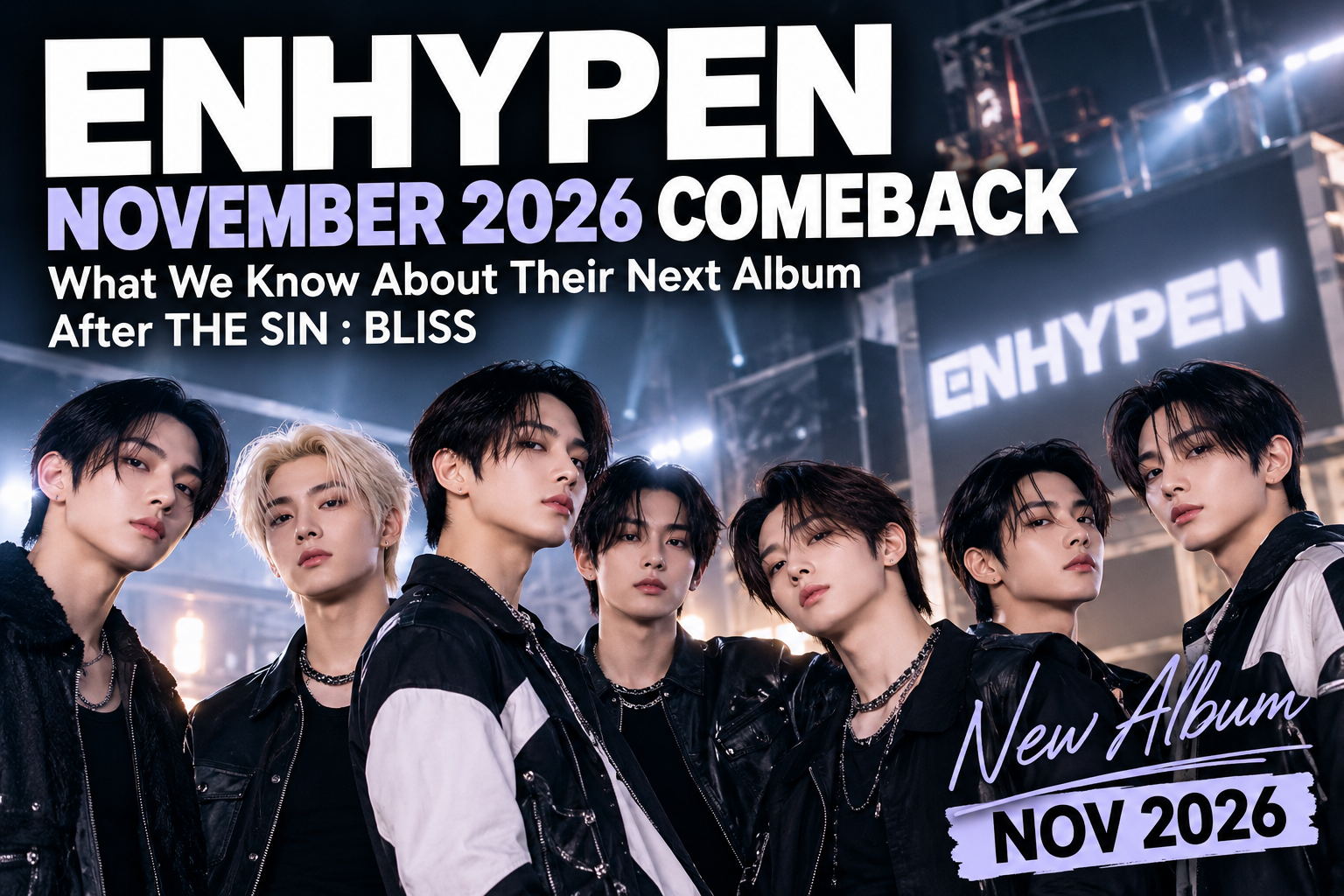

  • ENHYPEN November 2026 Comeback: What We Know About Their Next Album After THE SIN : BLISS

    ENHYPEN November 2026 Comeback: What We Know About Their Next Album After THE SIN : BLISS

    ENHYPEN are preparing for another comeback in November 2026, extending what has already become one of the most important years of their career.

    The group’s next release will follow THE SIN : BLISS, the album that brought ENHYPEN their first No. 1 on the Billboard 200 and strengthened their position among K-pop’s leading global groups.

    For ENGENEs, the announcement immediately raises several questions. When will the new album be released? Will it continue the story introduced in THE SIN : BLISS? And how might the comeback connect to ENHYPEN’s next stage as a group?

    Here is what has been confirmed so far—and what fans are still waiting to learn.

    ENHYPEN Are Preparing a November 2026 Comeback

    On September 30, 2026, reports confirmed that ENHYPEN are preparing to release a new album in November.

    BELIFT LAB confirmed the group’s plans for a November comeback, giving fans their first official indication of when ENHYPEN’s next era will begin.

    At the time of the announcement, however, several major details had not yet been revealed.

    These include:

    • the exact release date
    • the album title
    • the title track
    • the complete tracklist
    • album versions and preorder details
    • concept photos and teasers

    That distinction is important. A November comeback has been confirmed, but details that have not yet been officially announced should not be treated as fact.

    This article will be updated as additional information becomes available.

    The New Album Comes After THE SIN : BLISS

    The timing makes the upcoming comeback particularly interesting because ENHYPEN are following one of the biggest album eras of their career.

    Released in 2026, THE SIN : BLISS became ENHYPEN’s first album to reach No. 1 on the Billboard 200.

    That milestone represented more than another chart achievement. It showed how much the group’s international audience has expanded since their debut and placed even more attention on what ENHYPEN would do next.

    The album also continued the group’s long-running approach to storytelling.

    Rather than treating every release as an isolated project, ENHYPEN have frequently connected their music through recurring themes, imagery and narrative ideas. That has encouraged fans to examine trailers, lyrics, concept photos and music videos for connections between different eras.

    As a result, the November comeback is likely to attract interest well before the music itself is released.

    Will the Next Album Continue the THE SIN Story?

    This is one of the biggest unanswered questions.

    ENHYPEN’s 2026 music has developed a distinct narrative world, and THE SIN : BLISS expanded that storytelling through its concept, visuals and music.

    However, no official announcement has yet confirmed whether the November album will directly continue that storyline.

    ENHYPEN could extend the existing narrative, introduce a new chapter or move toward an entirely different concept.

    Until BELIFT LAB releases the first trailers or concept materials, any specific theory about the album’s storyline remains speculation.

    That uncertainty is also part of what makes ENHYPEN comeback periods so active among fans. New logos, trailers, photographs and even short pieces of text can quickly become clues for ENGENEs trying to understand the direction of the next era.

    Why the November Comeback Matters

    ENHYPEN are entering the comeback with considerably more momentum than they had at the beginning of their career.

    Since debuting in 2020, the group has developed from a rookie act formed through I-LAND into an internationally touring K-pop group with a large global fandom.

    Their 2026 Billboard 200 achievement added another major milestone to that progression.

    The next album therefore faces a different kind of expectation.

    The question is no longer simply whether ENHYPEN can grow internationally. Instead, attention will be on how the group follows its first U.S. No. 1 album and whether that momentum continues into another release cycle.

    That makes November an important moment in ENHYPEN’s 2026 story.

    What Could Be Announced Next?

    K-pop comeback campaigns usually unfold gradually rather than revealing everything at once.

    For ENHYPEN’s November release, fans can watch for several major announcements.

    Exact Release Date

    November has been confirmed as the comeback month, but the precise date is one of the most important details still to come.

    Once announced, it will establish the schedule for the entire promotional period.

    Album Title and Logo

    The album title may provide the first major clue about whether the new release connects directly with THE SIN : BLISS or begins another storyline.

    Concept Trailer and Photos

    ENHYPEN are known for concept-driven releases, making the first visual material especially important.

    Concept photos may reveal the mood and aesthetic of the era, while a trailer could provide more clues about its narrative direction.

    Tracklist

    The tracklist will reveal how many songs are included and which producers and songwriters participated in the project.

    It will also identify the title track and any potential collaborations.

    Album Versions and Preorders

    Physical album information is another major part of modern K-pop comeback campaigns.

    Different versions can include different photobooks, photocards and other inclusions, so collectors will want to check the official details carefully before ordering.

    What This Comeback Means for ENHYPEN’s 2026

    ENHYPEN have already had a significant year.

    THE SIN : BLISS gave the group its first Billboard 200 No. 1, while their international activities continued to expand their presence outside South Korea.

    A November release means that the group will now have another opportunity to build on that momentum before the end of 2026.

    It could also provide a clearer picture of where ENHYPEN’s music and storytelling are heading next.

    The group has consistently balanced performance-focused K-pop with darker narrative concepts and interconnected visual storytelling. Whether the next album continues that formula or deliberately changes direction will be one of the most interesting things to watch.

    What We Know So Far

    Here is the situation as of September 30, 2026.

    DetailStatus
    ENHYPEN comebackConfirmed
    Comeback monthNovember 2026
    New albumConfirmed
    Exact release dateNot yet announced
    Album titleNot yet announced
    Title trackNot yet announced
    TracklistNot yet announced
    Album versionsNot yet announced
    Concept detailsNot yet announced

    This information can change quickly once the official comeback rollout begins.

    FAQ

    Is ENHYPEN having a comeback in November 2026?

    Yes. ENHYPEN are preparing a new album for release in November 2026.

    What is ENHYPEN’s new 2026 album called?

    The title of the upcoming November album had not been officially announced as of September 30, 2026.

    When is ENHYPEN’s November 2026 album coming out?

    The comeback month has been confirmed as November, but the exact release date has not yet been announced.

    Is the new album connected to THE SIN : BLISS?

    That has not yet been officially confirmed. Fans will likely learn more once concept trailers, photos and other promotional materials are released.

    What was ENHYPEN’s previous album?

    The upcoming release follows THE SIN : BLISS, which became ENHYPEN’s first No. 1 album on the Billboard 200.

    Final Thoughts

    ENHYPEN’s November 2026 comeback arrives at an important point in the group’s career.

    After reaching No. 1 on the Billboard 200 with THE SIN : BLISS, the group now has the opportunity to turn that milestone into longer-term momentum.

    For now, the most important facts are simple: a new album is coming in November, while its exact release date, title, tracklist and concept remain to be announced.

    Those details will determine whether ENHYPEN continue the world of THE SIN : BLISS or begin an entirely new chapter.

    Either way, ENHYPEN’s next era is officially on the way.

  • BTS at SoFi Stadium in 2026: Why Their ARIRANG World Tour Marks a New Chapter for K-Pop

    BTS at SoFi Stadium in 2026: Why Their ARIRANG World Tour Marks a New Chapter for K-Pop

    BTS returned to Los Angeles in September 2026 for one of the biggest moments of their post-military-service era.

    The group performed four sold-out concerts at SoFi Stadium on September 1, 2, 5 and 6 as part of the BTS WORLD TOUR ‘ARIRANG.’ The Los Angeles shows attracted around 282,000 fans and brought the North American leg of the tour to a spectacular close.

    But the significance of these concerts goes beyond attendance numbers.

    For BTS, the SoFi Stadium shows represented a return to a venue closely connected to one of the most important chapters in their history. For K-pop, they offered another demonstration of how far the genre’s global concert business has developed — and how BTS continues to occupy a unique position within it.

    BTS Returns to SoFi Stadium

    SoFi Stadium already held a special place in BTS history before the ARIRANG tour arrived in Los Angeles.

    In 2021, BTS performed four concerts there during their “Permission to Dance On Stage” era. Those concerts came at a particularly meaningful moment because the group was finally able to perform in front of a large live audience again after the disruptions of the pandemic.

    Five years later, BTS returned under very different circumstances.

    The seven members — RM, Jin, Suga, J-Hope, Jimin, V and Jung Kook — were together again after completing their mandatory military service, and the group had entered a new stage of its career.

    That made the 2026 SoFi concerts more than another stop on a world tour.

    They became a symbol of BTS beginning its next chapter.

    Four Los Angeles Concerts Drew Around 282,000 Fans

    The scale of the Los Angeles run was enormous.

    BTS performed at SoFi Stadium four times across September 1, 2, 5 and 6. Around 282,000 people attended the four concerts combined.

    The shows were also livestreamed through Weverse to viewers in 177 countries and regions.

    That combination — massive stadium audiences and worldwide digital viewing — demonstrates how the modern K-pop concert has expanded beyond the physical venue.

    A BTS concert in Los Angeles is no longer simply an American concert.

    It is simultaneously a local stadium event and a global fan event.

    BTS Sold Out 31 Shows Across North America

    Los Angeles was the final destination of a much larger North American run.

    The ARIRANG World Tour played 31 concerts across 12 North American cities, with every show selling out in advance.

    Approximately 1.92 million people attended those concerts.

    Those numbers matter because BTS was returning to group touring after a long period in which the members focused on solo projects and completed their military service.

    There was therefore an important question surrounding their return: would the extraordinary demand that defined BTS before the hiatus still exist when the seven members reunited?

    The North American tour provided a clear answer in terms of concert demand.

    Millions of fans were still willing to travel, buy tickets and fill some of the largest venues on the continent.

    Eight BTS Shows at SoFi Stadium

    The 2026 concerts also extended BTS’s history with SoFi Stadium.

    After four shows in 2021 and another four in 2026, BTS had performed at the stadium eight times.

    Across those concerts, the group drew approximately 496,000 fans.

    That gives the venue an interesting place in BTS history.

    The 2021 concerts represented a return to live audiences.

    The 2026 concerts represented something different: the return of BTS as a complete seven-member touring group after military service.

    The same stadium therefore connects two very different turning points in the group’s career.

    Why the ARIRANG Era Is Different

    The name of the tour is also significant.

    “Arirang” is one of Korea’s best-known traditional folk songs and an important cultural symbol. Using the name for BTS’s new era creates a direct connection between the group’s Korean identity and its global audience.

    That relationship has always been important to BTS.

    Their success has never simply been a story about a Korean group adapting itself completely to Western pop. Instead, BTS has repeatedly moved between Korean and international influences while maintaining a recognizable identity of its own.

    The ARIRANG era brings that idea into particularly sharp focus.

    BTS can perform at one of America’s largest stadiums while using a name deeply associated with Korean cultural history.

    That combination tells us something important about how K-pop has changed.

    Global success no longer necessarily requires removing the “Korean” part of K-pop.

    BTS Returned to a Different K-Pop World

    BTS also returned to a music industry that had changed during the group’s hiatus.

    While the members pursued solo careers and completed military service, other K-pop artists continued expanding internationally.

    Groups such as Stray Kids and ENHYPEN strengthened their global touring presence, while K-pop became increasingly familiar at major festivals, stadiums and international entertainment events.

    That makes BTS’s return especially interesting.

    They are not returning to the same global K-pop landscape they left.

    They are returning to an industry that has grown around them.

    This changes the question surrounding BTS.

    The question is no longer simply whether BTS can introduce international audiences to K-pop. That process has already happened on an enormous scale.

    The more interesting question now is what role BTS will play in a global K-pop industry that is much larger and more competitive than it was during the group’s first rise.

    From Permission to Dance to ARIRANG

    Looking at the two SoFi Stadium eras side by side makes the transformation particularly clear.

    In 2021, “Permission to Dance On Stage” represented reconnection. BTS and ARMY could finally share a stadium again after the pandemic had separated artists from live audiences.

    In 2026, ARIRANG represents reunion and continuation.

    The members have completed military service. Their individual solo careers have expanded their artistic identities. And BTS has returned as a seven-member group with years of additional experience behind them.

    That makes the current era different from a simple comeback.

    BTS is not trying to recreate 2021.

    The group is beginning another phase of its history.

    What the SoFi Stadium Shows Mean for K-Pop

    The four Los Angeles concerts demonstrate three important things.

    First, BTS still has extraordinary stadium-level demand after its group hiatus.

    Second, K-pop’s global touring infrastructure has become much larger than it was when BTS first began breaking into the American market.

    And third, Korean cultural identity and global pop success increasingly exist together rather than in opposition to each other.

    That may ultimately be the most interesting part of the ARIRANG era.

    BTS helped open doors for K-pop internationally during the previous decade. In 2026, they are returning to walk through a global landscape that they themselves helped transform.

    Final Thoughts

    BTS’s four 2026 concerts at SoFi Stadium were impressive by almost any numerical measure: approximately 282,000 attendees in Los Angeles, 31 sold-out North American concerts and roughly 1.92 million fans across the North American leg of the ARIRANG World Tour.

    But the numbers tell only part of the story.

    SoFi Stadium has now witnessed BTS at two pivotal moments — their return to live audiences in 2021 and their return as seven members in 2026.

    That makes Los Angeles an important location in the group’s continuing history.

    The ARIRANG World Tour is not simply evidence that BTS can still fill stadiums. It shows what happens when one of the groups that helped globalize K-pop returns to an industry that has continued growing in its absence.

    And for BTS, that makes 2026 less of a return to the past than the beginning of a new chapter.

    Frequently Asked Questions

    How many BTS concerts were held at SoFi Stadium in 2026?

    BTS performed four concerts at SoFi Stadium in Los Angeles on September 1, 2, 5 and 6, 2026, as part of the BTS WORLD TOUR ‘ARIRANG.’

    How many people attended BTS’s 2026 SoFi Stadium concerts?

    Approximately 282,000 fans attended the four Los Angeles concerts combined.

    How successful was BTS’s North American ARIRANG tour?

    BTS played 31 sold-out concerts across 12 North American cities, drawing approximately 1.92 million attendees during the North American leg of the tour.

    How many times has BTS performed at SoFi Stadium?

    Including four “Permission to Dance On Stage” concerts in 2021 and four ARIRANG concerts in 2026, BTS has performed at SoFi Stadium eight times.

    Why is the ARIRANG World Tour important in BTS history?

    The tour marks BTS’s return to full-group touring after the members completed their military service and pursued individual projects. It also begins a new phase in the group’s history, connecting their Korean identity with the enormous global audience BTS has built over the years.

  • Stray Kids’ STRAYCITY Draws 270,000 Fans in Latin America: Why Their New Festival Is a Big Deal

    Stray Kids’ STRAYCITY Draws 270,000 Fans in Latin America: Why Their New Festival Is a Big Deal

    Stray Kids have spent the past few years proving that they can fill arenas, stadiums and major festival stages around the world.

    But STRAYCITY represents something different.

    In September 2026, Stray Kids launched a new festival built around the group itself, taking STRAYCITY to Bogotá, Buenos Aires and Mexico City. By the time the Latin American run ended in Mexico on September 26, the five shows had drawn a combined audience of about 270,000 people.

    That number is impressive on its own.

    What makes STRAYCITY more important, however, is what it could mean for the next stage of Stray Kids’ global career.

    Instead of simply appearing at someone else’s festival or adding another stop to a world tour, Stray Kids became the centerpiece of a festival carrying their own identity.

    What Is STRAYCITY?

    STRAYCITY is a new festival project jointly planned by JYP Entertainment and global concert promoter Live Nation, with Stray Kids serving as the main headliner.

    The first Latin American edition began in Bogotá, Colombia, on September 9 before moving to Buenos Aires, Argentina, for two shows on September 14 and 15. It then concluded with two nights at Estadio GNP Seguros in Mexico City on September 25 and 26.

    Unlike a traditional Stray Kids concert, STRAYCITY was designed as a broader festival experience.

    Stray Kids remained at the center, but the events also featured NEXZ and different local artists depending on the city. That gave each stop a more localized festival lineup rather than simply repeating the same touring package from country to country.

    That distinction matters.

    Stray Kids were not just touring Latin America.

    They were building an event around the Stray Kids name.

    270,000 Fans Across Five Shows

    The first STRAYCITY Latin American run consisted of five performances across three cities:

    • Bogotá — September 9
    • Buenos Aires — September 14 and 15
    • Mexico City — September 25 and 26

    Together, those five performances attracted approximately 270,000 fans.

    Mexico City provided an especially powerful ending.

    Billboard reported from the first Mexico City night at Estadio GNP Seguros, describing the massive production, choreography and atmosphere surrounding the festival. Local reporting put preliminary attendance for that first night alone at 58,611 tickets sold.

    The scale shows how far Stray Kids’ presence in Latin America has developed.

    Only a few years ago, the question was whether K-pop groups could consistently fill major venues across the region.

    For Stray Kids, the question is increasingly becoming what they can build on top of that demand.

    From the dominATE Tour to STRAYCITY

    STRAYCITY did not appear out of nowhere.

    It followed Stray Kids’ enormous 2025 dominATE world tour, during which the group performed eight stadium shows across five Latin American cities and drew roughly 400,000 people in the region.

    That tour demonstrated something important: the group’s Latin American audience was large enough to support stadium-scale performances across multiple markets.

    STRAYCITY took the next step.

    Instead of returning with only another conventional tour, Stray Kids and their partners created a new event format around the group.

    The change can be summarized simply:

    2025: Stray Kids proved they could fill Latin American stadiums.

    2026: Stray Kids began building their own festival around that audience.

    That is why STRAYCITY deserves to be remembered as more than another successful series of concerts.

    Rock in Rio Made September Even Bigger

    STRAYCITY was not Stray Kids’ only major Latin American achievement in September 2026.

    On September 11, between the Bogotá and Buenos Aires dates, Stray Kids headlined Rock in Rio in Brazil.

    They became the first K-pop act to headline the legendary festival, performing in front of approximately 100,000 people.

    Combined with the 270,000 fans reported for STRAYCITY, Stray Kids reached roughly 370,000 concertgoers in Latin America during September alone.

    The two achievements are closely related, but they represent different milestones.

    Rock in Rio showed that Stray Kids could stand at the top of the lineup at one of the world’s major established festivals.

    STRAYCITY showed something else: they could become the foundation for a new festival concept of their own.

    That difference is what makes the STRAYCITY story especially interesting.

    Why Latin America Matters for Stray Kids

    Latin America has become one of the clearest examples of Stray Kids’ growth outside their traditional Asian markets.

    Their 2025 stadium tour established the size of the fandom. Their 2026 Rock in Rio appearance demonstrated their position on the broader festival circuit. STRAYCITY then tested whether that popularity could support a new branded event.

    There is also a cultural reason the format makes sense.

    STRAYCITY combines the intensity of a Stray Kids concert with the scale and variety of a music festival — an environment well suited to a group known for powerful live performances, large crowds and highly participatory songs.

    Tracks including “MANIAC,” “God’s Menu,” “S-Class,” “MIROH,” “TOPLINE” and “Thunderous” have become natural large-crowd songs, while newer material gives the group a continually expanding festival setlist.

    The STRAYCITY performances used live-band arrangements, large video screens, fireworks and other outdoor-festival production elements.

    STRAYCITY Is More Than a Concert Name

    Perhaps the most important part of STRAYCITY is the name itself.

    Major artists regularly headline festivals.

    Far fewer reach the point where promoters can build a new large-scale festival concept around the artist’s identity.

    STRAYCITY turns “Stray” into something bigger than a tour title. It imagines a temporary city built around Stray Kids, their music and the community surrounding them.

    That creates possibilities beyond one Latin American run.

    If the format continues in other countries or regions, STRAYCITY could develop into a recurring part of the group’s global live strategy rather than remaining a one-time event.

    That possibility is not guaranteed, and future locations will depend on what JYP Entertainment and Live Nation announce next. But the first Latin American run has already demonstrated that the concept can operate at substantial scale.

    Where STRAYCITY Fits in Stray Kids’ History

    Looking back at Stray Kids’ international growth, several stages are becoming visible.

    First came increasingly large world tours.

    Then came headline appearances at major international festivals, including Lollapalooza Paris, BST Hyde Park, Lollapalooza Chicago and Governors Ball.

    In 2025, the dominATE tour pushed the group further into stadium territory.

    In 2026, Rock in Rio added another historic festival milestone.

    And now STRAYCITY introduces a different idea: a festival with Stray Kids not simply on the lineup, but at the center of the entire concept.

    That makes September 2026 an important chapter in the group’s touring history.

    FAQ

    What is Stray Kids’ STRAYCITY?

    STRAYCITY is a festival project jointly planned by JYP Entertainment and Live Nation with Stray Kids as the central headliner. The first Latin American run took place in Bogotá, Buenos Aires and Mexico City in September 2026.

    How many people attended STRAYCITY in Latin America?

    The five STRAYCITY performances across the three cities drew approximately 270,000 people in total.

    Where was STRAYCITY held in 2026?

    The Latin American run included Bogotá in Colombia, Buenos Aires in Argentina and Mexico City in Mexico. Bogotá hosted one show, while Buenos Aires and Mexico City each hosted two.

    Is STRAYCITY the same as a Stray Kids world tour?

    No. STRAYCITY was created as a festival-style event centered on Stray Kids and also featured NEXZ and local artists, with lineups varying by location.

    How many fans did Stray Kids reach in Latin America in September 2026?

    STRAYCITY drew approximately 270,000 people, while Stray Kids’ Rock in Rio headline performance drew about 100,000. That puts their September 2026 Latin American audience at roughly 370,000 people across those events.

    Final Thoughts

    The biggest number from STRAYCITY may be 270,000, but the real significance of the festival goes beyond attendance.

    Stray Kids have spent years building a global audience through world tours, stadium concerts and major festival appearances. STRAYCITY shows what can happen when that audience becomes large enough to support something created around the group itself.

    Across Bogotá, Buenos Aires and Mexico City, Stray Kids were no longer simply visitors on another tour or performers on someone else’s festival lineup. They became the center of a new festival concept carrying their own identity.

    Combined with their historic Rock in Rio headline performance, September 2026 became one of the most significant months in Stray Kids’ history in Latin America.

    The next question is no longer whether Stray Kids can fill major venues in the region.

    It is how far STRAYCITY can grow from here.


  • How Jimin’s “Like Crazy” Reached 1 Billion Spotify Streams: The Record-Breaking Story Behind His Solo Hit

    How Jimin’s “Like Crazy” Reached 1 Billion Spotify Streams: The Record-Breaking Story Behind His Solo Hit

    When Jimin released “Like Crazy” in March 2023, the song immediately became one of the biggest moments of his solo career.

    More than three years later, it was still making history.

    In September 2026, “Like Crazy” reached a major Spotify milestone, surpassing 1 billion filtered streams on the platform. The achievement was especially notable because the Korean-language version reached the milestone on its own, adding another chapter to a song that had already made Billboard history.

    But the story of “Like Crazy” is bigger than a single streaming number.

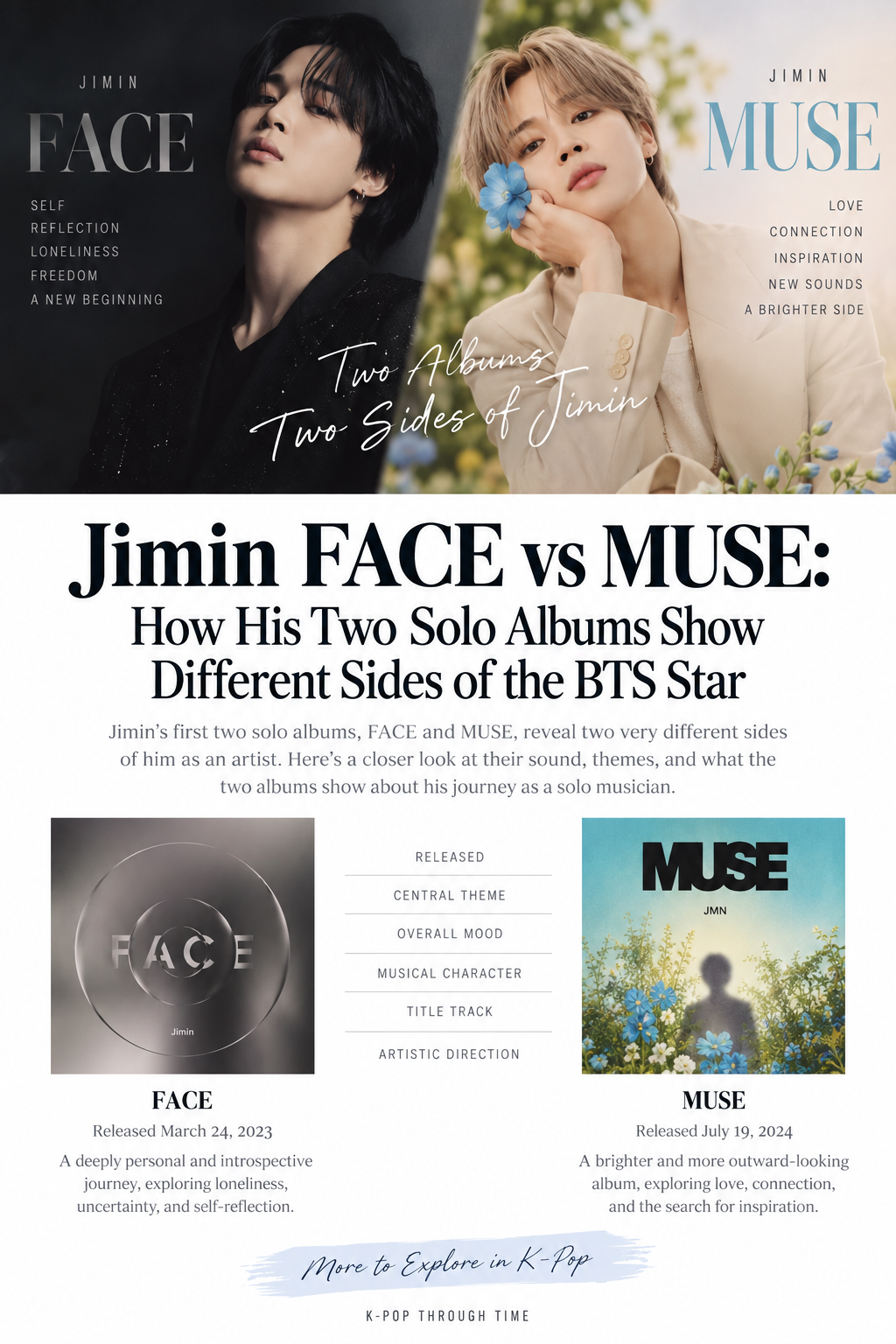
    From Jimin’s first solo album FACE to a No. 1 debut on the Billboard Hot 100 and years of continued listening around the world, “Like Crazy” became one of the defining K-pop solo songs of the 2020s.

    Here is how it happened.

    “Like Crazy” Began With Jimin’s First Solo Album, FACE

    Jimin released his first solo album, FACE, on March 24, 2023.

    The project marked an important transition.

    BTS members had already released individual music in different forms, but FACE gave Jimin the opportunity to build a complete solo project around his own experiences, emotions and musical identity.

    “Like Crazy” served as the album’s main single.

    The song leaned heavily into synth-pop, with an atmospheric sound that felt different from many listeners’ expectations of a traditional K-pop title track.

    Its mood was dreamy but uneasy.

    Rather than presenting a straightforward love story, “Like Crazy” explored escapism—the desire to remain inside a temporary emotional world instead of confronting what comes afterward.

    That tension became central to both the song and the FACE era.

    Why Are There Korean and English Versions of “Like Crazy”?

    One unusual part of the release was that Jimin recorded both Korean-language and English-language versions of “Like Crazy.”

    They share the same musical foundation, but the lyrics are not simply direct translations of each other.

    That distinction matters when discussing the song’s later streaming records.

    The Korean version developed its own enormous streaming total rather than relying entirely on combined listening across both versions.

    Years later, that would become one of the most important details behind the song’s 1 billion milestone.

    “Like Crazy” Made Billboard Hot 100 History

    The song’s impact became clear almost immediately.

    “Like Crazy” debuted at No. 1 on the Billboard Hot 100 in April 2023.

    That gave Jimin a historic achievement: he became the first South Korean solo artist to reach No. 1 on the Hot 100.

    For BTS fans, the moment was significant for another reason.

    Jimin had already reached the top of the chart as a member of BTS. “Like Crazy” showed that a BTS member could also reach No. 1 in the United States under his own name.

    The achievement helped establish the FACE era as more than simply a side project between BTS group activities.

    It became a major chapter in Jimin’s individual career.

    The Song Did Not Disappear After Its Debut

    Many songs experience their largest streaming numbers immediately after release.

    A major fandom can create an enormous opening week, especially for an anticipated K-pop release.

    The harder test is what happens afterward.

    Does the audience keep returning?

    That is where “Like Crazy” became particularly interesting.

    The song continued accumulating streams long after the initial FACE promotions ended.

    New releases arrived. Music trends changed. Jimin later began another solo era with MUSE.

    Yet “Like Crazy” continued to attract listeners.

    That long-term listening pattern is what eventually turned a successful 2023 single into a 2026 billion-stream song.

    Jimin’s MUSE Era Brought Even More Attention to His Solo Music

    Jimin released his second solo album, MUSE, in July 2024.

    Its biggest song, “Who,” became another major global streaming success.

    Rather than replacing interest in FACE, however, the newer era gave listeners another reason to explore Jimin’s earlier solo catalog.

    This is one reason an artist’s streaming story cannot always be understood album by album.

    A new hit can introduce listeners to an older one.

    Someone who first discovered Jimin through “Who” could move backward to FACE, while listeners who already loved “Like Crazy” had a new solo era to follow.

    By 2026, Jimin had developed a solo catalog in which multiple songs were generating substantial international listening at the same time.

    “Like Crazy” Reached 1 Billion Filtered Spotify Streams in 2026

    Then came the new milestone.

    In September 2026, reports announced that the Korean-language version of “Like Crazy” had surpassed 1 billion filtered streams on Spotify.

    The distinction between filtered and unfiltered streams is worth understanding.

    Spotify records listening activity, but chart-related or publicly reported filtered figures may exclude streams that do not meet certain platform criteria.

    Because of that, filtered milestones can differ from raw or unfiltered streaming totals reported elsewhere.

    The important point is that “Like Crazy” had accumulated an extraordinary amount of sustained listening over more than three years.

    Reports surrounding the milestone described it as the first fully Korean-language song to reach 1 billion filtered streams on Spotify.

    That made the achievement notable beyond Jimin’s own discography.

    Why the 1 Billion Milestone Matters

    A billion streams is impressive for any artist.

    But “Like Crazy” reached that level through a combination of several different factors.

    1. It had an enormous launch

    The FACE era began with intense global attention, and the song’s No. 1 Hot 100 debut gave it immediate visibility outside the existing K-pop audience.

    2. Listeners stayed with the song

    The billion-stream milestone did not arrive in 2023.

    It came years later.

    That means long-term listening was essential.

    3. Jimin continued building his solo catalog

    MUSE and “Who” kept Jimin highly visible as a solo artist after the FACE era.

    New music could lead newer listeners back to “Like Crazy.”

    4. The song crossed language boundaries

    The Korean version’s long-term international performance is particularly important.

    It demonstrated that a predominantly Korean-language solo track could continue attracting a massive global audience years after its original promotional cycle.

    “Like Crazy” and the Growth of BTS Solo Careers

    The milestone also fits into a much larger story.

    During BTS’s chapter of individual projects, each member began developing a distinct solo identity.

    Those identities did not simply reproduce BTS’s group sound.

    Jimin’s FACE explored darker and more introspective territory, while MUSE expanded into a different emotional and musical direction.

    “Like Crazy” became one of the clearest examples of how a BTS member could create a song strongly associated with his own individual artistic identity while still benefiting from the enormous global audience built during BTS’s career.

    That balance—between an established group legacy and an independent solo identity—is one of the most important stories in modern K-pop.

    How “Like Crazy” Compares With “Who”

    It is tempting to treat Jimin’s biggest songs as competitors, but they represent different stages of his solo development.

    “Like Crazy” belongs to FACE, an album centered on confrontation, isolation and emotional instability.

    “Who,” released during the MUSE era, came from a different project and reached audiences under different circumstances.

    The success of both songs is therefore more useful when viewed as evidence of continuity.

    “Like Crazy” proved Jimin could create a major solo hit.

    “Who” showed that the success was not limited to one album cycle.

    Together, they helped establish Jimin’s solo catalog as something listeners continued following beyond the initial excitement surrounding BTS members beginning their individual releases.

    From a 2023 No. 1 to a 2026 Streaming Milestone

    The timeline explains why “Like Crazy” has become historically important.

    March 24, 2023: Jimin releases FACE and “Like Crazy.”

    April 2023: “Like Crazy” debuts at No. 1 on the Billboard Hot 100, making Jimin the first South Korean solo artist to top the chart.

    2023–2024: The song continues accumulating global streams after its original promotional period.

    July 2024: Jimin releases MUSE, beginning another major solo era.

    2024–2026: Continued interest in Jimin’s solo catalog helps keep both older and newer songs in global listening rotation.

    September 2026: The Korean version of “Like Crazy” surpasses 1 billion filtered Spotify streams.

    Seen together, these moments show that the song’s story was not built around one explosive week.

    It unfolded over several years.

    What “Like Crazy” Says About K-Pop’s Global Audience

    For years, one recurring question around K-pop’s international growth was whether Korean-language music could build lasting mainstream audiences outside Korea.

    Songs such as “Like Crazy” make that question increasingly outdated.

    International listeners do not necessarily require English-language lyrics to continue listening to a song.

    Production, performance, emotion, fandom, discovery algorithms and an artist’s broader catalog can all contribute to long-term success.

    The billion-stream milestone does not mean language no longer matters in the music industry.

    It does show, however, how much larger the potential global audience for Korean-language music has become.

    Frequently Asked Questions

    When was Jimin’s “Like Crazy” released?

    “Like Crazy” was released on March 24, 2023 as the main single from Jimin’s first solo album, FACE.

    Did “Like Crazy” reach No. 1 on Billboard?

    Yes. “Like Crazy” debuted at No. 1 on the Billboard Hot 100 in April 2023. The achievement made Jimin the first South Korean solo artist to top the chart.

    Did “Like Crazy” reach 1 billion Spotify streams?

    Yes. In September 2026, the Korean-language version was reported to have surpassed 1 billion filtered Spotify streams.

    Why is the Spotify record significant?

    Reports surrounding the milestone identified “Like Crazy” as the first fully Korean-language song to surpass 1 billion filtered streams on Spotify.

    Is “Like Crazy” from FACE or MUSE?

    “Like Crazy” is from Jimin’s first solo album, FACE. His second solo album, MUSE, was released in 2024 and includes the hit “Who.”

    Are the Korean and English versions of “Like Crazy” identical?

    They share the same core music, but their lyrics are not simply identical translations. The two versions present somewhat different lyrical approaches.

    Final Thoughts

    “Like Crazy” was already historic when it debuted at No. 1 on the Billboard Hot 100 in 2023.

    Its 2026 Spotify milestone added something different to that story: longevity.

    Reaching a huge chart peak demonstrates how much attention a song can command at one moment. Reaching a billion-stream milestone years later demonstrates that people kept listening after that moment passed.

    That is why “Like Crazy” has become such an important part of Jimin’s solo history.

    It began as the centerpiece of FACE, became a Billboard record-breaker, survived beyond its original promotional era and eventually crossed another global milestone more than three years after release.

    For a song built around the desire to remain inside a fleeting moment, “Like Crazy” has shown remarkable staying power.

  • How Jin’s “Don’t Say You Love Me” Reached 1 Billion Spotify Streams: A New BTS Solo Milestone

    How Jin’s “Don’t Say You Love Me” Reached 1 Billion Spotify Streams: A New BTS Solo Milestone

    BTS’s Jin has reached a milestone that puts a new spotlight on his solo career.

    His song “Don’t Say You Love Me” surpassed 1 billion streams on Spotify on August 18, 2026, becoming Jin’s first solo song to reach the mark and earning him a place in Spotify’s Billions Club. The Straits Times

    The achievement did not happen overnight.

    Released in May 2025 as the title track of Jin’s second solo EP Echo, “Don’t Say You Love Me” spent more than a year building a global audience across streaming platforms, charts and international markets.

    So how did the song grow from a new solo release into Jin’s first billion-stream track?

    Here is the story behind the milestone—and why it matters in Jin’s solo career.

    “Don’t Say You Love Me” Started With Echo

    “Don’t Say You Love Me” was released on May 16, 2025 as the title track of Jin’s second solo EP, Echo.

    The song takes a restrained approach compared with the kind of explosive production often associated with major K-pop singles.

    Instead, it focuses on the complicated emotions of two people approaching the end of a relationship but struggling to let each other go.

    That emotional simplicity placed Jin’s voice at the center of the song.

    The release also arrived at an important stage of his solo career. Jin had already established his individual musical identity through songs such as “The Astronaut” and his first solo album Happy. Echo gave him another opportunity to expand that identity.

    And “Don’t Say You Love Me” quickly became the project’s biggest streaming success.

    The Song Reached Major Global Charts

    The song’s early chart performance showed that its audience extended well beyond the BTS fandom.

    “Don’t Say You Love Me” entered the Billboard Hot 100 at No. 90 on the chart dated May 31, 2025.

    That made it Jin’s third solo song to enter the Hot 100 after “The Astronaut” and “Running Wild.”

    At the same time, Echo debuted at No. 3 on the Billboard 200, improving on the No. 4 peak achieved by his previous solo album Happy.

    The song also reached No. 1 on Spotify’s Global Daily Songs chart during its original release period. The Straits Times

    Those numbers mattered because the eventual billion-stream milestone was not simply the result of one enormous debut week.

    The song continued attracting listeners long after its initial promotional period.

    From Release Hit to Long-Term Streaming Success

    This is where the story becomes more interesting.

    Many K-pop songs generate their largest streaming numbers immediately after release as fans concentrate their attention on a comeback.

    “Don’t Say You Love Me” demonstrated something different: longevity.

    Its streams continued accumulating through the rest of 2025 and into 2026.

    The track also remained visible internationally. In Japan, it ranked No. 63 on Billboard Japan’s 2026 midyear Hot 100, while Jin received the Best of Listeners’ Choice: Overseas Song award for the song at MUSIC AWARDS JAPAN.

    By August 2026, that sustained listening had pushed the song toward one of Spotify’s most recognizable milestones.

    Jin Reaches 1 Billion Spotify Streams

    On August 18, 2026, “Don’t Say You Love Me” surpassed 1 billion cumulative streams on Spotify.

    It took roughly one year and three months from the song’s May 2025 release to reach the milestone.

    Spotify later included the track among its August additions to the Billions Club, the group of songs that have crossed one billion streams on the platform. The Straits Times

    Most importantly for Jin, this was his first solo song to reach one billion Spotify streams.

    By September 24, 2026, third-party Spotify tracking data listed the song at more than 1.018 billion streams, showing that listening continued after the milestone itself. Kworb

    How Does It Compare With Jin’s Other Solo Songs?

    The scale becomes clearer when “Don’t Say You Love Me” is compared with Jin’s other major solo tracks.

    As of September 24, 2026, third-party Spotify tracking data listed:

    • “Don’t Say You Love Me” — more than 1.018 billion streams
    • “The Astronaut” — more than 626 million
    • “Running Wild” — more than 451 million
    • “I’ll Be There” — more than 228 million
    • “Yours” — more than 224 million

    The exact totals continue to change every day, but the gap illustrates how far “Don’t Say You Love Me” has grown beyond Jin’s previous solo streaming records. Kworb

    Jin Becomes the Fourth BTS Member in Spotify’s Billions Club

    The milestone also adds another chapter to BTS’s history as solo artists.

    Jin became the fourth BTS member to enter Spotify’s Billions Club as a solo artist, following Jungkook, Jimin and V. The Straits Times

    That context is important.

    BTS’s solo era has not produced seven identical careers. Each member has explored different sounds, release strategies and audiences.

    Jin’s billion-stream milestone therefore does not simply repeat a BTS group achievement. It reflects the development of his own audience as a solo artist.

    Why “Don’t Say You Love Me” Became Such an Important Jin Song

    Before this release, “The Astronaut” was one of the songs most closely associated with Jin’s solo identity.

    “Don’t Say You Love Me” changed the scale of that conversation.

    It became his most-streamed solo track on Spotify, gave him his first Billions Club entry and helped Echo reach a new Billboard 200 peak for his solo albums.

    The milestone also shows why first-week numbers do not tell the entire story of a K-pop release.

    A song can continue finding new listeners months after promotions have ended.

    For “Don’t Say You Love Me,” that long-term listening eventually became more important than its opening-week headline.

    FAQ

    When did Jin’s “Don’t Say You Love Me” reach 1 billion Spotify streams?

    The song surpassed one billion cumulative Spotify streams on August 18, 2026.

    What album is “Don’t Say You Love Me” from?

    It is the title track of Jin’s second solo EP, Echo, released on May 16, 2025.

    Is this Jin’s first song with 1 billion Spotify streams?

    Yes. “Don’t Say You Love Me” became Jin’s first solo track to reach the milestone. The Straits Times

    How long did it take to reach 1 billion streams?

    Approximately one year and three months after its release.

    Did “Don’t Say You Love Me” chart on the Billboard Hot 100?

    Yes. It debuted at No. 90 on the Billboard Hot 100 dated May 31, 2025

    Final Thoughts

    “Don’t Say You Love Me” reaching one billion Spotify streams is more than another large number attached to BTS.

    It documents a specific stage in Jin’s development as a solo artist.

    The song began as the emotional centerpiece of Echo, reached major global charts, continued attracting listeners well beyond its release period and eventually became Jin’s first Spotify Billions Club song.

    For a career that has moved from BTS member to increasingly established solo artist, the billion-stream milestone gives “Don’t Say You Love Me” a clear place in Jin’s history.

    And for K-pop history more broadly, it is another example of how BTS members have continued building significant global audiences through distinctly different solo careers.

  • Stray Kids “This & That” Hits 100 Million Views: Their Fastest MV Ever to Reach the Milestone

    Stray Kids “This & That” Hits 100 Million Views: Their Fastest MV Ever to Reach the Milestone

    Stray Kids have added another major YouTube milestone to their career — and this time, they did it faster than ever before.

    On September 23, 2026, the music video for “This & That” surpassed 100 million views on YouTube, setting a new personal record for the group.

    The achievement is especially notable because of how quickly it happened. Released on August 7, the music video needed only 47 days to cross the 100 million mark.

    That makes “This & That” the fastest Stray Kids music video ever to reach 100 million views.

    Here is a closer look at the milestone, what record the song broke, and where “This & That” now stands among Stray Kids’ many YouTube hits.

    “This & That” Reaches 100 Million Views in 47 Days

    The “This & That” music video was released on August 7, 2026 at 1 p.m. KST.

    On September 23 at approximately 3:25 p.m. KST, the video passed 100 million YouTube views.

    That means the milestone took just 47 days — or one month and 16 days.

    For a group that already has a long list of music videos above the 100 million mark, setting a new speed record is a significant addition to Stray Kids’ YouTube history.

    It Is Stray Kids’ Fastest MV to 100 Million Views

    The 47-day achievement gives “This & That” a new distinction:

    It is now the fastest Stray Kids music video to surpass 100 million views.

    The previous group record belonged to “Thunderous,” which had held the distinction for reaching the milestone at an especially fast pace.

    “This & That” has now overtaken that benchmark.

    The record adds another measurable milestone to the song’s 2026 run and gives fans a new way to compare it with some of the group’s biggest releases from previous eras.

    “This & That” Joins Stray Kids’ 100 Million View Club

    Reaching 100 million views is not new territory for Stray Kids.

    “This & That” became the group’s 21st full-group music video to reach the milestone.

    The list includes major songs from across their career, including:

    • “God’s Menu”
    • “MIROH”
    • “Back Door”
    • “My Pace”
    • “Thunderous”
    • “MANIAC”
    • “Hellevator”
    • “Christmas EveL”
    • “CASE 143”
    • “S-Class”
    • “LALALALA”
    • “CIRCUS”
    • “VENOM”
    • “Chk Chk Boom”
    • “MEGAVERSE”
    • “CHEESE”
    • “CEREMONY”
    • “DO IT”
    • “Walkin On Water”
    • “Easy”

    And now, “This & That” joins them.

    Rather than being an isolated viral moment, the new milestone sits within a catalog that has repeatedly attracted large audiences on YouTube.

    Why the 47-Day Record Matters

    A 100 million view milestone tells us how many times a video has been watched.

    The 47-day figure tells us something different: speed.

    Older Stray Kids music videos have had years to accumulate views. “This & That,” by contrast, crossed the threshold less than seven weeks after release.

    That is why this particular achievement stands out even within a group that already has many high-view-count videos.

    It does not necessarily mean “This & That” will ultimately become the group’s most-viewed music video. Long-term view totals depend on many factors and continue changing over time.

    What can be said now is much more specific: no previous Stray Kids MV reached its first 100 million views this quickly.

    Another Milestone for the “This & That” Era

    “This & That” has remained visible beyond its initial release period.

    In September, the group’s latest mini album THIS & THAT was still appearing prominently on Billboard’s World Albums chart, showing that the era continued to draw attention several weeks after release.

    The new YouTube record adds another milestone to that period.

    For fans following Stray Kids in 2026, it also provides a clear marker of how quickly the group’s newest visual releases can mobilize a global audience.

    Already Read Our “This & That” Guide?

    If you want to learn more about the song itself rather than the new YouTube record, read our earlier Stray Kids “This & That” guide.

    That article looks at the release in more detail, while this update focuses specifically on the new 100 million-view milestone and the record it set.

    Connecting the two articles makes it easier to follow both the original release and what happened afterward.

    Stray Kids’ YouTube History Keeps Growing

    YouTube milestones have become one way of tracing Stray Kids’ growth across different eras.

    Songs such as “God’s Menu,” “Back Door,” “Thunderous,” “MANIAC,” “S-Class,” and “Chk Chk Boom” each represent different points in that history.

    “This & That” now has its own place in that timeline.

    Its distinction is not simply that it reached 100 million views, but that it reached the milestone faster than any Stray Kids music video before it.

    With 21 full-group music videos now past 100 million views, Stray Kids’ YouTube catalog continues to expand — and “This & That” has set a new speed benchmark for whatever comes next.

    This article was updated on September 23, 2026, following “This & That” reaching 100 million views on YouTube.

    Frequently Asked Questions About Stray Kids “This & That”

    When did Stray Kids’ “This & That” reach 100 million views?

    The “This & That” music video surpassed 100 million views on YouTube on September 23, 2026, at approximately 3:25 p.m. KST.

    How long did “This & That” take to reach 100 million views?

    It took approximately 47 days, or one month and 16 days, after the music video was released on August 7, 2026.

    Is “This & That” Stray Kids’ fastest music video to reach 100 million views?

    Yes. “This & That” became the fastest Stray Kids music video to reach 100 million YouTube views, breaking the group’s previous speed record.

    How many Stray Kids music videos have reached 100 million views?

    With “This & That,” Stray Kids now have 21 full-group music videos that have surpassed 100 million views on YouTube.

    Which Stray Kids song previously held the record?

    Before “This & That,” “Thunderous” held Stray Kids’ record for the fastest music video to reach 100 million views.

    Is “This & That” Stray Kids’ most-viewed music video?

    Not necessarily. This record is about how quickly the video reached its first 100 million views, not its total lifetime views.

    Several older Stray Kids music videos have accumulated much higher overall view counts because they have been available for years.

    Conclusion

    Stray Kids reaching 100 million views is no longer unusual, but the speed of the “This & That” milestone makes this achievement different.

    The music video needed only 47 days to reach 100 million views, making it the fastest Stray Kids MV ever to cross the mark.

    It also became the group’s 21st full-group music video to reach 100 million views, adding another entry to a YouTube catalog that stretches across multiple eras of their career.

    For fans looking back at Stray Kids’ growth over time, “This & That” now has a clear place in that history: the song that set a new 100-million-view speed record for the group.

    As Stray Kids continue their activities in 2026, the next question is how long this record will stand — and which future release might eventually challenge it.

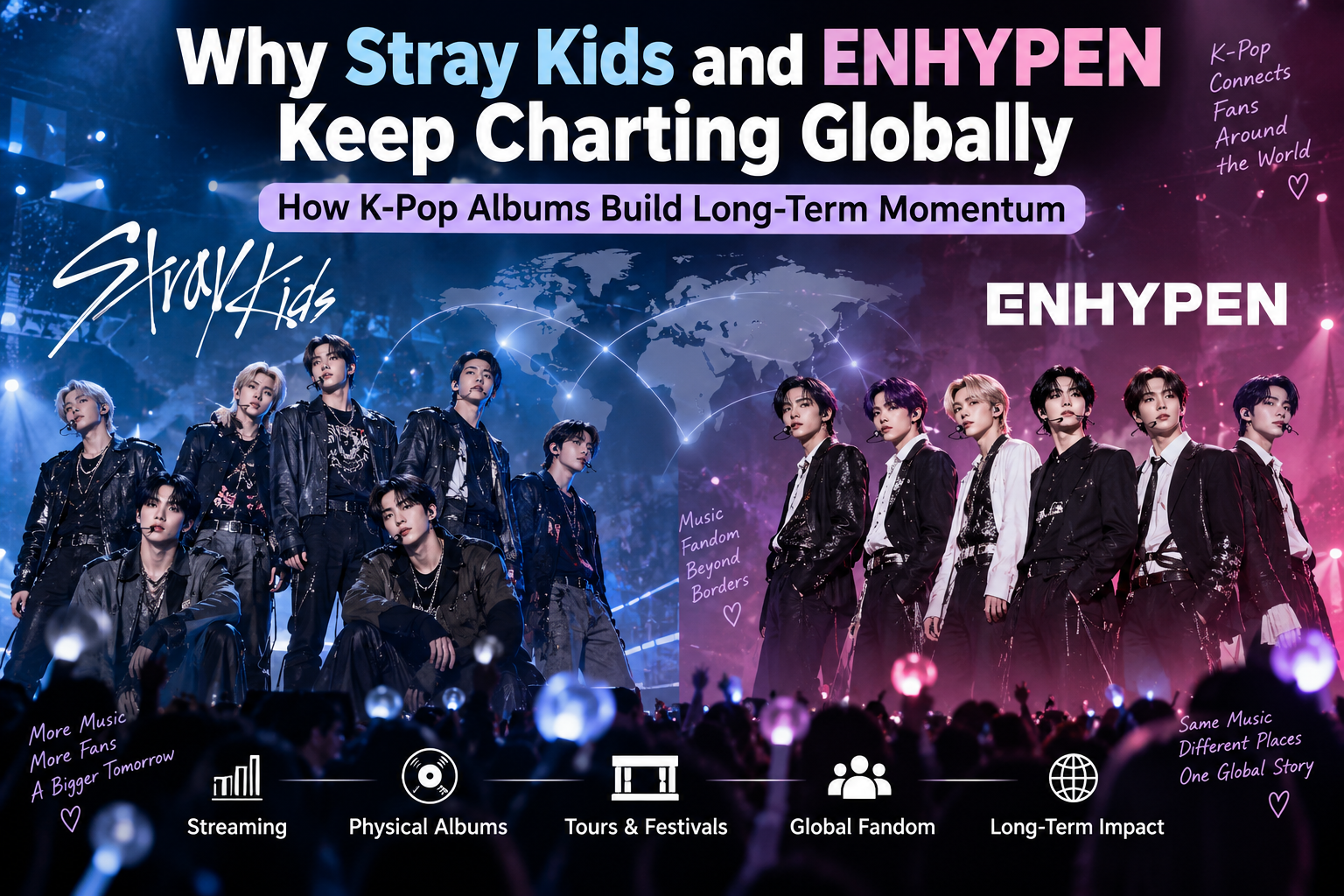
  • Why Stray Kids and ENHYPEN Keep Charting Globally: How K-Pop Albums Build Long-Term Momentum

    Why Stray Kids and ENHYPEN Keep Charting Globally: How K-Pop Albums Build Long-Term Momentum

    K-Pop Albums Are No Longer Just About Release Week

    For years, one of the easiest ways to measure a K-pop comeback was to look at what happened during its first week.

    How many albums were sold? How high did the album debut? How many views did the music video receive?

    Those numbers still matter. But the global growth of K-pop has created another important question:

    What happens after the first week?

    Stray Kids and ENHYPEN offer two useful examples of how modern K-pop albums can continue generating attention well after their initial release.

    Recent global chart activity has shown both groups maintaining visibility beyond the first burst of comeback promotions. Stray Kids have also seen older releases return to international album charts, while ENHYPEN have continued to maintain a presence across major global rankings.

    This is not simply a story about two successful groups.

    It reflects a larger change in the way K-pop works internationally.

    Albums today can gain new momentum through touring, festival appearances, fan discovery, physical album collecting, social media, streaming, and the continued growth of international fandoms.

    To understand why Stray Kids and ENHYPEN keep charting globally, it helps to look beyond release-day numbers and examine the system that keeps a K-pop album alive.

    From a Comeback Event to a Longer Album Cycle

    Traditionally, a K-pop comeback is built around an intense promotional period.

    A group announces a new release, teaser photos and videos appear, pre-orders begin, the album arrives, music-show promotions follow, and fans concentrate much of their activity around the launch.

    That structure still exists.

    What has changed is what can happen afterward.

    A successful album can now move through several additional stages:

    • Fans discover songs through concerts and festival performances.
    • New listeners explore an artist’s older catalog.
    • Physical albums continue selling to collectors.
    • Songs receive new attention through short-form video and social media.
    • International promotions introduce the group to new audiences.
    • Touring keeps the album visible months after its original release.

    This means a comeback is no longer necessarily a short promotional event.

    For globally established K-pop acts, it can become a long-running album cycle in which new music, older albums, touring, and fandom activity continuously reinforce one another.

    Stray Kids: When Touring Keeps the Catalog Moving

    Stray Kids are a strong example of how global touring can extend the life of K-pop music far beyond a comeback period.

    Their international growth has been built not only around new album releases but also around large-scale touring, festival appearances, and an expanding audience across multiple regions.

    When a group performs in front of new audiences, listeners do not necessarily start with only the newest single.

    They may search for the songs they heard live, explore previous title tracks, stream older albums, or buy physical releases they missed when they were first released.

    That creates something especially valuable for an established artist: catalog momentum.

    Instead of each new comeback replacing the previous one, new activity can send attention backward through the group’s discography.

    For Stray Kids, that effect is particularly relevant because their musical identity is recognizable across releases. Listeners who discover one high-energy performance can quickly find a much larger catalog built around the group’s distinctive production and performance style.

    Festivals Can Create a Different Kind of Discovery

    Festival appearances add another layer.

    A K-pop concert is largely filled with people who already chose to see that artist. A major music festival can put a group in front of a broader audience, including listeners who may not normally attend a K-pop-specific show.

    That difference matters.

    Someone who encounters Stray Kids through a large international festival may begin with a performance clip rather than an album release. From there, discovery can move backward:

    festival performance → song search → streaming → older music → fandom

    This is one reason international live exposure can have effects that continue after the event itself.

    It turns touring and festivals into more than ticket businesses. They can also function as long-term discovery channels for an artist’s music.

    Physical Albums Still Matter in K-Pop

    Another reason K-pop albums can maintain momentum is that the physical album remains unusually important.

    For many music listeners, an album is primarily something to stream. In K-pop, physical releases are also collectible products.

    Different versions, photobooks, photocards, packaging, and other inclusions give fans reasons to purchase physical albums even when the music itself is available digitally.

    This creates a different sales pattern from a market in which most consumption happens only through streaming.

    New fans who join a fandom months or even years later can begin collecting older releases, which means an album’s commercial life does not necessarily end when its original promotional cycle is over.

    That helps explain why an older K-pop release can sometimes reappear in conversations or charts when an artist experiences another wave of global attention.

    ENHYPEN: Building Momentum Through a Global Fandom

    ENHYPEN show another side of long-term K-pop momentum.

    The group developed with an international audience in mind from an early stage, and their music, performances, visual storytelling, and online content have helped fans enter the fandom through many different routes.

    Some listeners discover ENHYPEN through a new album. Others may first encounter a performance, a short video, a member-focused clip, a concert, or an older song recommended online.

    Once that happens, discovery rarely stops with a single track.

    A new listener can move from the latest release to previous title tracks, B-sides, music videos, performances, and eventually older albums.

    That creates a discovery loop:

    new release → new listener → older songs → deeper fandom engagement → renewed interest in the catalog

    As the international fandom grows, every new promotional cycle has the potential to introduce more people to music that was released before they became fans.

    Why an Older Album Can Become Relevant Again

    In the traditional release model, older albums gradually disappear as newer releases take their place.

    K-pop can behave differently because fandom growth continuously introduces new buyers and listeners.

    Imagine someone becoming an ENHYPEN fan after seeing the group perform in 2026.

    That person may begin with the newest album, but the next step could be listening to earlier releases, watching older music videos, learning the group’s history, or collecting previous physical albums.

    Multiply that behavior across thousands of new fans in different countries and an older catalog can receive a meaningful second life.

    This is particularly important for groups whose global audiences are still expanding.

    Their newest release does not only generate demand for new music. It can increase the value and visibility of everything that came before it.

    Streaming and Physical Sales Reinforce Each Other

    K-pop’s global momentum also comes from the interaction between digital listening and physical collecting.

    Streaming makes discovery easy. A listener can hear a song immediately and move through an artist’s catalog within minutes.

    Physical albums create a different relationship. They turn the release into something fans can own, collect, display, trade, and revisit.

    The two behaviors can reinforce each other:

    stream a song → become interested in the group → explore the album → join the fandom → buy a physical release → discover more music

    Not every fan follows this exact path, of course. But the combination helps explain why physical albums remain important even in a streaming-dominated music industry.

    For groups such as Stray Kids and ENHYPEN, global digital discovery and physical album demand do not have to compete with each other. They can become parts of the same fandom ecosystem.

    Why Long-Term Chart Momentum Matters for K-Pop

    The importance of long-term chart activity goes beyond the ranking itself.

    A high debut can show that a fandom was ready for a comeback. Continued activity can reveal something different: whether music continues circulating after the initial promotional push.

    That circulation can come from several places at once.

    1. Global Fandoms Do Not Discover Artists at the Same Time

    K-pop is now consumed across many countries, platforms, and time zones.

    A fan in one market may discover an artist during an album release, while someone elsewhere may first encounter the same group months later through a concert, festival, recommendation, or viral clip.

    There is no longer one universal moment when everyone discovers an album.

    That makes the potential lifespan of a release much longer.

    2. Every Comeback Can Promote the Back Catalog

    A new album does more than compete for attention with older releases.

    It can advertise them.

    When a comeback attracts new fans, those listeners often want to understand what came before. That sends attention toward earlier title tracks, albums, performances, and music videos.

    For artists with several successful eras behind them, the catalog becomes an increasingly valuable asset.

    3. Touring Connects Music Markets

    Global tours also connect regions that once experienced K-pop mainly through online content.

    A concert can create local media attention, social posts, fan videos, searches, streams, and album purchases around the same period.

    As K-pop tours expand geographically, this cycle can repeat across multiple markets rather than happening only once around the original Korean comeback.

    4. Fandom Is Part of the Distribution System

    K-pop fandoms do more than consume music.

    Fans translate content, recommend songs, share performances, organize communities, introduce friends to groups, discuss older releases, and keep an artist visible between comebacks.

    This does not mean every chart movement can be explained by fandom activity alone. Touring, promotion, distribution, playlist exposure, media coverage, and the music itself also matter.

    But fandom gives K-pop something unusually powerful: a global network that can continue circulating an artist’s catalog long after release day.

    Stray Kids and ENHYPEN Represent a Broader Shift

    Stray Kids and ENHYPEN have different histories, sounds, and fandom journeys.

    What connects them is the way their international audiences can sustain attention across more than one release cycle.

    Their recent chart visibility illustrates a broader transition in K-pop:

    success is increasingly about building a catalog and a global audience that can keep interacting over time—not simply producing one large comeback week.

    That changes how we should think about K-pop’s international growth.

    The most important question may no longer be only:

    “How high did the new album debut?”

    It may also be:

    “How much new attention did this era create for everything the group has already built?”

    FAQ

    Why do K-pop albums sometimes return to global charts?

    There is no single reason. New tours, festival appearances, growing fandoms, renewed streaming, physical album purchases, social media exposure, and new releases can all bring attention back to an artist’s older music.

    When a group gains new fans, those listeners often explore earlier albums rather than listening only to the newest release.

    Why are physical albums still important in K-pop?

    K-pop physical albums are often designed as collectible products as well as music releases.

    Photobooks, photocards, multiple versions, and other inclusions can give fans additional reasons to buy an album even when they already stream the music digitally.

    This allows physical sales and streaming to play different roles within the same fandom.

    How does touring help K-pop albums?

    Tours keep artists visible between comeback periods and introduce their music to audiences in different markets.

    Concert performances can lead people to search for songs, stream albums, watch older performances, and explore an artist’s catalog. Major festivals can also expose K-pop acts to listeners outside their existing fan communities.

    Why can older Stray Kids or ENHYPEN music gain attention again?

    Both groups continue reaching new international listeners.

    Someone becoming a fan today has years of existing music to discover. As the audience grows, older songs and albums can receive new streams, purchases, searches, and discussion even though their original promotional periods have ended.

    Does staying on a chart automatically mean an album is more successful?

    Not necessarily.

    Charts use different methodologies and measure different forms of activity. A chart position should therefore be understood within the rules and market represented by that particular chart.

    Longer chart activity is useful as one signal of continued consumption, but it is not a complete measurement of an artist’s overall popularity or success.

    Final Thoughts

    Stray Kids and ENHYPEN help illustrate how the meaning of a K-pop album has changed in the global era.

    An album can begin with a comeback, but its story does not necessarily end when music-show promotions finish.

    Touring can introduce the songs to new audiences. Festivals can create unexpected discovery. Streaming can send listeners backward through a group’s discography. Physical collecting can keep older releases commercially relevant. And every new wave of fans can give an existing catalog another opportunity to be discovered.

    That is why long-term momentum matters.

    The global K-pop market is increasingly built not only around big release weeks, but around relationships between new music, older catalogs, touring, collecting, and continuously expanding fandoms.

    For groups such as Stray Kids and ENHYPEN, the result is a music catalog that can keep moving long after release day.

  • Jimin FACE vs MUSE: Album Themes, Key Songs and What the Producers Explained

    Jimin FACE vs MUSE: Album Themes, Key Songs and What the Producers Explained

    Jimin’s first two solo albums, FACE and MUSE, approach different questions. FACE centers on confronting the self, while MUSE explores the search for inspiration and connection.

    That contrast comes from BIGHIT MUSIC’s album descriptions and the producers’ own explanations. However, the albums should not be treated as a simple story in which Jimin finished one emotional chapter and only then began creating the next.

    In a Weverse Magazine interview, producers Pdogg and GHSTLOOP explained that FACE and MUSE were developed largely at the same time, with their contrasting moods leading to separate albums.

    This guide compares the albums’ documented concepts, selected songs and production background. Listening observations are identified separately from statements made by the label or producers.

    FACE vs MUSE at a glance

    DetailFACEMUSE
    Release dateMarch 24, 2023July 19, 2024
    Solo album orderFirst solo albumSecond solo album
    Title track“Like Crazy”“Who”
    Official conceptConfronting the inner selfFinding inspiration from the surrounding world
    Selected songs discussed here“Like Crazy,” “Alone,” “Set Me Free Pt.2”“Who,” “Slow Dance,” “Smeraldo Garden Marching Band”
    Production contextDeveloped alongside material that became MUSESeparated from FACE because the material had a different mood

    The release dates establish the order in which listeners received the albums. They do not establish a completely separate writing process for each project.

    What the official album descriptions tell us

    BIGHIT MUSIC introduces FACE as an album about Jimin facing himself and preparing for a new beginning as a solo artist.

    Its description of MUSE explicitly contrasts the projects: while FACE dealt with confronting the inner self, MUSE presents a journey of finding inspiration from Jimin’s surroundings.

    These descriptions provide a reliable starting point. They support a comparison between self-reflection and inspiration, but they should not be stretched into claims about every lyric being a literal account of Jimin’s private life.

    An album’s concept and a song’s narrator are useful ways to discuss the music. Neither gives listeners complete access to the artist’s personal experiences.

    The production detail that changes the comparison

    In their MUSE interview, Pdogg and GHSTLOOP describe FACE as connected to emotions from the pandemic period, when Jimin spent a long time away from performing onstage.

    They explain MUSE through a different emphasis: searching for someone else, with love becoming a source of inspiration.

    The producers also discuss working on the two projects largely together. The darker character of FACE and the different atmosphere of the MUSE material helped determine how the songs were separated.

    This makes the comparison more interesting than “a dark album followed by a happy album.”

    The two releases can instead be heard as different directions explored within a connected creative period. Their contrasting concepts do not require us to assume that Jimin’s feelings changed in a neat, linear sequence.

    “Like Crazy” and “Who”: two different starting points

    The title tracks are useful entry points, but they do not represent every sound on either album.

    “Like Crazy”

    On FACE, “Like Crazy” places Jimin’s voice inside a synth-pop arrangement. As a listening observation, its dance-oriented sound can feel inviting even when the song’s atmosphere suggests uncertainty and escape.

    That combination is more specific than calling the entire album “sad.” The track allows movement, brightness and unease to exist together.

    Listen first to the title track, then compare its atmosphere with “Alone” and the more forceful presentation of “Set Me Free Pt.2.”

    “Who”

    On MUSE, “Who” places the search for an imagined connection at the center of the song.

    As a listening observation, its prominent hook and rhythmic delivery make it a direct introduction to the album. However, it should not be used to claim that every MUSE track has the same energy.

    Follow it with “Slow Dance” and “Smeraldo Garden Marching Band” to hear different approaches to the album’s broader theme.

    The useful comparison is how each song presents its question—not which one proves Jimin became a better singer or a happier person.

    Compare songs, not just album labels

    A practical way to hear the contrast is to choose a small set of tracks and ask the same questions.

    Listening comparisonWhat to notice
    “Like Crazy” and “Who”How the arrangement supports the central vocal hook and the song’s perspective
    “Alone” and “Slow Dance”Differences in pace, atmosphere and the way the vocal sits within the production
    “Set Me Free Pt.2” and “Smeraldo Garden Marching Band”How contrasting arrangements create different kinds of momentum

    These pairings are suggestions for listening, not claims that the songs are official counterparts.

    For each pair, listen for the opening texture, the transition into the chorus and the relationship between the voice and the instrumental. This produces a more useful comparison than repeatedly describing one album as dark and the other as bright.

    What can we say about Jimin’s vocals?

    The recordings offer different vocal textures and production choices. That does not automatically establish a measurable improvement between albums.

    A vocal comparison should distinguish:

    • Performance: phrasing, articulation, intensity and delivery.
    • Arrangement: where the melody sits and how the song is structured.
    • Production: layering, effects and mixing that shape the finished recording.

    Listeners can describe what they hear, but technical claims about range, technique or improvement require more evidence than a contrast between two mixed studio recordings.

    For this guide, the emphasis is on how the voice serves each song, rather than ranking the albums by vocal ability.

    Which album should a new listener play first?

    Start with FACE if you want to follow the release order and explore the official concept of confronting the self.

    Start with MUSE if the idea of inspiration and connection interests you more.

    For a shorter introduction, play “Like Crazy” and “Who,” then choose one additional track from each album. After that, listen to both albums in their released sequence to experience the transitions and pacing.

    For the wider release timeline, see our Jimin solo career guide. That article covers his earlier individual songs and solo album milestones; this comparison focuses on the relationship between FACE and MUSE.

    Frequently asked questions

    Which album came first?

    FACE was released on March 24, 2023. MUSE followed on July 19, 2024.

    Were FACE and MUSE made completely separately?

    The producers describe substantial overlap in their development. Their different moods helped shape the decision to release the material as two albums.

    Is FACE dark and MUSE bright?

    That is a convenient shorthand, but it is incomplete. Individual tracks have different energies, and the official concepts are better described as confronting the self and searching for inspiration.

    Does MUSE reveal who Jimin is dating?

    The album’s exploration of love does not establish facts about his private relationships. Discussing a song’s concept is different from making a biographical claim.

    Is one album better than the other?

    That is a matter of preference. A useful comparison explains the concepts, production background and listening experience rather than presenting personal taste as an objective ranking.

    FACE and MUSE offer contrasting perspectives within Jimin’s early solo album work. Their release order matters, but the producers’ account of their overlapping development adds an important layer.

    Listen to the albums as separate projects with a shared creative background, and let the individual songs complicate the simple labels.

    Sources and further listening


  • Stray Kids at Rock in Rio 2026: How They Became the Festival’s First K-Pop Headliner

    Stray Kids at Rock in Rio 2026: How They Became the Festival’s First K-Pop Headliner

    Stray Kids Made History at Rock in Rio 2026

    On September 11, 2026, Stray Kids reached another major milestone in their global career. The eight-member group headlined Rock in Rio in Brazil, becoming the first K-pop act to headline the legendary festival.

    Their performance took place on Palco Mundo, Rock in Rio’s main stage, in front of an estimated 100,000 people. The achievement was especially significant because Rock in Rio has been one of the world’s best-known music festivals since its first edition in 1985.

    For Stray Kids, however, the night represented more than another large international concert. It showed how far both the group and K-pop have moved into the mainstream global festival circuit.

    Rock in Rio also made an unusual change for the occasion. For the first time in the festival’s history, fans were allowed to bring K-pop lightsticks into the venue. The result was a huge lightstick-filled crowd that visually brought K-pop concert culture into one of Latin America’s most famous music festivals.

    Stray Kids performed songs from different stages of their career, including “TOPLINE,” “S-Class,” “MANIAC,” “God’s Menu,” “Chk Chk Boom,” “LALALALA,” and “THIS & THAT.” The group performed with a live band and delivered festival versions and remixes of several songs, giving the show a different character from a standard tour concert.

    But why was Stray Kids becoming Rock in Rio’s first K-pop headliner such an important moment?

    To understand that, it helps to look at both the history of the festival and Stray Kids’ rapid rise on the international festival circuit.

    Why Rock in Rio Matters

    Rock in Rio is not a new festival looking for its first international breakthrough. Its history goes back to 1985, when the first edition was held in Rio de Janeiro and attracted around 1.38 million people over 10 days.

    Over the following decades, Rock in Rio expanded beyond Brazil to other countries and became one of the most recognizable large-scale music festivals in the world. Its stages have hosted major artists from rock, pop, metal, electronic music, and many other genres.

    That history makes Stray Kids’ appearance especially meaningful.

    On September 11, Stray Kids occupied the top position on the Palco Mundo lineup. The same 2026 main stage hosted artists including Foo Fighters, Elton John, Maroon 5, Twenty One Pilots, Halsey, Demi Lovato, and Avenged Sevenfold on other festival days.

    The September 11 lineup also showed something bigger happening around K-pop. Stray Kids were joined on Palco Mundo by HWASA and NEXZ, alongside Brazilian DJ and producer Alok.

    For a genre that once reached many international listeners mainly through online fandoms, albums, music videos, and dedicated K-pop concerts, appearing at the center of a festival like Rock in Rio represents a different kind of visibility.

    Stray Kids were no longer performing only inside a K-pop-specific environment.

    They were standing on the main stage of a major global music festival.

    From K-Pop Concerts to Global Festival Stages

    Stray Kids’ Rock in Rio appearance also fits a broader change in the group’s international career.

    As their audience has grown, the group has increasingly appeared in spaces that place them alongside artists from many different genres and countries. Large festivals offer a different challenge from an arena or stadium filled primarily with dedicated fans.

    A festival performance has to communicate quickly.

    The songs, choreography, live energy, stage production, and individual personalities all have to work even for people who may not know every lyric or every member.

    That makes Stray Kids particularly suited to this environment. Their music frequently combines hip-hop, electronic production, rock elements, powerful choreography, and performance-focused arrangements. Songs such as “God’s Menu,” “MANIAC,” “S-Class,” and “Chk Chk Boom” were already designed around strong musical and visual identities.

    At Rock in Rio, those characteristics could be presented not simply as part of K-pop fandom culture, but as a live festival experience.

    Why Latin America Matters for Stray Kids

    Rock in Rio was not an isolated stop for Stray Kids. It came in the middle of a much larger push into Latin America.

    Just two days before the Rock in Rio performance, Stray Kids launched STRAYCITY in Bogotá, Colombia. The new festival-style project, co-produced with Live Nation, was designed as a multi-city event rather than a conventional K-pop concert tour.

    After Bogotá and Rio de Janeiro, the schedule continued through Buenos Aires and Mexico City. Local artists were also included alongside K-pop acts, giving STRAYCITY a broader festival identity.

    That matters because Stray Kids had already demonstrated the scale of their Latin American audience before 2026. Their previous touring showed that the region was capable of supporting major stadium-level K-pop performances.

    STRAYCITY takes the idea one step further.

    Instead of simply bringing an existing Korean concert production to Latin America, the project places Stray Kids at the center of a festival format that can connect K-pop with artists and audiences from individual markets.

    From Seoul to the World

    There is also a clear connection between this expansion and the story Stray Kids have been telling through their music.

    Their 2026 song “RUN IT” was built around the idea of moving from a small beginning in Seoul toward a much larger global stage. Members Bang Chan, Changbin, and Han of 3RACHA participated in creating the track, which combines pop and alternative hip-hop with brass, marching drums, and world-beat rhythms.

    JYP Entertainment also connected “RUN IT” directly with the group’s expanding international performance schedule, including Governors Ball, Rock in Rio, and STRAYCITY.

    That makes the Rock in Rio performance feel almost like a real-world continuation of the song’s message.

    Stray Kids started as a K-pop group built around self-produced music and a distinctive sound. By 2026, they were not simply taking that music overseas. They were being positioned at the top of major festival lineups and building new live-event formats around their own name.

    What This Moment Means for K-Pop

    The significance of Rock in Rio goes beyond Stray Kids.

    For years, one of the clearest signs of K-pop’s international growth was the expansion of dedicated K-pop concerts and world tours. Groups could travel farther, perform in larger venues, and attract increasingly large fandoms outside Asia.

    Festival headlining represents another stage of that evolution.

    At Rock in Rio, Stray Kids appeared on the same main stage used by major international artists from many different musical traditions. September 11 was also presented as the festival’s first K-pop-focused day, with HWASA and NEXZ performing on the main stage before Stray Kids.

    Even the decision to allow K-pop lightsticks into the festival for the first time carried symbolic weight. A fan culture that developed largely inside K-pop concerts was now visible inside one of the world’s major music festivals.

    Rock in Rio 2026 therefore represents more than another entry on Stray Kids’ tour schedule.

    It marks a moment when a K-pop group did not simply participate in a global festival.

    Stray Kids headlined it.

    And as STRAYCITY continues across Latin America, that milestone may be remembered as another step in the transformation of K-pop from a global fandom phenomenon into a permanent part of the international live-music landscape.

    Frequently Asked Questions

    When did Stray Kids perform at Rock in Rio 2026?

    Stray Kids performed at Rock in Rio in Rio de Janeiro, Brazil, on September 11, 2026. They closed the night on Palco Mundo, the festival’s main stage.

    Were Stray Kids the first K-pop headliner at Rock in Rio?

    Yes. Stray Kids became the first K-pop act to headline Rock in Rio. Their appearance was part of a historic K-pop-focused day that also featured HWASA and NEXZ on the main stage.

    How many people attended Stray Kids’ Rock in Rio performance?

    JYP Entertainment said the performance drew around 100,000 people. The huge crowd also stood out visually because Rock in Rio allowed K-pop lightsticks into the festival for the first time.

    What songs did Stray Kids perform at Rock in Rio?

    Their performance included major Stray Kids songs such as “God’s Menu,” “MANIAC,” “S-Class,” “LALALALA,” “Chk Chk Boom,” “TOPLINE,” and “THIS & THAT,” among others.

    What is STRAYCITY?

    STRAYCITY is Stray Kids’ festival-style live project developed with Live Nation. Its 2026 Latin American schedule includes cities such as Bogotá, Rio de Janeiro, Buenos Aires, and Mexico City, combining Stray Kids with other K-pop and local artists.

    A New Chapter in Stray Kids’ Global Story

    Stray Kids’ rise has often been measured through album sales, chart records, sold-out tours, and an increasingly international fandom.

    Rock in Rio offered a different measure.

    On September 11, 2026, eight Korean artists stood at the top of the lineup on one of the world’s most recognizable festival stages, while tens of thousands of fans filled the venue with the lightsticks and chants associated with K-pop concert culture.

    That moment connected several parts of the Stray Kids story: their self-produced musical identity, their growth as live performers, their expanding Latin American audience, and their move into the wider global festival circuit.

    For Stray Kids, Rock in Rio 2026 was another milestone.

    For K-pop, it was another sign of how much the boundaries of the genre’s global stage have changed.