
Author: kpopthroughtime

  • What Is a K-Pop Fan Chant? Why Fans Shout Together During Performances

    What Is a K-Pop Fan Chant? Why Fans Shout Together During Performances

    You are watching your favorite K-Pop group perform. The music starts, the crowd erupts, and suddenly thousands of fans shout the same words at exactly the same moment.

    Some fans call out the members’ names. Others respond to particular lyrics or shout a phrase during a pause in the song.

    If you are new to K-Pop, you might wonder: How does everyone know what to say?

    The answer is a K-Pop fan chant, often written as fanchant.

    Fan chants are one of the most recognizable traditions in K-Pop performance culture. They turn a concert audience into an active part of the experience.

    But you do not need to memorize every word to enjoy a K-Pop show.

    This beginner-friendly guide explains what fan chants are, how they work, where to find official instructions, and how to participate respectfully at your first concert.

    What Is a K-Pop Fan Chant?

    A K-Pop fan chant is a coordinated set of words, names, or phrases that fans shout or sing at specific moments during a performance.

    In Korean, a fan chant is commonly called eungwonbeop (응원법), meaning a cheering method or cheering guide.

    Fan chants may include:

    • The group’s name
    • Individual members’ names
    • Selected lyrics
    • Short responses between vocal lines
    • A repeated phrase at a particular point in the song

    Some fan chants are officially shared by an artist’s company or fan community. Others develop informally among fans.

    An official fan chant typically tells fans what to say and when to say it.

    Unlike ordinary singing along, fan chants often fit into carefully chosen spaces in a song, allowing the performers’ voices to remain the focus.

    Quick example: How a fan chant works

    Imagine a fictional four-member group called STARLIGHT.

    During the introduction to a song, fans might chant:

    “MINA! JIHO! SORA! YUNA! STARLIGHT!”

    Later, they might shout a short phrase during an instrumental break.

    This is only an illustrative example, not an official fan chant for a real group.

    The important point is that the audience follows a recognizable pattern rather than shouting randomly throughout the performance.

    Fan Chant vs. Singing Along: What Is the Difference?

    A fan chant and a sing-along may happen during the same concert, but they are not identical.

    Fan chantSinging along
    Uses particular words at planned momentsFollows the song’s lyrics
    May include member namesUsually follows the vocalist’s lines
    Often has an official guideUsually does not require instructions
    Frequently fills pauses or instrumental sectionsMay continue through entire verses or choruses
    Creates a coordinated audience responseCreates a shared singing experience

    For example, a fan chant might call out member names during an introduction, while a sing-along might happen when the audience sings an entire chorus.

    Some performances combine both traditions.

    The easiest way to remember the difference: A sing-along follows the song; a fan chant follows a cheering pattern.

    Why Do K-Pop Fans Shout Members’ Names?

    Member-name chants are among the most recognizable parts of K-Pop fan culture.

    For many groups, fans learn a specific sequence of names and shout them during a designated part of a song.

    These chants serve several purposes.

    1. Recognizing the members

    Calling members’ names is a direct way for fans to express support for the artists onstage.

    2. Creating a shared rhythm

    A coordinated chant gives the audience a common pattern to follow.

    Even fans who speak different languages can participate together.

    3. Making the audience part of the performance

    A loud, well-timed response can become part of the atmosphere of a live show.

    The performers provide the music and choreography; the audience adds its collective voice.

    4. Expressing fandom identity

    Knowing a group’s fan chants can be one way fans connect with a larger community.

    However, memorizing a chant is not a requirement for being a genuine fan.

    If you are unfamiliar with the wider fan community, read our guide:

    What Does “Fandom” Mean in K-Pop? How K-Pop Fan Communities Got Their Names

    How Do K-Pop Fan Chants Actually Work?

    Most fan chants are easier to understand when you divide them into a few basic patterns.

    Pattern 1: Member-name sequences

    Fans shout members’ names in a particular order.

    The sequence may be repeated at the beginning of a song or during another designated section.

    Do not assume that the order is always the same across groups or songs. Follow the official guide when one is available.

    Pattern 2: Call and response

    The performer sings a line, and the audience responds with a short phrase.

    This can create the feeling of a musical conversation between the stage and the crowd.

    Pattern 3: Instrumental-break chants

    Fans may shout a phrase during a section without lead vocals.

    This helps add energy without competing with the singer.

    Pattern 4: Selected lyric emphasis

    Sometimes a fan chant repeats or emphasizes a particular word or phrase from the song.

    The goal is not necessarily to sing every lyric.

    Pattern 5: Special concert responses

    Artists may encourage the audience to repeat a phrase, sing a chorus, or respond to a question.

    These moments can be spontaneous and are not always part of a published fan chant.

    Important: Not every K-Pop song has an official fan chant, and not every performance follows the same audience-participation pattern.

    Where Can You Find Official K-Pop Fan Chants?

    This is one of the most useful things to know before attending a concert.

    Rather than memorizing an unverified fan-made version, start with the artist’s official channels.

    1. Official artist communities

    Some artists publish fan chant instructions through official fan platforms.

    For example, BTS has shared official cheering guides through Weverse.

    Visit the artist’s official community and look for notices or posts labeled:

    • Fan chant
    • Cheering guide
    • Cheering method
    • 응원법

    Official platform:

    Weverse

    Availability varies by artist and release.

    2. Official YouTube channels

    Some companies upload fan chant guide videos or performance clips that demonstrate the timing.

    Search using the exact artist and song name.

    For example:

    [Artist name] + [Song title] + fan chant

    You can also search:

    [Artist name] + [Song title] + 응원법

    When possible, prioritize uploads from the artist’s verified channel.

    3. Official artist websites and notices

    An artist’s official website may link to fan community posts, concert information, or promotional materials.

    4. Fan-made tutorials

    Fan-made guides can be helpful when official instructions are difficult to find.

    However, they may contain mistakes, outdated versions, or unofficial additions.

    Compare them with an official source whenever one exists.

    How to tell whether a fan chant is official

    Check whether the instructions come from:

    • The artist’s official account
    • The entertainment company’s verified account
    • An official fan-community notice
    • An official guide linked from the artist’s website

    A popular video is not automatically an official guide.

    How to Learn a K-Pop Fan Chant: Five Beginner-Friendly Steps

    You do not have to learn an entire concert setlist in one day.

    Start with one song.

    Step 1: Choose a song you already know

    Pick a track you enjoy and recognize immediately.

    Familiarity with the melody makes it easier to anticipate the right moments.

    Step 2: Find the official cheering guide

    Look for the song’s official fan chant, if available.

    Check the artist’s official community or verified video channel.

    Step 3: Separate the chant from the lyrics

    Listen to the song while reading the cheering instructions.

    Notice where the audience is supposed to speak and where it should remain quiet.

    Step 4: Practice with the original recording

    Play the song and say the fan chant at the appropriate moments.

    Start slowly.

    You can practice the member-name sequence separately before combining it with the full song.

    Step 5: Practice with a performance video

    Once you understand the timing, watch a live performance.

    Pay attention to how the crowd responds.

    Remember that live performances may differ from studio recordings. Introductions, arrangements, and audience instructions can change.

    Beginner tip: Learning one chorus response or one name sequence is a perfectly reasonable starting point.

    What If You Cannot Pronounce the Korean Words?

    You can still participate.

    Many international fans learn K-Pop fan chants without being fluent in Korean.

    Here are a few practical ways to make the process easier.

    Use a pronunciation guide

    Romanized Korean can help beginners recognize unfamiliar sounds.

    However, romanization is only an approximation of Korean pronunciation.

    When possible, listen to an official recording or a reliable Korean-language pronunciation example.

    Practice in short sections

    Break a long sequence into smaller groups of words.

    Repeat one section until it feels natural before moving on.

    Focus on timing first

    A correctly timed short response may be easier than trying to pronounce a long phrase at full speed.

    Do not worry about perfection

    Concert participation is supposed to be enjoyable.

    You do not need perfect Korean pronunciation or flawless memorization to support an artist.

    Your First K-Pop Concert: Should You Join the Fan Chants?

    You can join if you want to, but participation is optional.

    Some fans know every chant. Others sing along, wave their lightsticks, dance, or simply watch the performance.

    All of these can be meaningful ways to enjoy a show.

    If you are attending your first concert, use this simple plan.

    Before the concert

    1. Check the official concert announcements.
    2. Find official fan chants for a few familiar songs.
    3. Practice the easiest parts.
    4. Learn the venue’s rules about lightsticks, signs, filming, and prohibited items.
    5. Prepare to enjoy the show even if you forget the chants.

    During the concert

    • Follow the performers’ instructions when they invite audience participation.
    • Respect the people around you.
    • Avoid shouting continuously over quieter performances.
    • Do not assume every song requires a chant.
    • Enjoy the music even when you do not know the words.

    What about lightsticks?

    Lightsticks and fan chants often appear together at K-Pop concerts, but they serve different roles.

    A fan chant adds coordinated sound.

    A lightstick adds a visual expression of support.

    Some concerts use synchronized lightstick effects, creating patterns across the audience.

    For more background, read:

    What Is a K-Pop Lightstick? Why Every Fandom Has Its Own Design

    Five Common Fan Chant Mistakes Beginners Can Avoid

    Mistake 1: Treating every fan-made guide as official

    Fan tutorials can be useful, but they are not always accurate.

    Check the source before memorizing a chant.

    Mistake 2: Shouting throughout the entire song

    Fan chants usually have particular timing.

    Constant shouting can interfere with the performance and other fans’ enjoyment.

    Mistake 3: Assuming every song has the same pattern

    A group may use different cheering methods for different songs.

    Some songs may have no official chant at all.

    Mistake 4: Worrying that you are not a real fan

    There is no requirement to memorize fan chants to belong to a fandom.

    Knowing the music, appreciating the performers, and respecting fellow fans matter more than passing an imaginary test.

    Mistake 5: Forgetting concert etiquette

    A concert is a shared experience.

    Respect venue rules, accessibility needs, and the space of nearby audience members.

    If an artist requests silence or a particular audience response, follow those instructions rather than forcing a chant into the moment.

    How Fan Chants Help Explain K-Pop’s Global Appeal

    Fan chants reveal something distinctive about K-Pop: the relationship between artists and audiences is often highly participatory.

    The audience is not simply listening.

    Fans may learn choreography, follow comeback activities, share performance clips, use official lightsticks, and participate in coordinated cheering.

    Fan chants are one visible—and audible—expression of that broader culture.

    They also help explain how fans from different countries can share a recognizable concert experience.

    A fan who learns a chant in Seoul and another who practices it in Los Angeles may be following the same pattern, even if they speak different languages.

    This does not mean every K-Pop audience behaves identically. Concert traditions vary by artist, country, venue, and fan community.

    Still, the shared structure of fan chants helps turn an individual listening experience into a collective performance moment.

    To explore the broader development of these communities, read:

    How K-Pop Fandom Became a Global Force: From Fan Clubs to Digital Communities

    Frequently Asked Questions About K-Pop Fan Chants

    What does fan chant mean in K-Pop?

    A fan chant is a coordinated audience response performed at specific moments during a song. It may include member names, selected lyrics, or short phrases.

    What is the Korean word for fan chant?

    The Korean term is 응원법 (eungwonbeop), commonly translated as a cheering method or cheering guide.

    Are K-Pop fan chants official?

    Some are officially published by artists or entertainment companies. Others are created informally by fans. Check the source before assuming a chant is official.

    Do all K-Pop songs have fan chants?

    No. Some songs have published cheering guides, while others do not.

    Do I have to learn fan chants before a K-Pop concert?

    No. Fan chants are optional. You can enjoy a concert without memorizing them.

    Why do fans shout K-Pop members’ names?

    Name chants express support, create a coordinated rhythm, and help the audience participate in the performance.

    Can international fans participate in Korean fan chants?

    Yes. Many fans learn chants through recordings, pronunciation guides, and practice, regardless of whether they speak Korean fluently.

    Is a fan chant the same as a sing-along?

    No. A fan chant follows specific cheering cues, while a sing-along generally follows the song’s lyrics.

    Where can I find BTS fan chants?

    Start with BTS’s official Weverse community and official channels. Look for cheering guides associated with particular songs.

    What happens if I forget the fan chant during a concert?

    Nothing is wrong. Listen, enjoy the performance, and join the parts you remember. Participation is not a test.

    Final Thoughts: You Do Not Need to Be an Expert to Join In

    K-Pop fan chants can sound complicated when you first hear thousands of people shouting in perfect coordination.

    But the basic idea is simple.

    Fans learn a shared pattern and use it to support performers at particular moments in a song.

    If you are new to K-Pop, begin with one song, find an official guide when available, and practice a short section.

    At your first concert, participate as much or as little as you feel comfortable.

    The goal is not to chant perfectly. It is to enjoy the music and share the experience with other fans.


    Sources and Further Reading

    Editorial note: Official fan chant availability and concert participation rules vary by artist and event. Always check the latest artist and venue announcements before attending a performance.


  • JENNIE and The Weeknd’s “One Of The Girls” Live in Korea: What Happened and Why It Matters

    JENNIE and The Weeknd’s “One Of The Girls” Live in Korea: What Happened and Why It Matters

    JENNIE joined The Weeknd onstage in Korea on October 8, 2026, to perform “One Of The Girls.” For viewers discovering the performance through a short clip, the main question is simple: was this a new release, a BLACKPINK performance, or a reunion around an older collaboration?

    It was a live performance of an existing song. The original recording credits The Weeknd, JENNIE and Lily-Rose Depp, and dates back to 2023.

    The useful way to understand this moment is to separate three things: the song, the concert appearance and what performing together adds to a recorded collaboration.

    What happened at The Weeknd’s Korea concert?

    JENNIE appeared as a special guest during the October 8 show of Hyundai Card Super Concert 28: The Weeknd, at the main stadium of Goyang Sports Complex in Gyeonggi Province.

    She joined him for “One Of The Girls.” Although international coverage often describes the event as a Seoul concert, the venue was in Goyang, outside Seoul itself.

    This distinction helps readers identify the event correctly without confusing the concert’s location with the wider metropolitan area.

    QuestionAnswer
    When was the appearance?October 8, 2026
    Where did it happen?Goyang Sports Complex main stadium, Gyeonggi Province
    Whose concert was it?The Weeknd’s Hyundai Card Super Concert 28 show
    What did they perform?“One Of The Girls”
    Was it a new song announcement?The performance featured an existing 2023 collaboration

    The appearance is the news event. Understanding the original recording explains why the song was the natural connection between the two artists.

    Who sings the original “One Of The Girls”?

    The original track is credited to The Weeknd, JENNIE and Lily-Rose Depp. It was released in connection with HBO’s The Idol in 2023.

    That makes it different from both a BLACKPINK group release and a JENNIE-only solo single. JENNIE is one of the credited artists on a shared recording.

    For a new listener, those credits matter. A performance clip may focus on the two people standing onstage, but it does not change who appears on the studio version. Lily-Rose Depp remains part of the original song’s artist credits.

    Start with the official recording if you want to understand the song before comparing it with concert footage. The studio version provides the full arrangement and the original sequence of vocal parts.

    Why does a live reunion feel different from a recorded collaboration?

    A studio collaboration and a shared stage answer different questions.

    The recording shows how voices fit within an arranged track. A concert appearance lets an audience see the performers sharing a space, responding to the same crowd and moving through the song in real time.

    Our reading of the Korea appearance is that this visible connection is its main appeal. Listeners who already knew the recording could now associate it with a specific shared performance.

    That does not require claiming the song changed the industry overnight. A more precise point is that the performance gave an established collaboration a new event around which fans could gather.

    For JENNIE, it also offers a way to discuss her work outside BLACKPINK without treating every appearance as the start of a new solo era. An artist’s career includes group releases, solo projects, collaborations and guest performances. Those categories can overlap, but they are not interchangeable.

    What should you listen for when comparing the song and the live clip?

    Instead of deciding which version is “better,” listen for what each format lets you notice.

    Vocal entrances and handovers

    Pay attention to where a voice enters and how the next part begins. In the studio recording, these transitions sit inside a controlled arrangement. In concert footage, the camera and audience noise may draw attention to the handover itself.

    The atmosphere around the voices

    The official audio is the clearest starting point for hearing the production. A crowd-recorded video captures something else: the room, the audience and the excitement around the appearance.

    Phone footage can make sound seem louder, thinner or more distorted than it was in person. It is useful for experiencing the event, but it is a limited basis for judging a singer’s entire performance.

    The difference between the full song and a highlight

    A short clip may show an entrance, a vocal passage or the end of the performance. Those moments can be memorable while still leaving out much of the song.

    If you are new to the collaboration, hear the original track first, then use the clip to understand the live moment. That order gives the highlight more context.

    Three common misunderstandings

    “One Of The Girls” is JENNIE’s new 2026 single

    The song dates back to 2023. The October 2026 event was a concert appearance featuring that existing collaboration.

    A BLACKPINK member appearing means it was a BLACKPINK comeback stage

    This was JENNIE’s guest appearance at The Weeknd’s concert. It should not be described as a BLACKPINK group comeback announcement.

    A joint performance confirms another song is coming

    The appearance shows the artists performing their existing track together. It is not, by itself, confirmation of a future release. A new collaboration would need its own announcement.

    Where should new fans go next?

    If this performance introduced you to JENNIE, begin with her wider career rather than assuming one collaboration represents all of her music.

    Our guide to JENNIE of BLACKPINK follows her development from group performer to solo artist. The BLACKPINK members guide provides the group context and explains where each member’s individual career fits.

    You can then return to “One Of The Girls” with a clearer understanding of the distinction between JENNIE’s group identity, solo work and collaborations.

    The Korea appearance is worth discussing because it brings those contexts together in one visible moment: a BLACKPINK member on another artist’s stage, performing a song they already share. Knowing the original credits and the event details makes the clip more meaningful than a headline alone.


  • ILLIT ‘BREAK EVEN’ Explained: Release Date, Concept and a Beginner’s Comeback Guide

    ILLIT ‘BREAK EVEN’ Explained: Release Date, Concept and a Beginner’s Comeback Guide

    ILLIT’s BREAK EVEN is scheduled for October 26, 2026, at 6 p.m. KST. The group’s fifth mini album introduces a relationship theme with a clear change in perspective: deciding when to stop giving time and affection to someone who does not return them.

    For new listeners, the useful question is how that idea connects with ILLIT’s earlier music—and what the promotional material actually tells us before release day.

    This guide separates confirmed release information from interpretation, suggests a short listening route through previous title tracks, and explains how to follow the comeback without treating every teaser as a complete preview of the album.

    Release information checked October 10, 2026. This is a pre-release guide, not a review of the finished album.

    BREAK EVEN at a Glance

    QuestionConfirmed information
    Who is releasing it?ILLIT, under BELIFT LAB
    What is it?The group’s fifth mini album
    When does it arrive?Monday, October 26, 2026, at 6 p.m. KST
    When did pre-orders begin?September 28, 2026, at 11 a.m. KST
    What is the announced theme?Ending an emotionally unequal relationship rather than continuing because of past investment
    Which editions have official notices?Standard, GLLIT and Weverse Albums versions

    The announced release time is a Korean-time reference. International fans should convert it to their own time zone. A physical album’s shipping or delivery date is a separate matter from the music’s release time.

    1. What Does BREAK EVEN Mean in ILLIT’s Comeback?

    In financial language, breaking even means reaching a point where gains and costs balance. BELIFT LAB uses that idea as a relationship metaphor for this album.

    The announcement describes a decision to leave a connection where affection and effort are not reciprocated. Previous emotional investment is no longer a sufficient reason to keep pursuing an indifferent person.

    Our reading of that premise is a shift in the question being asked: from “How do I express my feelings?” toward “Is this relationship giving anything back?”

    That is an interpretation of the announced theme. It does not establish the meaning of every unreleased song, or imply that the lyrics describe the members’ personal relationships.

    The distinction matters because a comeback concept can guide an album without making every track tell the same story.

    2. A Beginner’s Listening Route Before Release Day

    You do not need to memorize ILLIT’s entire discography. Start with four earlier title tracks and listen for how each frames attraction, confidence or uncertainty.

    Start withAlbumWhat to pay attention to
    MagneticSUPER REAL METhe direct expression of attraction
    Cherish (My Love)I’LL LIKE YOUConfidence in one’s own feelings
    Do the DancebombMoving from private feelings into interaction
    It’s MeMAMIHLAPINATAPAIA more assertive approach to the uncertainty of a developing relationship

    This is a suggested listening route, not an official continuous storyline across the albums.

    Magnetic: Begin with the Attraction

    Magnetic is the lead single from ILLIT’s debut mini album. It offers a starting point for understanding the group’s approach to expressing a crush.

    Listen once without the video, then watch the music video. Notice what the visual presentation adds to your understanding of the song, rather than letting the imagery determine everything you hear.

    Cherish (My Love): Focus on the Speaker’s Confidence

    BELIFT LAB frames Cherish (My Love) around valuing one’s own feelings while remaining curious about the other person’s response.

    Use that perspective as a comparison point for BREAK EVEN. Both premises leave room for confidence, but the new album’s announcement places greater emphasis on whether affection is being returned.

    Do the Dance: Watch the Interaction

    The official description of bomb moves the focus toward exchanges with another person. Do the Dance is its lead single.

    For a new listener, the useful comparison is the relationship’s direction: does the speaker move closer, hesitate, or establish a boundary? You can return to that question when the new songs arrive.

    It’s Me: The Most Recent Mini-Album Reference

    It’s Me is the lead single from ILLIT’s fourth mini album, MAMIHLAPINATAPAI. BELIFT LAB describes that project as exploring the complicated feelings of growing closeness, including the uncertainty surrounding a first date.

    It is therefore a useful recent reference before BREAK EVEN. Compare the emotional position of the songs first; wait for the full new music before deciding how much the production or performance style has changed.

    3. How to Read the BREAK EVEN Promotional Content

    As of October 10, BELIFT LAB’s official album page lists BURNING concept films, a promotion calendar, a teasing video, and BURNING and GLLIT concept imagery.

    These materials serve different purposes. Keeping those purposes separate helps you form expectations without mistaking an edited preview for the complete release.

    MaterialUseful for understandingWhat it cannot establish alone
    Concept photosStyling, visual motifs and campaign moodThe album’s complete musical sound
    Concept filmThe campaign’s narrative framingEvery song’s lyrics or meaning
    Promotion calendarThe planned sequence of announcementsWhether your album order will arrive on release day
    Teasing videoThe specific images or audio included in that previewThe full arrangement or overall quality of the album
    Full songs and performances, once releasedStructure, lyrics, delivery and choreographyA single definitive interpretation for every listener

    For example, a dramatic concept film may encourage you to expect a sharper emotional tone. It does not by itself prove that every track will use aggressive production.

    Save your initial impression, then compare it with the full music on release day. That comparison is more informative than treating your first guess as a confirmed fact.

    4. Do You Need to Pre-Order to Follow the Comeback?

    No. Following the official announcements and listening when the music becomes available is enough to participate in the comeback.

    If you want a physical edition, compare the product details rather than choosing by the version name alone. Official notices exist for standard, GLLIT and Weverse Albums editions, but you should check each listing’s contents, format and seller conditions before purchasing.

    Consider three practical questions:

    • Do you want a particular format or set of inclusions?
    • What is the total cost after shipping and any applicable import charges?
    • Are any advertised benefits random, limited to a retailer, or tied to separate event rules?

    A pre-order is a purchasing choice, not a requirement for being a fan. It also does not automatically mean guaranteed participation in a fan event.

    5. What to Compare When the Album Arrives

    On release day, begin with the full music rather than a ranking or a short social-media clip.

    First, listen to the promoted song in full. Ask whether the lyrics support the relationship premise introduced in the announcement.

    Next, hear the mini album in sequence. Notice whether the other tracks reinforce that premise, complicate it, or move into different subjects.

    Then watch a complete performance when one is available. Compare how formations, gestures and delivery communicate the song’s attitude.

    Finally, return to one earlier track from the listening route. Identify a specific change you can hear or see: a different lyrical viewpoint, vocal approach, arrangement or performance choice.

    This gives you a clearer basis for discussing ILLIT’s development than simply describing the new era as “more mature” or “completely different.”

    Frequently Asked Questions

    When is ILLIT’s BREAK EVEN coming out?

    The announced release is October 26, 2026, at 6 p.m. KST.

    Is BREAK EVEN a full-length album?

    No. BELIFT LAB identifies it as ILLIT’s fifth mini album.

    Is the new music already available?

    As of this guide’s October 10 information check, the album’s scheduled release is still ahead. Promotional previews should be distinguished from the full release.

    Where should a new listener begin?

    Try Magnetic, Cherish (My Love), Do the Dance and It’s Me. This short route provides earlier musical and emotional reference points without requiring a complete discography study.

    Does the title tell us exactly how the album will sound?

    No. The title and official announcement establish the relationship premise. The full songs will provide the evidence needed to discuss the album’s sound and execution.


  • Who Is XLOV? Members, Genderless Concept, Songs and 2026 Comeback Explained

    Who Is XLOV? Members, Genderless Concept, Songs and 2026 Comeback Explained

    XLOV is one of the most distinctive new groups in K-pop, not simply because of how its members dress or perform, but because of the artistic ideas behind its identity.

    Debuting in January 2025, the four-member group has built its music and performances around a gender-free concept that challenges expectations about how a boy group should look, move, and express emotion.

    For newcomers, the most interesting question is not just who the members are. It is what XLOV is trying to communicate through its music, visual identity, and performances.

    With another comeback scheduled for October 2026, here is a closer look at the group, its members, its concept, and how its artistic direction has evolved.

    XLOV at a Glance

    DetailInformation
    GroupXLOV
    Debut dateJanuary 7, 2025
    MembersWumuti, Rui, Hyun, Haru
    Debut releaseI’mma Be
    Core artistic conceptGender-free expression
    2026 releasesI, God and upcoming i=!
    Next announced comebackOctober 28, 2026

    XLOV’s name combines the letter X, representing incompleteness, with LOV, suggesting unfinished love.

    That idea of incompleteness is especially useful for understanding the group. Rather than presenting identity as something fixed, XLOV explores the possibility of becoming, changing, and expressing different sides of oneself.

    Who Are the Four XLOV Members?

    XLOV consists of four members: Wumuti, Rui, Hyun, and Haru.

    Wumuti

    Wumuti is the group’s leader and has also contributed to its musical direction.

    Before debuting with XLOV, he gained experience through Korean survival programs, including Boys Planet. His involvement in songwriting and composition gives him a particularly important role in connecting the group’s concept with its music.

    Rui

    Rui is one of XLOV’s four performers and contributes to the group’s distinctive stage identity.

    Rather than relying only on fixed visual expectations for male idols, XLOV’s performances allow the members to explore a broader range of movement, styling, and expression.

    Hyun

    Hyun is another member whose performance contributes to the group’s collective identity.

    His creative involvement also extends to music: he is credited with participating in the lyrics for “Silence,” a track announced for the upcoming i=! album.

    Haru

    Haru is the youngest member of XLOV.

    Together with the other members, he helps create a performance style that combines carefully coordinated choreography with individual expression.

    Although each member has a different background, XLOV’s identity depends on how the four performers work together rather than on a conventional list of assigned idol roles.

    What Does XLOV’s Genderless Concept Actually Mean?

    The word genderless is central to discussions about XLOV, but it can also be misunderstood.

    In an early interview, the members explained that their artistic approach challenges assumptions about what people of particular genders are expected to do.

    In practical terms, this means the group does not treat traditional ideas of masculinity or femininity as strict boundaries for its styling, choreography, or creative expression.

    This distinction matters.

    A gender-free performance concept is not automatically a statement about an individual member’s personal gender identity or sexuality. Those are personal matters that should not be inferred from clothing, makeup, or stage performance.

    For XLOV, the concept is better understood as an artistic framework that allows a wider range of expression.

    Why is this different in K-pop?

    K-pop has a long history of experimenting with fashion, makeup, theatrical performances, and changing concepts.

    XLOV’s distinctive approach is to make freedom from gender-based artistic expectations an explicit and consistent part of its group identity.

    Instead of using unconventional styling only for a single comeback, the group connects that approach to its music, imagery, and wider message.

    To understand how concepts and artistic identities are developed in the industry, explore our guide to the K-pop trainee system.

    XLOV’s Music: Where Should New Listeners Start?

    For someone discovering XLOV for the first time, listening chronologically provides a useful introduction.

    1. “I’mma Be” — The debut statement

    Released in January 2025, “I’mma Be” introduced XLOV’s artistic identity.

    It is the natural starting point for understanding the group’s initial sound and visual direction.

    2. I ONE — Expanding the group’s identity

    Released in June 2025, I ONE marked the next stage of XLOV’s early career.

    Listening to it after the debut makes it easier to recognize how the group developed its musical and performance style.

    3. UXLXVE — Building a broader musical world

    XLOV released its first mini album, UXLXVE, in November 2025.

    This release expanded the group’s discography beyond its first two singles and helped establish a more substantial body of work.

    4. I, God — Transformation as a central theme

    Released in May 2026, I, God presented a more developed conceptual narrative.

    The project drew inspiration from pawn promotion in chess, where a pawn reaching the far end of the board can transform into another piece.

    As a metaphor, that idea fits XLOV’s broader artistic direction: someone who begins from a position of limitation can move toward a different possibility.

    This gives the album an underlying story that goes beyond fashion or choreography.

    Why XLOV’s 2026 Comeback Matters

    XLOV is scheduled to release its third mini album, i=! — pronounced “I Equals I” — on October 28, 2026.

    The album follows I, God, and early announcements suggest a continuation of the group’s conceptual narrative.

    That makes the comeback especially interesting for listeners who want to understand XLOV as more than a new act with an unusual visual identity.

    The group’s previous project explored transformation. The next release raises a related question: what happens after someone begins to define themselves on their own terms?

    That is an interpretation of the group’s developing artistic narrative, rather than a confirmed explanation of every song on the unreleased album.

    What has been announced so far?

    The announced track list includes two title tracks, “HUSH” and “Tooth Gem Chiwawa.”

    Other listed tracks include “Cat Move,” “All Tied Up,” and “Silence.”

    The credits also indicate creative contributions from members, including Wumuti and Hyun.

    Because the album has not yet been released as of October 9, its complete sound, performances, and reception cannot be evaluated yet.

    How Is XLOV Different From Other K-Pop Boy Groups?

    XLOV stands out in three interconnected ways.

    First, its concept is an ongoing identity rather than a temporary styling experiment. The group’s gender-free approach has remained part of its public artistic direction since debut.

    Second, the concept connects to a developing narrative. Ideas of incompleteness, transformation, and self-definition appear across the group’s name and album concepts.

    Third, the members participate in the creative process. This makes it possible to examine XLOV not only through its stage image but also through its songwriting and musical decisions.

    None of these elements exists exclusively in XLOV. Other K-pop artists have also challenged visual conventions, developed elaborate narratives, and participated in songwriting.

    What distinguishes XLOV is the particular way these elements are combined into one consistent artistic identity.

    Is XLOV Becoming More Popular Internationally?

    XLOV’s activities have extended beyond South Korea.

    In 2026, the group pursued international performances and fan events, including activities in Europe, North America, and Asia.

    These appearances suggest an effort to build an audience across different regions rather than relying only on domestic promotion.

    However, international activity should not be confused with guaranteed mainstream success. Touring plans, audience engagement, music performance, and long-term recognition are different measures of growth.

    The October comeback will provide another opportunity to see how XLOV’s music and concept connect with listeners.

    Why XLOV Is Worth Watching

    XLOV is an interesting case study in how newer K-pop groups can establish a recognizable identity in a crowded industry.

    The group’s appeal is not limited to a single unconventional visual choice. Its name, artistic concept, music, and album narratives all return to related ideas about expression and transformation.

    For listeners discovering XLOV in 2026, the best approach is to start with the debut, explore the subsequent releases, and then follow how i=! develops the story.

    Whether XLOV becomes a major long-term force in K-pop remains to be seen. What is already clear is that the group has established a distinct creative direction worth understanding.

    To explore how K-pop companies develop artists and build their businesses, read our guide to how K-pop entertainment companies make money.

    Frequently Asked Questions About XLOV

    When did XLOV debut?

    XLOV debuted on January 7, 2025, with “I’mma Be.”

    Who are the members of XLOV?

    The four members are Wumuti, Rui, Hyun, and Haru.

    What does XLOV mean?

    The group’s name combines “X,” representing incompleteness, and “LOV,” referring to unfinished love.

    Is XLOV a boy group?

    Yes. XLOV is a four-member K-pop boy group known for its gender-free artistic concept.

    What does XLOV’s genderless concept mean?

    It refers to an artistic approach that challenges traditional gender-based expectations in styling, music, and performance. It should not be used to assume anything about the members’ personal identities.

    When is XLOV’s next comeback?

    XLOV’s third mini album, i=! (“I Equals I”), is scheduled for October 28, 2026.

    Which XLOV songs should beginners listen to?

    Start with “I’mma Be,” then explore I ONE, UXLXVE, and I, God to hear how the group’s music has developed.

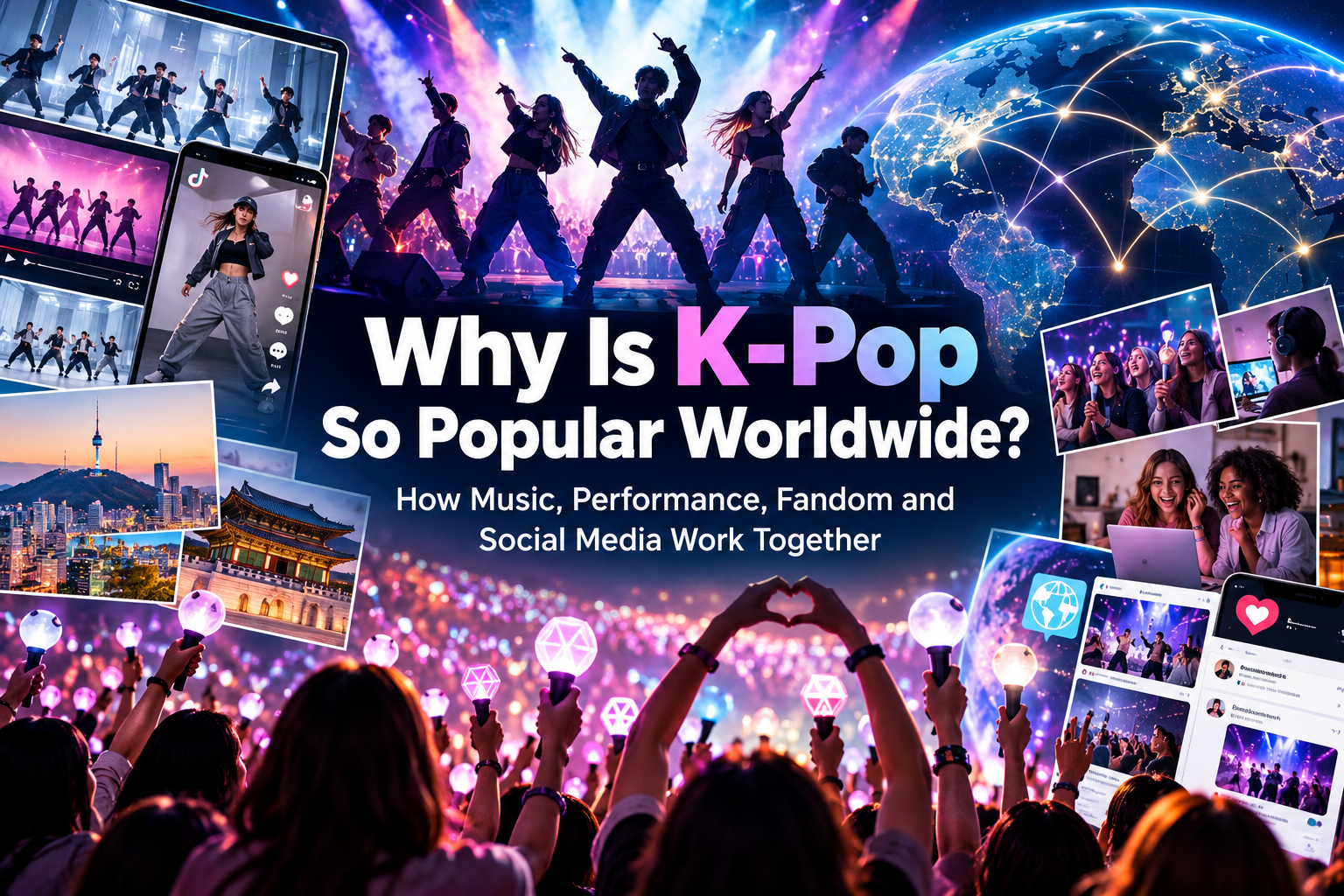
  • Why Is K-Pop So Popular Worldwide? How Music, Performance, Fandom and Social Media Work Together

    Why Is K-Pop So Popular Worldwide? How Music, Performance, Fandom and Social Media Work Together

    Why Is K-Pop So Popular Worldwide? How Music, Performance, Fandom and Social Media Work Together

    Why is K-pop so popular worldwide, even among people who do not speak Korean?

    The usual answers are catchy songs, synchronized choreography, attractive music videos and passionate fans. All of these matter, but they do not fully explain how a music industry rooted in South Korea developed audiences across languages, cultures and continents.

    The more revealing question is what happens after someone discovers a K-pop song.

    A listener may watch a performance, become curious about the members, discover behind-the-scenes videos, join an online fan community and eventually introduce the music to someone else. Each experience creates a reason to continue engaging.

    K-pop’s global success is not the result of one powerful ingredient. It comes from several connected experiences that help turn initial curiosity into lasting participation.

    Understanding those connections explains both how K-pop became popular worldwide and why its influence has lasted beyond individual viral hits.

    The K-Pop Popularity Loop: From First Discovery to Global Fandom

    Imagine someone encountering a K-pop dance clip on social media.

    They may not know the group’s name or understand the lyrics. But the choreography, visual presentation or musical hook catches their attention.

    What happens next can follow a recognizable pattern:

    1. Discovery: A song, performance or short video attracts attention.
    2. Curiosity: The viewer looks for the full music video or another performance.
    3. Recognition: Members, personalities and musical styles become familiar.
    4. Connection: Interviews, livestreams and other content build interest beyond one song.
    5. Community: The listener encounters fans who share information, translations and recommendations.
    6. Participation: The listener begins following releases, sharing content or attending events.
    7. New discovery: That participation introduces K-pop to additional people.

    This is not a fixed journey that every fan follows. Some people remain casual listeners, while others become deeply involved in fandom.

    But the pattern illustrates an important distinction: K-pop does not depend entirely on repeatedly attracting new listeners through new songs. Existing audiences can also help new audiences discover the music.

    That is one reason its international growth cannot be explained by music quality or marketing alone.

    1. K-Pop Music Creates the First Connection

    Before choreography, fan communities or elaborate concepts can matter, something usually needs to attract the listener.

    For many people, that starting point is the music itself.

    K-pop incorporates influences from pop, hip-hop, R&B, electronic dance music, rock and other styles. Individual releases may combine several influences within one song, while other tracks use relatively straightforward pop arrangements.

    This musical variety gives international listeners multiple entry points.

    Someone who enjoys energetic dance music may discover one group, while a listener interested in vocal performances or emotional ballads may connect with another.

    Does the Korean language limit K-pop’s appeal?

    Language can create a barrier to understanding lyrics immediately, but it does not prevent listeners from responding to melody, rhythm, vocal delivery or emotion.

    International audiences have long enjoyed music in languages they do not speak.

    K-pop also exists in a digital environment where translations, subtitles and fan explanations are widely available.

    A listener can enjoy a song before understanding its words and explore its meaning afterward.

    That creates an important sequence:

    Musical attraction can come before linguistic understanding.

    The language difference may even encourage some listeners to investigate lyrics, cultural references and Korean expressions more closely.

    However, language alone is neither the secret to K-pop’s success nor a barrier that has completely disappeared. Its importance varies among listeners and markets.

    2. Performance Turns a Song Into Something People Can Watch and Share

    K-pop is not simply recorded music accompanied by occasional live performances.

    In much of the idol industry, choreography, stage presentation, styling and camera work are closely connected to the musical release.

    A song can therefore reach audiences through several different formats:

    • The official music video
    • A television music-show performance
    • A choreography or dance-practice video
    • A live concert clip
    • A short-form dance challenge
    • A fan-recorded performance moment

    These formats offer different ways to encounter the same music.

    Someone may discover a song through a dance challenge rather than a streaming playlist. Another person may become interested after watching a live vocal performance.

    Why synchronized choreography matters

    Group choreography can create a strong visual identity.

    Formation changes, coordinated movement and memorable gestures make performances recognizable even when the viewer is unfamiliar with the artists.

    Dance also gives audiences something they can reproduce.

    A memorable movement can become a dance cover, tutorial or short video.

    This is where performance begins to connect with social distribution.

    The choreography is not only part of the entertainment. It can also become material that audiences participate in and share.

    Still, not every successful K-pop act depends on difficult choreography. Musical identity, vocals, songwriting and live performance remain important, and the balance differs among artists.

    3. Music Videos and Concepts Give Fans Something to Explore

    A K-pop music video often introduces more than a song.

    It may present a visual concept through fashion, sets, cinematography, color, symbolism or storytelling.

    Some artists develop recurring themes across releases. Others change concepts dramatically from one comeback to another.

    This creates additional reasons for viewers to return.

    A person might watch a music video once for the music and again to notice a detail in the choreography, understand the story or recognize individual members.

    Fans may discuss how a new release connects to an artist’s earlier work.

    Why concepts can extend interest

    In a conventional listening experience, someone may hear a song, enjoy it and move on.

    With a concept-driven release, the same listener may also explore:

    • Performance versions
    • Concept photographs
    • Album artwork
    • Behind-the-scenes production content
    • Earlier music videos
    • Interpretations shared by other fans

    These materials do not guarantee loyalty. But they create opportunities for deeper engagement.

    The music becomes an entry point into a broader creative identity.

    4. Member Identity Helps Turn Curiosity Into Attachment

    One of K-pop’s distinctive features is the attention given to individual members within many idol groups.

    Listeners may initially notice a group as a whole.

    Over time, they begin recognizing individual voices, performance styles, personalities and artistic contributions.

    This can make a large group feel more approachable.

    A fan who first enjoys the music may become interested in how particular members sing, dance, write, produce or interact with one another.

    Why non-musical content matters

    Interviews, variety appearances, documentaries and livestreams can reveal aspects of artists that are less visible in a three-minute song.

    For some fans, these experiences build familiarity and a sense of connection.

    That connection can encourage continued interest between major releases.

    It also creates an important distinction between discovering an artist and following an artist.

    A person may discover a group through one song but continue following it because of its music, members, creative direction and community.

    These relationships can be meaningful, although viewers should remember that publicly presented artist identities are not the same as knowing someone personally.

    5. The Comeback System Gives Fans Reasons to Return

    K-pop’s release culture provides another connection in the popularity loop.

    A comeback is generally a new promotional period associated with a musical release, rather than necessarily a return after a long absence.

    For many idol acts, a comeback can involve teasers, concept photographs, music videos, live performances, interviews and fan activities.

    Instead of experiencing only a release date, audiences may follow a sequence of related events.

    Why this matters internationally

    A fan living outside South Korea may not be able to attend a music-show recording or local promotional event.

    But digital content makes many parts of the release cycle accessible internationally.

    Fans can follow announcements, watch performances and discuss new material with people in other countries.

    This gives the audience recurring opportunities to reconnect with an artist.

    The comeback system also helps explain why K-pop discussions can remain active between albums.

    However, the system has drawbacks. Frequent releases and promotional expectations can contribute to pressure on artists and fans, and the pace is not equally sustainable for every act.

    Regular content can support engagement, but it does not automatically produce lasting artistic success.

    6. K-Pop Fandom Turns Individual Interest Into Community

    This is where the popularity loop becomes especially important.

    A listener who enjoys a song may remain an individual consumer.

    But joining a fan community can change the experience.

    Fans share recommendations, discuss releases, translate material, organize events and help newcomers understand unfamiliar terminology.

    The music becomes something people experience together.

    Fans help reduce the barriers to entry

    Imagine discovering a Korean-language interview with no official translation available.

    A multilingual fan may summarize or translate it.

    Someone else may explain references that international viewers would otherwise miss.

    Another person may compile a beginner’s guide to a group’s members and discography.

    These activities can make unfamiliar artists easier to explore.

    They also demonstrate why global K-pop growth is not simply a top-down process directed by entertainment companies.

    Fans are not only the audience for K-pop. They can also help distribute, explain and reinterpret it.

    Academic research on transnational K-pop fandom has examined how translation, online participation and fan-created content contribute to the movement of Korean music across borders.

    Community creates reasons to stay

    Fan communities also offer social experiences.

    People may form friendships, attend concerts together or participate in discussions that continue long after a release.

    For some, these relationships become part of the appeal.

    This does not mean all K-pop fans participate in organized fandoms. Many enjoy the music without joining fan communities or purchasing merchandise.

    Both kinds of listeners contribute to K-pop’s international audience.

    7. Social Media Connects Every Stage of the Experience

    Social media is often described as the reason K-pop became popular worldwide.

    That explanation is incomplete.

    Social platforms are better understood as the infrastructure connecting many of the other elements.

    YouTube can introduce viewers to music videos, performances and fan-created content.

    TikTok and other short-form platforms can expose people to memorable song excerpts or choreography.

    Online communities can help viewers find translations, recommendations and discussions.

    Streaming services make it easier to continue listening.

    The crucial advantage is not merely that K-pop exists online.

    It is that one encounter can lead quickly to another.

    A dance clip can lead to a full performance.

    A full performance can lead to an artist’s channel.

    An artist’s channel can lead to interviews.

    An interview can lead to a fan community.

    And that community can introduce the artist to someone new.

    Algorithms amplify discovery, but they do not guarantee success

    Recommendation systems can help unfamiliar content reach interested audiences.

    However, platforms also change their recommendation systems, and viral attention can be temporary.

    A viral video may produce millions of views without creating a lasting audience.

    For sustainable growth, an artist still needs music and experiences that give listeners reasons to return.

    This is why social media should be viewed as an amplifier rather than a complete explanation.

    8. How Did K-Pop Become Popular Worldwide?

    The modern popularity loop developed over several decades. K-pop did not suddenly become international when one group achieved a major Western breakthrough.

    The 1990s: Foundations of the modern idol industry

    South Korea’s popular music industry changed significantly during the 1990s.

    Artists such as Seo Taiji and Boys helped transform expectations around contemporary Korean popular music, while early idol groups contributed to the development of organized fandom and agency-led artist promotion.

    These developments helped establish the foundations of modern K-pop.

    The 2000s: Regional expansion through the Korean Wave

    Korean entertainment gained audiences in other Asian markets through music, television and the broader Korean Wave, or Hallyu.

    Artists including BoA, TVXQ, BIGBANG, Girls’ Generation and others contributed to the growth of K-pop beyond South Korea, although their international paths differed.

    This period demonstrated that Korean popular music could develop substantial audiences outside its home market.

    The early 2010s: Global online visibility accelerates

    YouTube and social media reduced dependence on traditional international distribution channels.

    PSY’s “Gangnam Style” became a major global viral phenomenon in 2012, demonstrating the reach Korean-language music could achieve through online video.

    But one viral hit did not create the entire global K-pop industry.

    The broader expansion depended on artists, companies, digital platforms and fan communities building audiences over time.

    The late 2010s and early 2020s: Global fandom becomes central

    Groups such as BTS and BLACKPINK achieved major international visibility, while numerous other artists expanded K-pop’s reach across different markets.

    Global streaming, online communities, international tours and increasingly accessible digital content made it easier for audiences to follow Korean artists directly.

    K-pop was no longer experienced internationally only through occasional breakout songs.

    For many fans, it became part of everyday listening and online culture.

    The mid-2020s: A more diverse global industry

    By the mid-2020s, K-pop encompassed a wider range of musical identities, group concepts, international collaborations and digital experiences.

    Global audiences could discover both established artists and newer acts through overlapping music and social platforms.

    The international audience also became more diverse in how it engaged: some listeners followed albums and concerts, while others participated primarily through short videos, online communities or fan-created content.

    This history matters because each period added something to the next.

    The idol system helped build recognizable artists. Regional expansion demonstrated international demand. Digital platforms increased access. Global fandom made participation and continued discovery easier.

    9. Why BTS and BLACKPINK Matter—But Do Not Explain Everything

    Any discussion of K-pop’s global success should recognize the importance of BTS and BLACKPINK.

    Their international achievements helped expand the visibility of Korean popular music and introduced many people to the industry.

    BTS demonstrated the power of sustained musical storytelling, digital communication and international fan engagement.

    BLACKPINK helped extend K-pop’s presence across music, fashion, performance and global popular culture.

    But treating either group as the sole explanation would overlook the artists and audiences that came before them, as well as the broader industry and digital environment.

    K-pop’s international rise was cumulative.

    Earlier generations helped establish regional markets and fan practices. Later artists expanded those foundations, while digital platforms made international discovery increasingly accessible.

    Individual breakthroughs matter, but they occur within a larger history.

    10. Why K-Pop Fans Keep Coming Back

    Discovery explains how someone first encounters K-pop.

    Retention explains why they continue following it.

    These are different questions.

    A memorable chorus might produce a first listen.

    A strong performance might produce a second.

    But lasting interest may depend on several overlapping experiences:

    Music: New releases provide fresh reasons to listen.

    Artistic identity: Listeners develop preferences for particular artists and styles.

    Performance: Live stages and concerts offer experiences beyond recordings.

    Continuity: Comebacks and other content maintain visibility between releases.

    Community: Shared interests make following artists a social experience.

    Personal meaning: Songs, performances and artists may become associated with important moments in listeners’ lives.

    Not every fan needs all six.

    The strength of the wider K-pop ecosystem is that people can connect through different combinations.

    That flexibility helps explain why K-pop appeals to audiences with different ages, musical tastes and levels of fandom participation.

    11. Can the K-Pop Popularity Loop Break?

    The same system that helps K-pop grow also has weaknesses.

    A steady flow of content can create expectations that are difficult to maintain.

    Competition for attention can encourage increasingly intense promotional activity.

    Organized fandom can foster friendship and creativity, but it can also produce conflicts, unhealthy comparisons or pressure to spend money.

    Algorithm-driven discovery can reward brief viral moments rather than long-term artistic development.

    And international popularity does not guarantee that every artist benefits equally.

    These challenges matter because K-pop’s continued global success depends on more than maximizing attention.

    Artists need room to develop their music and careers. Audiences need reasons to remain interested beyond promotional campaigns.

    A sustainable popularity loop requires meaningful creative work—not simply more content.

    12. Is K-Pop Popular Because of the Music or the Fandom?

    Both matter, but they play different roles.

    Music and performance often create the initial attraction.

    Artist identity, ongoing content and community can deepen the connection.

    Social platforms help those experiences circulate internationally.

    Fandom can then introduce new people to the music.

    The relationship is therefore better understood as a connected process than as a competition between music and marketing.

    Consider two hypothetical listeners.

    Listener A discovers a K-pop song, adds it to a playlist and continues enjoying the music without participating in fandom.

    Listener B discovers the same song, watches performances, learns about the members, joins a fan community and shares content with friends.

    Both are genuine listeners.

    But Listener B also participates in activities that can introduce the artist to additional people.

    When this pattern occurs across many artists and countries, it helps explain how K-pop can sustain international visibility.

    Frequently Asked Questions About K-Pop’s Global Popularity

    Why is K-pop so popular outside South Korea?

    K-pop combines accessible music, visually engaging performances, recognizable artist identities, frequent digital content and international fan communities. Social platforms help connect these experiences and introduce Korean artists to listeners around the world.

    How did K-pop become popular worldwide?

    K-pop expanded gradually through the Korean Wave, regional Asian markets, online video, international artist breakthroughs and global fan participation. YouTube, streaming and social media made Korean music easier to discover and follow across borders.

    Why do people like K-pop if they don’t understand Korean?

    Listeners can connect with melody, rhythm, vocal expression and performance without understanding every lyric. Translations and subtitles also make it easier to explore songs and artists more deeply.

    Is K-pop popular only because of BTS and BLACKPINK?

    No. BTS and BLACKPINK played major roles in expanding international visibility, but K-pop’s global development also reflects earlier generations of artists, entertainment companies, digital platforms and fan communities.

    What makes K-pop different from Western pop?

    The distinction is not absolute, and both industries influence each other. However, many K-pop idol acts place particular emphasis on coordinated group performance, comeback promotions, visual concepts, member-focused content and organized fan participation.

    Will K-pop remain popular in the future?

    Its future cannot be guaranteed. Continued success will depend on musical creativity, artist development, changing audience preferences, international accessibility and the industry’s ability to sustain healthy relationships with fans.

    Final Thoughts: K-Pop’s Global Success Is a Connected System

    K-pop became popular worldwide through more than catchy music, impressive choreography or social media promotion.

    Those elements work together.

    A song attracts attention.

    A performance encourages discovery.

    Artist identity and continuing content create opportunities for deeper interest.

    Fan communities help people participate, understand and share what they enjoy.

    Digital platforms connect those activities across borders.

    And the resulting visibility introduces new listeners to Korean music.

    That is the central explanation for K-pop’s international growth: a connected system in which music creates interest, participation sustains it and global communities help it spread.

    Not every listener becomes a dedicated fan. Not every artist follows the same path. And no popularity system can guarantee success.

    But understanding how these experiences connect reveals why K-pop has become more than a series of international hits.

    It has developed into a global music culture shaped by artists, performances, platforms and the people who listen.

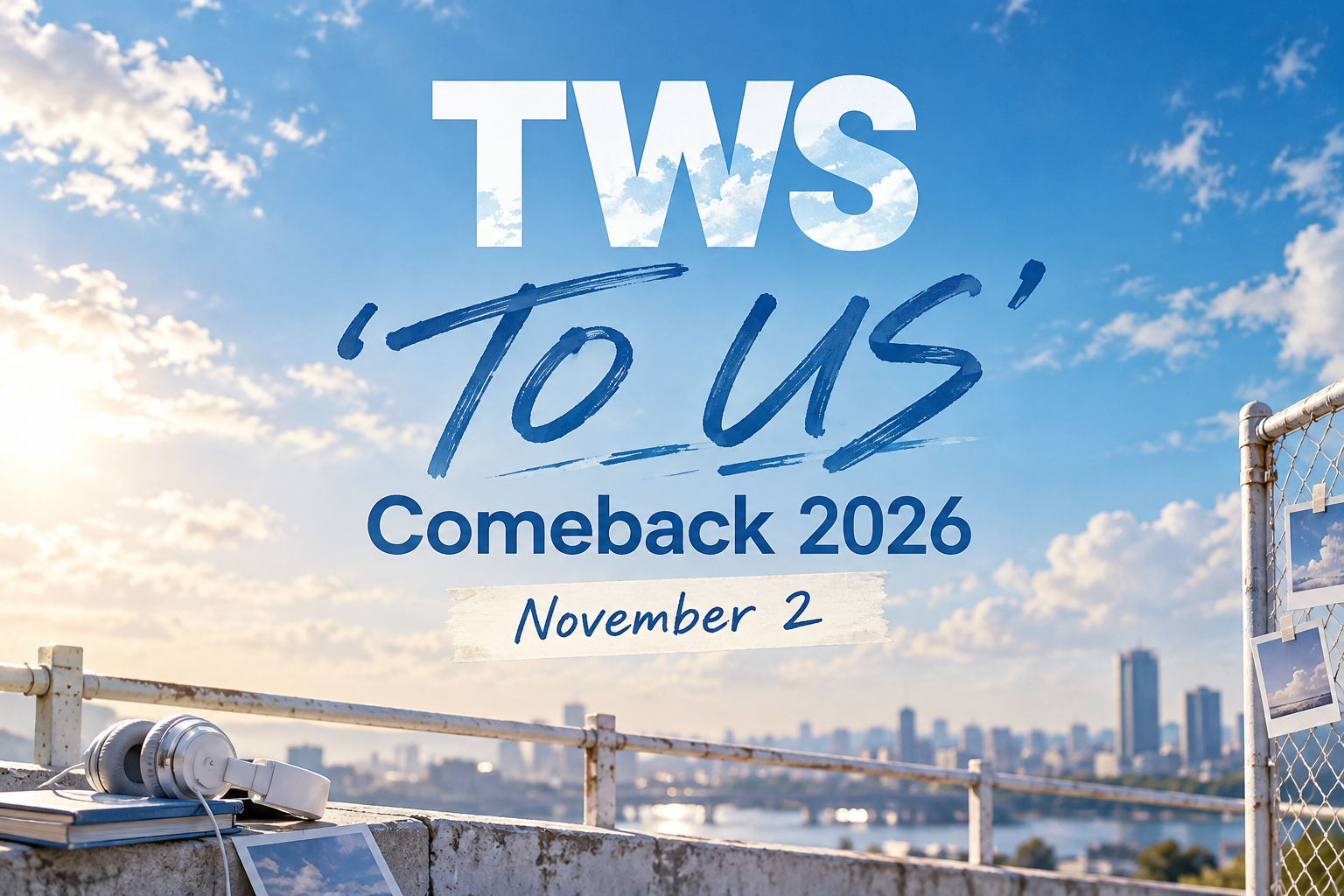
  • TWS ‘TO US’ Comeback 2026: Release Date, New Single Album and What We Know

    TWS ‘TO US’ Comeback 2026: Release Date, New Single Album and What We Know

    TWS is officially preparing for its next comeback.

    The six-member group will return on November 2, 2026, with its second single album, TO US, opening another chapter in a year that has already marked significant growth for the group.

    The announcement immediately gives fans a few important details: the release date is confirmed, the album format has been revealed, and the first comeback trailer has arrived. But much of the music itself is still under wraps.

    Here is what has been confirmed about TO US so far, along with why this comeback could be an important step in TWS’s continuing evolution.

    When Is TWS Releasing ‘TO US’?

    TWS will release TO US on November 2, 2026.

    The project is described as the group’s second single album and comes roughly six months after their previous Korean release.

    The comeback announcement was accompanied by a trailer that begins establishing the visual mood of the new era without revealing everything about the music.

    More details, including the full track list and additional promotional content, are expected as the release approaches.

    What Does ‘TO US’ Mean?

    The album title is especially fitting for TWS.

    The group’s name comes from “Twenty Four Seven With Us,” representing the idea of being together through everyday moments.

    TO US therefore feels closely connected to an identity that has been part of TWS from the beginning.

    Rather than simply functioning as another album title, it may reinforce the relationship between the group, its members and the listeners who have followed their coming-of-age story.

    Exactly how that idea will appear in the songs remains to be seen.

    TWS Has Built Its Identity Around Youth

    Since debuting in 2024, TWS has developed a recognizable musical and visual identity centered on youth, friendship and the emotions surrounding everyday life.

    Their breakthrough debut track “plot twist” introduced many listeners to the group through a bright and approachable sound.

    Subsequent releases allowed TWS to expand that image instead of abandoning it completely.

    That continuity matters.

    Many K-pop groups change concepts dramatically between comeback cycles. TWS has instead had the opportunity to show different stages and emotions within a broader youth-centered identity.

    The question surrounding TO US is therefore not simply whether TWS will present a new concept.

    It is how much further the group can develop the identity it has already established.

    Why 2026 Has Been an Important Year for TWS

    TWS enters this comeback from a stronger position than it held at the beginning of its career.

    During 2026, the group continued expanding its album sales and international activities, while its first Asian tour helped bring TWS directly to fans across multiple cities.

    Those developments change the context surrounding TO US.

    Earlier releases were still helping define what kind of group TWS would become. Now the group has a larger catalog, a growing fandom and more live-performance experience behind it.

    That means the November comeback can show whether TWS is ready to turn its early momentum into longer-term growth.

    What Has Been Confirmed So Far?

    As of the comeback announcement, several basic details are clear:

    • Artist: TWS
    • Album: TO US
    • Release date: November 2, 2026
    • Format: Second single album
    • Members: Shinyu, Dohoon, Youngjae, Hanjin, Jihoon and Kyungmin

    The comeback trailer has also been released.

    However, the complete track list and many of the musical details surrounding the album have not yet been revealed.

    That distinction is important because early comeback announcements often generate speculation before official information is available.

    What to Watch Before the November Release

    The biggest question will be the musical direction of the title track.

    Will TWS continue emphasizing the bright, youthful sound associated with its early success, or will TO US introduce a noticeably more mature version of the group?

    The concept photos, track list, song credits and additional teasers should provide clearer answers as November 2 approaches.

    Another point worth watching is how the group connects the album title to its established identity.

    If TO US becomes more than a name and functions as a continuation of TWS’s broader story about youth and companionship, it could help make this comeback feel like a natural progression rather than an isolated release.

    Why ‘TO US’ Could Matter for TWS

    A group’s early success attracts attention.

    What happens afterward determines whether that attention develops into a lasting career.

    TWS has already moved beyond its debut period and established a recognizable place among its generation of K-pop groups. The next challenge is showing that its identity can continue evolving without losing what made listeners interested in the first place.

    That is what makes TO US worth watching.

    When the album arrives on November 2, 2026, the most interesting question may not simply be whether TWS can produce another successful song.

    It will be whether TO US shows us what the next version of TWS looks like.

  • IVE ‘Looks Can Kill’ Comeback 2026: Release Date, Girl Hero Concept and What We Know

    IVE ‘Looks Can Kill’ Comeback 2026: Release Date, Girl Hero Concept and What We Know

    IVE is returning with Looks Can Kill, a new mini album built around a “Girl Hero” concept that appears designed to expand the group’s familiar message of confidence into a more character-driven world.

    The title track “Looks Can Kill” will be pre-released on October 19, 2026, while the full six-track mini album arrives on October 26.

    This is IVE’s first new album since REVIVE+, released in February 2026, and it follows the conclusion of the group’s second world tour, SHOW WHAT I AM.

    But the most interesting part of this comeback may not be the release date.

    IVE has repeatedly built its identity around confidence, self-belief and an almost larger-than-life version of the self. With Looks Can Kill, that idea is being reframed through six “Girl Hero” characters and a spin-off-style promotional campaign.

    Here is everything confirmed so far — and why this comeback could represent an important next step in IVE’s evolving identity.

    IVE Looks Can Kill: Quick Facts

    DetailConfirmed information
    ArtistIVE
    AlbumLooks Can Kill
    TypeMini album / EP
    Title trackLooks Can Kill
    Title track pre-releaseOctober 19, 2026
    Full album releaseOctober 26, 2026
    Number of tracks6
    Main conceptGirl Hero
    Previous albumREVIVE+
    Previous album releaseFebruary 2026
    Time between releasesAbout 8 months
    Previous major activitySHOW WHAT I AM world tour

    The unusual part of the rollout is that fans do not have to wait until October 26 to hear the central song.

    The title track arrives one week before the complete album, making October 19 the first major date to watch.

    When Does IVE’s Looks Can Kill Come Out?

    IVE will release the title track “Looks Can Kill” on October 19, 2026.

    The complete mini album will follow on October 26.

    That distinction is important because some early comeback announcements can make October 19 look like the album release date.

    It is not.

    The schedule is:

    October 19 — “Looks Can Kill” title track pre-release

    October 26 — Looks Can Kill mini album release

    Between those dates, IVE will continue releasing promotional material, including a highlight medley.

    This gives the title track a full week to establish the album’s central concept before listeners hear the remaining songs.

    IVE Looks Can Kill Tracklist

    The mini album contains six tracks:

    1. Looks Can Kill
    2. Mirror Mirror
    3. SNAKESKIN
    4. CRUMBS
    5. Girls Girls Girls
    6. Glow Motion

    The tracklist already gives this comeback more substance than the earliest announcement articles could provide.

    There are also several notable credits.

    Rei participated in writing lyrics for the title track “Looks Can Kill.”

    Gaeul and Liz received lyric credits on “CRUMBS.”

    The album also brings together Korean and international writers and producers. Credits connected to the project include Kiko, Seo Ji-eum, Lil Cherry and Omega Sapien, while “Glow Motion” includes Zara Larsson among its credited collaborators alongside Margo XS and Cecile Believe.

    Those names do not tell us exactly what the album will sound like.

    But they do make one thing clear: Looks Can Kill is not being presented only as a visual concept project. IVE members are participating in the writing, while the production team reaches beyond a single songwriting style.

    Until the highlight medley and songs are released, however, it is better not to predict the sound of individual tracks from their titles or credits alone.

    What Is IVE’s Girl Hero Concept?

    “Girl Hero” is the central visual and narrative idea behind Looks Can Kill.

    IVE’s promotional material has presented the six members as individual hero-like characters, using imagery that resembles movie posters, comics and superhero storytelling.

    The rollout itself reinforces that language.

    Promotional stages include names such as:

    GIRL HERO

    HERO COMICS

    HERO ON SET

    and

    SPIN-OFF

    There is even a “POST CREDITS SCENE: GIRL HERO” component, borrowing the language of superhero films.

    This is more than a single set of concept photos.

    The campaign is structured as if IVE’s comeback were a fictional screen universe being gradually revealed.

    That makes the word “spin-off” particularly interesting.

    Why “Spin-Off” Matters for IVE

    IVE is not presenting Looks Can Kill as a complete rejection of its previous identity.

    Instead, the Girl Hero concept has been described as another form of the group’s existing persona — an “Another Ego.”

    That distinction matters.

    IVE’s music has long returned to ideas of self-confidence, desire and knowing one’s own value.

    Songs such as “ELEVEN,” “LOVE DIVE,” “After LIKE” and “I AM” approached those ideas in different ways, but the central character was often someone unusually certain of herself.

    The group later explored more stylized identities and visual worlds.

    Looks Can Kill appears to take that process another step.

    Rather than simply presenting confidence as an attitude, the comeback turns it into characters.

    The six members become Girl Heroes.

    In other words, IVE’s familiar self-assurance is being translated into a narrative device.

    That is why the spin-off description is useful: the group does not need to abandon the identity listeners already recognize in order to build a new world around it.

    From Cupid and Magical Girl to Girl Hero

    The Girl Hero concept also makes more sense when viewed as part of a progression rather than an isolated comeback idea.

    IVE’s recent visual storytelling has experimented with personas including Cupid and Magical Girl imagery.

    Girl Hero follows those identities as another variation on the group’s larger-than-life image.

    There is an important difference, however.

    Cupid and magical-girl imagery draw from fantasy.

    A hero concept introduces something else: agency.

    A hero acts.

    A hero has a mission.

    A hero occupies the center of a story rather than simply existing inside an aesthetic.

    Whether the actual music and lyrics develop that distinction cannot be judged until the songs are released.

    But as a promotional concept, Girl Hero gives IVE a framework capable of connecting fashion, character, storytelling, music videos and individual member identities.

    That provides more room than a single visual theme.

    Six Members, Six Girl Heroes

    One of the smartest parts of the concept is that it does not appear to turn IVE into one uniform superhero team.

    The teaser strategy emphasizes the members as six distinct Girl Heroes.

    That matters for a group such as IVE.

    An Yujin, Gaeul, Rei, Jang Wonyoung, Liz and Leeseo already have highly recognizable individual identities. A concept that allows each member to embody a different character can preserve that individuality while keeping the group inside one shared world.

    It also creates more possibilities for fans to interpret each member’s styling, symbolism and role as additional teasers appear.

    The important point at this stage is not to invent powers or character stories that have not been confirmed.

    What has been established is the framework:

    six members, distinct hero identities, one shared Girl Hero concept.

    The details are still unfolding.

    Looks Can Kill Comes After a Strong REVIVE+ Era

    The timing of this comeback is also important.

    IVE released its second full-length album REVIVE+ in February 2026.

    That era included “BANG BANG,” which achieved a Perfect All-Kill on major Korean charts, as well as “BLACKHOLE.”

    The group then continued with its second world tour, SHOW WHAT I AM, performing across Asia, Oceania and North America.

    So Looks Can Kill is not a comeback designed to restore momentum after a long disappearance.

    It arrives after an active album-and-tour cycle.

    That changes the question surrounding the release.

    IVE does not simply need to remind listeners who the group is.

    The more interesting challenge is how to extend an already established identity without repeating it.

    Girl Hero may be the answer Starship Entertainment is testing.

    Why the World Tour Matters

    Touring can change how a K-pop group approaches its next era.

    Songs are no longer experienced only through streaming platforms and music shows. They have to work inside larger live sets, in different countries and in front of audiences with varying levels of familiarity with the group.

    IVE recently completed its second world tour before announcing Looks Can Kill.

    That does not prove the new album was musically shaped by touring, and it would be speculation to say so before the members or producers explain it.

    But the sequence is worth noting.

    The group is moving directly from a large-scale international performance cycle into a concept built around cinematic characters and a broader narrative world.

    That makes this comeback feel less like a restart and more like the next chapter of an ongoing expansion.

    Why the Title “Looks Can Kill” Fits IVE

    Even before hearing the song, Looks Can Kill is a striking title for IVE.

    The phrase traditionally refers to an extremely powerful or hostile look.

    For a group whose image has frequently involved glamour, self-awareness, beauty and confidence, the phrase immediately connects appearance with power.

    That makes it unusually compatible with the Girl Hero idea.

    The title can operate on at least two levels without requiring us to speculate about the lyrics:

    “Looks” connects naturally to IVE’s highly visual identity.

    “Can Kill” transforms that visual presence into something powerful and active.

    Whether the song itself uses the phrase literally, ironically or metaphorically will only become clear when it is released.

    But as an album title and concept phrase, it efficiently links IVE’s established image with the new hero framework.

    Member Songwriting Is Worth Watching

    The member credits are another detail that could become important once the album arrives.

    Rei has a lyric credit on the title track.

    Gaeul and Liz participate in the lyrics for CRUMBS.

    Member participation alone does not automatically make an album more personal or better.

    But it does give listeners something concrete to examine when the songs are released.

    For a concept built around six individual heroes, member involvement in the words of the album is particularly interesting.

    The question after release will be whether those contributions help give the individual characters or the broader Girl Hero theme more depth.

    For now, that remains a question rather than a conclusion.

    What Makes Glow Motion Interesting Before Release?

    Among the B-sides, Glow Motion immediately stands out because of its international credits.

    Zara Larsson is credited on the track alongside Margo XS and Cecile Believe, who have worked within contemporary international pop production.

    Again, credits are not enough to predict a song.

    It would be premature to label Glow Motion as a particular genre or claim it represents IVE’s “global sound” before anyone has heard the finished track.

    But the collaboration does show that the album’s creative network extends beyond the Korean songwriting ecosystem.

    That makes Glow Motion one of the B-sides worth watching when the highlight medley arrives.

    IVE Is Entering a Crowded October Comeback Week

    IVE will not release Looks Can Kill in an empty calendar.

    October 2026 is a busy K-pop comeback month, and October 26 is particularly competitive, with ILLIT and RIIZE also scheduled to release new music that day.

    That creates an unusual environment.

    Chart performance, album sales, music-show results and online attention will inevitably be compared.

    But those comparisons should not be treated as the only measure of whether Looks Can Kill succeeds.

    For IVE, the more consequential question may be whether Girl Hero gives the group an identity that can extend beyond one promotional cycle.

    IVE already has major hits.

    Building a concept that can support the next phase of the group may matter more in the long term than winning one crowded release date.

    IVE Looks Can Kill Comeback Schedule

    The promotional rollout is unusually structured, so these are the dates worth watching:

    October 4 — Tracklist

    October 5 — HERO IN EVERYWHERE

    October 6 — POST CREDITS SCENE: GIRL HERO

    October 7–9 — GIRL HERO concept content

    October 12–14 — HERO COMICS

    October 16–17 — Music video teasers

    October 18 — HERO ON SET

    October 19 — “Looks Can Kill” title track pre-release

    October 21 — Highlight medley

    October 26 — Full mini album release and SPIN-OFF content

    For fans searching for the song itself, October 19 is the key date.

    For listeners who want the complete six-track project, it is October 26.

    What We Still Do Not Know

    There is already a substantial amount of confirmed information about Looks Can Kill, but several important questions remain unanswered as of October 6.

    We do not yet know how the six tracks sound as a complete project.

    We do not know how literally the Girl Hero narrative will carry into the title track’s lyrics and music video.

    We do not know whether each member’s hero identity will develop into a detailed character story or remain primarily a visual device.

    And we do not yet know how songs such as Mirror Mirror, SNAKESKIN, CRUMBS, Girls Girls Girls and Glow Motion connect to the central concept.

    Those gaps matter.

    Rather than filling them with predictions, it makes more sense to update the picture as IVE releases the remaining teasers, highlight medley and music.

    Why Looks Can Kill Could Be an Important IVE Comeback

    IVE does not need a completely new identity.

    The group already has one of the clearest identities among its generation: polished, confident and unapologetically aware of its own value.

    The challenge is keeping that identity recognizable without making every comeback feel like another version of the same idea.

    Looks Can Kill offers one possible solution.

    Girl Hero turns confidence into character.

    The spin-off structure turns a comeback into a narrative.

    Individual hero identities give six well-known members room to remain distinct.

    And the tracklist combines member songwriting with a broader group of Korean and international contributors.

    None of that guarantees what the music will sound like or how successful the era will be.

    But it does make Looks Can Kill more than another date on IVE’s release calendar.

    It is an attempt to answer a question that every successful K-pop group eventually faces:

    How do you evolve without losing the identity that made people recognize you in the first place?

    For IVE, Girl Hero may be the next answer.

  • MONSTA X 2026 North America Tour: THE X : NEXUS Dates and Why This Comeback Matters

    MONSTA X 2026 North America Tour: THE X : NEXUS Dates and Why This Comeback Matters

    MONSTA X are back on the road in North America.

    The North American leg of the 2026 MONSTA X WORLD TOUR [THE X : NEXUS] began in Fairfax, Virginia, on October 3 and will continue through October 24, with 10 shows across the United States and Canada.

    But this is more than another set of tour dates.

    THE X : NEXUS is MONSTA X’s first large-scale North American tour in four years, following the group’s 2022 NO LIMIT tour. It also arrives at an important point in their career: more than a decade after debut, with a third English-language album, a new Korean EP, and a five-member touring lineup while I.M completes his military service.

    For fans who have followed MONSTA X’s international career, the 2026 tour connects several different chapters of the group at once.

    MONSTA X THE X : NEXUS North America Tour Dates

    The North American leg runs from October 3 to October 24, 2026.

    DateCityVenue
    October 3Fairfax, VirginiaEagleBank Arena
    October 6New York, New YorkInfosys Theater at Madison Square Garden
    October 8Boston, MassachusettsMGM Music Hall at Fenway
    October 10Toronto, OntarioGreat Canadian Casino Resort Toronto
    October 13Rosemont, IllinoisRosemont Theatre
    October 15Irving, TexasThe Pavilion at Toyota Music Factory
    October 17Phoenix, ArizonaArizona Financial Theatre
    October 20Los Angeles, CaliforniaKia Forum
    October 22San Francisco, CaliforniaBill Graham Civic Auditorium
    October 24Seattle, WashingtonWAMU Theater

    The route takes MONSTA X from the East Coast through Canada and the central and southwestern United States before finishing on the West Coast.

    For current ticket availability, entry rules, VIP details, and venue-specific information, fans should check the official tour, ticketing, or venue pages because availability and policies can change by show.

    Why the 2026 North American Tour Matters

    The simplest reason is time.

    MONSTA X’s previous large-scale North American run was the 2022 NO LIMIT tour. That tour also brought the group to cities including New York, Fairfax, Chicago, Phoenix, and Los Angeles.

    Four years later, THE X : NEXUS returns to several important markets while representing a very different stage in the group’s career.

    MONSTA X are no longer a group trying to establish whether they can sustain an international audience. By 2026, their catalog includes more than a decade of Korean releases, multiple world tours, and three full-length English-language albums.

    That changes the question surrounding this tour.

    Instead of asking whether MONSTA X can build a presence in North America, THE X : NEXUS shows what that presence looks like after years of releases, touring, individual activities, military-service interruptions, and musical evolution.

    From NO LIMIT to THE X : NEXUS

    The contrast with 2022 is particularly useful for understanding the new tour.

    The NO LIMIT era emphasized much of what had already become associated with MONSTA X: forceful performance, strong rap and vocal combinations, and a catalog capable of moving between Korean and English-language material.

    THE X : NEXUS has a wider history to draw from.

    The tour began in Seoul in early 2026 with performances spanning different periods of the group’s career, including songs such as “DRAMARAMA,” “Love Killa,” and “Rush Hour,” alongside newer material.

    That makes the word “NEXUS” especially fitting.

    The tour is not built around only one comeback. It connects the MONSTA X that longtime MONBEBE already know with the group’s current music and the next stage of their career.

    Unfold Gives the North American Leg a Different Context

    One major difference between the 2022 and 2026 tours is Unfold.

    Released on April 3, 2026, Unfold is MONSTA X’s third full-length English-language album, following All About Luv and The Dreaming.

    The album includes “heal,” “growing pains,” and “baby blue” and focuses more heavily on themes of emotional openness, healing, relationships, and growth.

    That matters for a North American tour because MONSTA X’s English-language catalog has become a genuine second lane within their discography rather than an occasional experiment.

    Their earlier English albums demonstrated that the group could approach the U.S. market without simply translating the sound of their Korean title tracks. Unfold extends that strategy with a more emotionally focused side of MONSTA X.

    The result is a tour with more musical territory to explore.

    Fans can encounter the high-impact performance identity associated with MONSTA X while also seeing how the group’s English-language material has developed over several years.

    The Phase Adds Another Layer to the Tour

    There is another reason the timing of the North American leg is interesting.

    MONSTA X released the EP The Phase on September 4, only about a month before the Fairfax concert.

    Its title track, “MAGIC,” combines rhythmic guitar, a forceful beat, rap, and vocals in a way that fits naturally with the group’s performance-driven identity.

    The six-track EP also includes “Type X,” “SURVIVOR,” “Electric Heart,” “That’s My Girl,” and “Sweet Night, Sweet Morning.”

    This means the North American leg is not simply promoting an album released earlier in the year.

    It arrives after both Unfold and The Phase.

    That creates an unusual overlap between two sides of MONSTA X in 2026: the English-language material aimed at a broad international audience and the newer Korean release that reinforces the group’s established performance identity.

    For fans attending the tour, that makes the 2026 catalog particularly relevant when thinking about how the current MONSTA X differs from the group that last completed a major North American tour in 2022.

    Who Is Performing on MONSTA X’s 2026 North American Tour?

    MONSTA X’s North American concerts are taking place with five members: Shownu, Minhyuk, Kihyun, Hyungwon, and Joohoney.

    I.M is not participating in the overseas tour dates while completing his mandatory military service.

    He enlisted in February 2026 after taking part in the Seoul concerts within health-related performance limits.

    That makes the North American leg another transitional moment for the group.

    Military service has affected the schedules of many long-running K-pop groups, and MONSTA X have had to navigate the same challenge. Rather than putting their global touring identity on hold completely, the group is continuing THE X : NEXUS with the available members.

    For longtime fans, the five-member configuration is therefore part of the specific context of the 2026 tour rather than a permanent redefinition of MONSTA X.

    What Makes MONSTA X’s North American Career Different?

    MONSTA X’s relationship with the North American market has developed over a longer period than a single viral hit or tour.

    Their first full-length English album, All About Luv, reached the Billboard 200 in 2020. The Dreaming followed in 2021, and Unfold became their third English-language full-length album in 2026.

    That sustained approach is important.

    English releases have given MONSTA X a catalog that can communicate directly with international listeners while their Korean discography continues to carry the harder-edged performance style for which the group became known.

    The two sides do not always sound identical, and that is precisely what makes their global career interesting.

    Rather than abandoning one identity for another, MONSTA X have gradually built a catalog broad enough to support both.

    THE X : NEXUS can bring those histories onto the same stage.

    Why the Los Angeles Show Is Worth Watching

    Among the 10 North American stops, Los Angeles carries an additional connection to MONSTA X’s touring history.

    The group performed at the Kia Forum during the 2022 NO LIMIT tour, and THE X : NEXUS brings them back to the venue on October 20.

    That makes Los Angeles one of the clearest points of comparison between the group’s previous major North American tour and its 2026 return.

    The surrounding circumstances, however, are different.

    MONSTA X now return with another four years of music behind them, a third English album, new Korean material, and a lineup temporarily reshaped by military service.

    The venue may be familiar, but the career chapter is not.

    What Does THE X : NEXUS Mean?

    The name of the tour is also connected to where MONSTA X are in their career.

    “Nexus” suggests a connection or meeting point, and the tour has been framed around the long relationship between MONSTA X and MONBEBE while opening another chapter after more than a decade together.

    That idea works on several levels.

    THE X : NEXUS connects older songs with new releases. It connects the group’s Korean and English-language catalogs. It reconnects MONSTA X with North American fans after a four-year gap between large-scale tours.

    And perhaps most importantly, it connects the group’s past with a period in which continuing together requires adaptation.

    For a K-pop act more than 10 years into its career, that may be the most interesting part of the tour.

    Is THE X : NEXUS MONSTA X’s First North American Tour?

    No.

    MONSTA X toured North America before THE X : NEXUS, including their 2022 NO LIMIT tour.

    The 2026 run is significant because it is their first large-scale North American tour in four years and comes after a period shaped by individual activities, military service, and new group releases.

    Is I.M Performing on the North American Tour?

    No. I.M is not participating in the North American leg of THE X : NEXUS while completing his mandatory military service.

    The North American shows feature Shownu, Minhyuk, Kihyun, Hyungwon, and Joohoney.

    What Albums Are Most Relevant to THE X : NEXUS in 2026?

    Two releases are particularly important for understanding the current North American leg.

    Unfold, released in April 2026, is MONSTA X’s third full-length English-language album and adds a more emotionally focused body of English material to their catalog.

    The Phase, released in September 2026, is the group’s newest EP and includes the title track “MAGIC.”

    Together, the two releases show different sides of MONSTA X immediately before the October North American concerts.

    A Return, but Not a Reset

    It would be easy to describe THE X : NEXUS simply as MONSTA X returning to North America after four years.

    But “return” does not fully describe what has changed.

    The group comes back with a much larger catalog, another English album, fresh Korean music, more than a decade of history, and the experience of continuing group activities through military-service transitions.

    That is what makes THE X : NEXUS more than a collection of 2026 tour dates.

    For longtime MONBEBE, it reconnects different eras of MONSTA X. For newer listeners, it offers a useful snapshot of what the group has become after more than 10 years.

    And for MONSTA X themselves, the North American leg is another test of something that becomes increasingly important for long-running K-pop groups: not simply how to make a comeback, but how to keep moving forward without losing the identity that built the audience in the first place.

  • BTS and Stray Kids Skip the 2027 Grammys: Why the New Asian Pop Category Is Dividing K-Pop

    BTS and Stray Kids Skip the 2027 Grammys: Why the New Asian Pop Category Is Dividing K-Pop

    The Grammy Awards have spent years trying to catch up with K-pop’s global rise. In 2026, the Recording Academy appeared to take another step forward by creating a new category: Best Asian Pop Music Performance.

    On paper, that sounds like recognition.

    But the reaction from two of K-pop’s biggest names has raised a much more uncomfortable question.

    What if creating a separate space for Asian pop is not the same thing as treating Asian artists as part of global pop?

    BTS chose not to submit music for the 2027 Grammy Awards, while Stray Kids also did not submit their work for consideration. The circumstances are not identical. BTS publicly explained its position, while JYP Entertainment confirmed Stray Kids’ non-submission without giving an official reason.

    That distinction matters.

    But taken together, the developments have turned what might have been celebrated as a milestone for Asian music into a larger debate about how the Grammys understand K-pop in the first place.

    Why BTS Decided Not to Submit for the 2027 Grammys

    BTS’s position goes beyond disappointment over nominations or awards.

    The group expressed the view that music should be heard and loved as music itself rather than being divided primarily by region or language.

    That argument goes directly to the problem created by the new Best Asian Pop Music Performance category.

    K-pop has “Korean” in its name, but its modern identity has become increasingly difficult to contain within a regional box.

    BTS is perhaps the clearest example.

    The group has topped major charts around the world, filled stadiums far beyond South Korea and competed in the Grammy Awards’ major pop ecosystem before the creation of a dedicated Asian Pop category.

    From that perspective, a new regional category creates a strange contradiction.

    K-pop is global enough to influence the international music business, but at the Grammys it may now be encouraged to compete inside a category defined partly by geography and language.

    For BTS, that distinction appears to matter.

    Stray Kids Made a Different — but Equally Interesting — Decision

    Stray Kids also did not submit music for the 2027 Grammys.

    However, this needs to be described carefully.

    JYP Entertainment confirmed the non-submission, but did not publicly state that Stray Kids made the decision as a protest against the Asian Pop category.

    So it would be misleading to simply say that BTS and Stray Kids issued the same boycott for the same reason.

    What makes the Stray Kids situation especially interesting is something else.

    The decision also comes at a moment when Stray Kids’ global presence has expanded far beyond the traditional K-pop circuit, including their historic role as the first K-pop act to headline Rock in Rio.

    All eight members were invited to become voting members of the Recording Academy.

    That means their relationship with the Grammys is not simply one of rejection.

    They can participate in the institution while choosing not to enter their own work into this year’s competition.

    That distinction makes the story more complicated — and more important.

    Why the New Asian Pop Grammy Sounds Like Progress

    The Recording Academy has a reasonable argument of its own.

    Creating Best Asian Pop Music Performance gives music from across Asia another opportunity to receive Grammy recognition.

    The category can potentially provide visibility to artists who might otherwise struggle to break into categories dominated by the American and broader Western music industries.

    And entering the Asian Pop category does not automatically prevent an eligible artist from competing in the Grammy General Field.

    So the new award should not simply be dismissed as a category designed to keep Asian artists away from the major prizes.

    But that still leaves a difficult question.

    Why does Asian pop need to be geographically separated at the moment when some Asian artists have become fully global pop stars?

    The Problem With Treating “Asian Pop” as One Musical Space

    Asia is not a musical genre.

    K-pop, J-pop, C-pop and other Asian popular music traditions operate in different languages, industries and cultural contexts.

    Even within K-pop, the music can move between hip-hop, R&B, EDM, rock, ballads and mainstream pop within a single album.

    Putting these artists together because they are “Asian” therefore creates an unusual category.

    Compare that with categories built primarily around musical characteristics.

    Rock describes a musical tradition. Rap describes one. R&B has its own historical and musical lineage.

    “Asian,” by contrast, describes geography.

    That does not automatically make the category illegitimate. Music awards have long used cultural and regional categories to recognize traditions that might otherwise receive little institutional attention.

    But K-pop presents a particularly difficult case because its biggest artists are no longer operating only as regional acts seeking international exposure.

    They are already competing for the same listeners, chart positions, touring markets and cultural attention as Western pop stars.

    That is why the new Grammy category can simultaneously look like recognition and separation.

    BTS Has Already Tested the Limits of Grammy Recognition

    This debate also cannot be separated from BTS’s history with the Grammys.

    That history becomes even more significant when viewed alongside BTS’s evolution from a Korean idol group into one of the defining global pop acts of its generation.

    BTS received multiple Grammy nominations before the creation of the Asian Pop category and performed on the Grammy stage.

    Yet despite becoming one of the most commercially and culturally significant pop groups of their era, they did not win a Grammy during those earlier nominations.

    That history matters because BTS did not need a separate Asian category in order to prove that its music could compete globally.

    The group had already entered the mainstream Grammy conversation.

    Creating a specifically Asian category afterward therefore raises a legitimate question about what kind of recognition the institution is actually offering.

    Is the Grammys expanding the table?

    Or is it creating a new table?

    Those are not necessarily the same thing.

    Why This Moment Is Bigger Than BTS and Stray Kids

    The significance of this controversy is not limited to two groups.

    For years, K-pop artists sought recognition from Western institutions because those institutions represented access to the center of the global music business.

    But K-pop’s position has changed.

    Major Korean acts now headline international festivals, sell out stadiums, dominate physical album sales, build enormous global fandoms and collaborate directly with major international artists and producers.

    That changes the balance of power.

    The question is no longer simply:

    “Will the Grammys recognize K-pop?”

    Increasingly, another question matters:

    “What kind of Grammy recognition does K-pop consider meaningful?”

    That is a very different stage in K-pop history.

    The Recording Academy Now Faces a Harder Question

    The Recording Academy can reasonably argue that more categories mean more opportunities for recognition.

    And for many Asian artists, the new category may indeed become valuable.

    But BTS’s response exposes the weakness in treating representation as a simple numbers problem.

    Adding an award does not automatically solve the deeper question of how an institution categorizes the artists receiving it.

    If an artist has already become part of global mainstream pop, defining that artist primarily through geography can feel less like inclusion and more like a boundary.

    That does not mean the Asian Pop category has no value.

    It means its value will ultimately depend on how the Grammys use it.

    If Asian artists continue to compete seriously across the General Field and major genre categories while the new award provides an additional path to recognition, the category could broaden representation.

    If it instead becomes the place where internationally successful Asian acts are expected to compete, criticism of the category will become much harder to dismiss.

    What BTS and Stray Kids’ Decision Could Mean for K-Pop

    It is too early to know whether other K-pop artists will make similar choices.

    And Stray Kids’ reason for not submitting should not be assumed without an official explanation.

    But BTS has already made the larger debate impossible to ignore.

    For much of K-pop’s international expansion, success was measured partly by whether Korean artists could enter institutions such as Billboard, the Grammys and major Western award shows.

    Now one of K-pop’s most globally recognized groups is asking a different question.

    Not simply whether K-pop is allowed inside.

    But on what terms it is being invited in.

    That may be the most important part of this story.

    The creation of Best Asian Pop Music Performance was supposed to demonstrate how much Asian pop has grown.

    The controversy surrounding it may demonstrate something even more significant:

    K-pop has become global enough to question whether it still needs Western institutions to define where it belongs.

  • LISA “PRESS PLAY” Explained: What We Know About Her October 2026 Comeback

    LISA “PRESS PLAY” Explained: What We Know About Her October 2026 Comeback

    LISA is getting ready for another major solo chapter.

    The BLACKPINK member will release her new EP, PRESS PLAY, on October 23, 2026, following a period in which her solo career has expanded far beyond K-pop alone.

    But PRESS PLAY is interesting for another reason. Rather than simply continuing LISA’s increasingly global image, the project appears to reconnect that global career with where her story began: Thailand.

    The first taste of that direction has already arrived through “SaWaDiKa,” a song that puts her Thai identity directly at the center of the new era.

    So what exactly do we know about PRESS PLAY, and why could this release matter for LISA’s solo career?

    What Is LISA’s PRESS PLAY?

    PRESS PLAY is LISA’s new six-track EP, scheduled for release on October 23, 2026.

    It follows her previous full-length solo album and arrives at a point when LISA is no longer building recognition simply as “a BLACKPINK member going solo.”

    She has already established a much broader individual career spanning music, acting, fashion and major international performances.

    That makes PRESS PLAY less about proving that LISA can succeed independently and more about showing what kind of solo artist she wants to become next.

    The project has been presented as both a reflection on how far she has traveled and a return to her roots in Thailand.

    That combination may become the key to understanding this era.

    “SaWaDiKa” Gives Us the First Clue

    The first major preview of PRESS PLAY is “SaWaDiKa.”

    The title comes from the familiar Thai greeting, immediately making LISA’s connection to Thailand part of the song’s identity.

    That is significant because LISA’s international career has often placed her in highly global settings.

    She debuted in South Korea as a member of BLACKPINK, developed one of K-pop’s largest international fanbases, and later expanded her solo activities across the United States and other global markets.

    With “SaWaDiKa,” however, Thailand is not simply part of her biography.

    It becomes part of the music and visual storytelling itself.

    The music video was filmed in Bangkok and uses the city as an important part of its visual identity, while the song brings LISA’s rap performance and hip-hop influences back to the foreground.

    For longtime fans, this makes “SaWaDiKa” more than just another pre-release single.

    It suggests that PRESS PLAY may explore the relationship between Lalisa Manobal from Thailand and LISA the global pop star more directly than some of her previous solo work.

    How PRESS PLAY Follows LISA’s Previous Solo Era

    PRESS PLAY also arrives after an important transition in LISA’s career.

    Her earlier solo releases helped establish that her popularity could extend beyond BLACKPINK. Her later projects then pushed that identity further into the international pop market.

    By 2026, the question surrounding a new LISA release has therefore changed.

    The question is no longer:

    Can LISA build a successful solo career outside BLACKPINK?

    She already has.

    A more interesting question now is:

    What will distinguish LISA’s music as her own catalog continues to grow?

    PRESS PLAY may provide part of that answer.

    If the rest of the EP follows the direction suggested by “SaWaDiKa,” personal identity and cultural roots could become more important parts of her solo storytelling.

    That would give this project a clearer identity than simply being another collection of global pop songs.

    Why 2026 Is an Important Year for LISA

    PRESS PLAY is also arriving during an unusually active period for LISA outside the recording studio.

    Her career now stretches across several areas of global entertainment, while her solo performances have grown large enough to support major events under her own name.

    One of the biggest examples is VIVA LA LISA, her Las Vegas residency scheduled for November 2026.

    The timing matters.

    PRESS PLAY arrives on October 23, shortly before those performances, meaning the new music will enter a career that increasingly includes large-scale solo stages rather than only BLACKPINK concerts.

    Her documentary Always Lalisa adds another layer to the same period, documenting her development as an individual artist and public figure.

    Together, these projects make PRESS PLAY feel less isolated.

    The EP sits inside a much larger phase of LISA’s career in which she is defining what her identity looks like when BLACKPINK is not the only frame around her work.

    Is PRESS PLAY a BLACKPINK Comeback?

    No.

    This is an important distinction for newer K-pop fans.

    PRESS PLAY is a LISA solo release, not a BLACKPINK group comeback.

    BLACKPINK and LISA’s solo career are related, but they are separate release cycles.

    That means promotions, musical direction and creative decisions surrounding PRESS PLAY should be understood primarily as part of LISA’s individual career.

    For fans who are new to K-pop terminology, the word “comeback” also does not mean that an artist disappeared or retired.

    In K-pop, it commonly refers to the start of a new promotional era built around new music.

    For LISA, PRESS PLAY represents exactly that: another new chapter in her solo discography.

    What We Still Don’t Know About PRESS PLAY

    There is also plenty that has not yet been revealed.

    While the release date, EP format and “SaWaDiKa” are confirmed, much of the full project remains under wraps.

    That means fans should be careful about treating online speculation as confirmed information.

    In particular, unreleased track titles, collaborations, promotional schedules or assumptions about the sound of every song should not be treated as fact until LISA or her official team announces them.

    This distinction becomes especially important as the October 23 release date approaches and fan theories begin circulating more widely.

    What Fans Should Watch Next

    There are three things worth watching as the PRESS PLAY rollout continues.

    First is the remaining tracklist.

    “SaWaDiKa” establishes one direction, but the rest of the EP will show whether its Thai-rooted identity is the central concept of the project or one part of a broader musical approach.

    Second is LISA’s performance strategy.

    She is one of K-pop’s most recognizable performers, and the upcoming Las Vegas residency gives her a major stage on which new PRESS PLAY material could become part of a larger solo show.

    Third is the balance between global pop star and personal identity.

    LISA’s career has become increasingly international, but PRESS PLAY appears interested in reminding listeners where that career began.

    How successfully the EP connects those two sides may ultimately be one of the most interesting things about the project.

    Why PRESS PLAY Matters in LISA’s Career

    Every solo release after leaving the safety of an established group identity carries a different challenge.

    The first releases establish whether an artist can stand independently.

    Later releases have to establish something harder: a recognizable artistic identity that can continue evolving.

    That is where LISA appears to be now.

    She no longer needs PRESS PLAY simply to demonstrate her global popularity.

    Instead, the EP has an opportunity to show how LISA wants her music, background and increasingly independent career to fit together.

    “SaWaDiKa” has already given fans the first indication.

    On October 23, 2026, PRESS PLAY should give us a much clearer answer.