Stray Kids have spent the past few years proving that they can fill arenas, stadiums and major festival stages around the world.
But STRAYCITY represents something different.
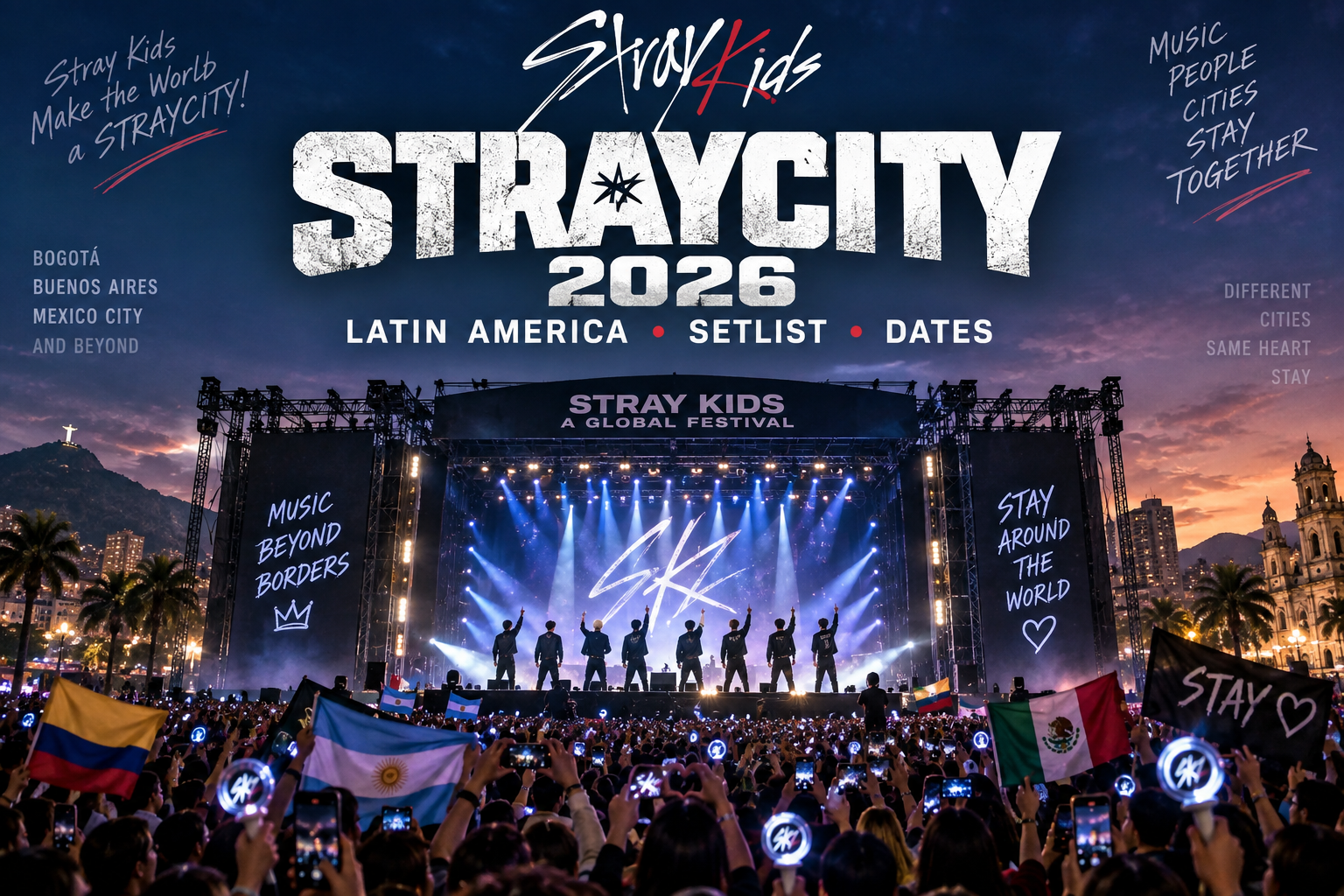
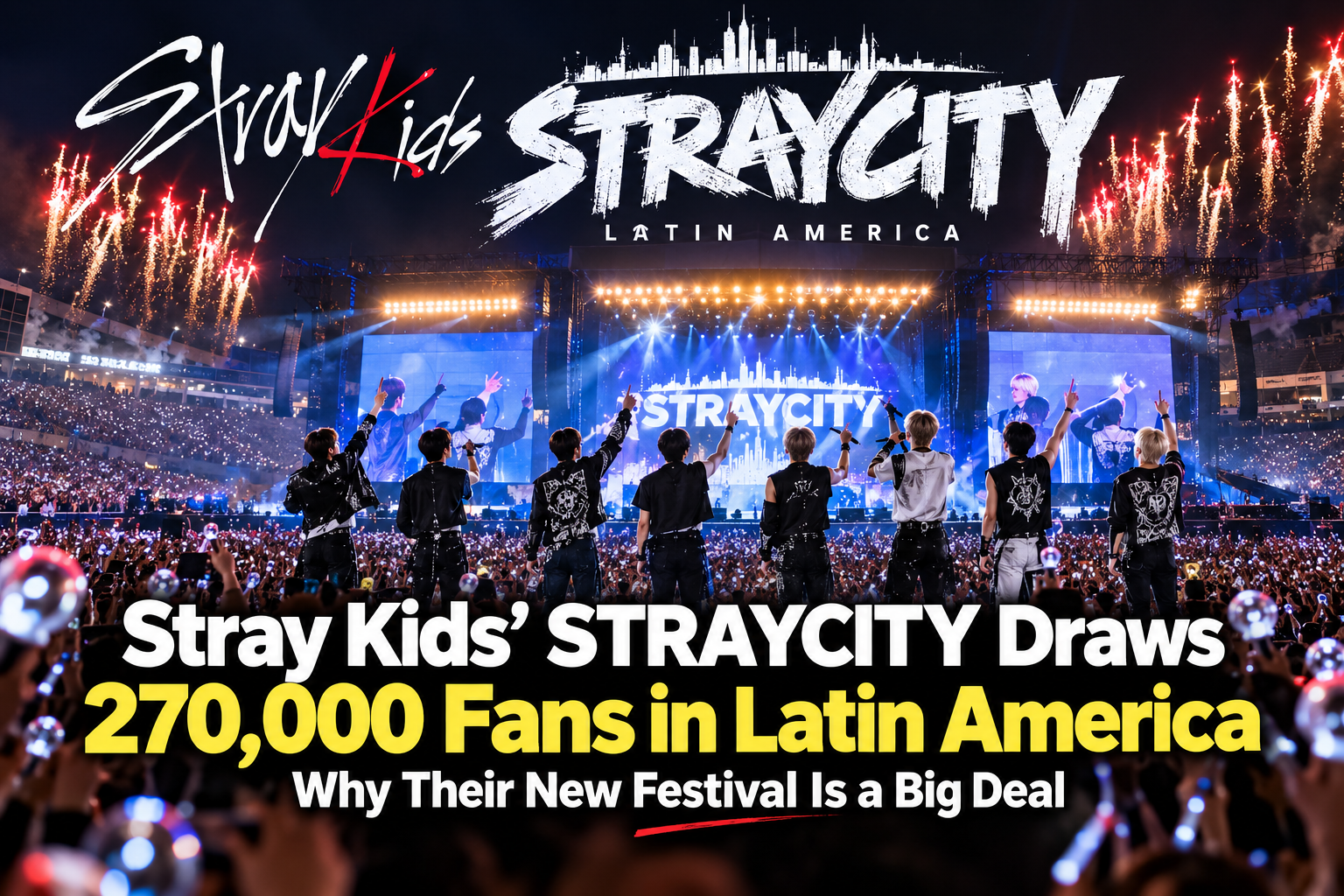
In September 2026, Stray Kids launched a new festival built around the group itself, taking STRAYCITY to Bogotá, Buenos Aires and Mexico City. By the time the Latin American run ended in Mexico on September 26, the five shows had drawn a combined audience of about 270,000 people.
That number is impressive on its own.
What makes STRAYCITY more important, however, is what it could mean for the next stage of Stray Kids’ global career.
Instead of simply appearing at someone else’s festival or adding another stop to a world tour, Stray Kids became the centerpiece of a festival carrying their own identity.
What Is STRAYCITY?
STRAYCITY is a new festival project jointly planned by JYP Entertainment and global concert promoter Live Nation, with Stray Kids serving as the main headliner.
The first Latin American edition began in Bogotá, Colombia, on September 9 before moving to Buenos Aires, Argentina, for two shows on September 14 and 15. It then concluded with two nights at Estadio GNP Seguros in Mexico City on September 25 and 26.
Unlike a traditional Stray Kids concert, STRAYCITY was designed as a broader festival experience.
Stray Kids remained at the center, but the events also featured NEXZ and different local artists depending on the city. That gave each stop a more localized festival lineup rather than simply repeating the same touring package from country to country.
That distinction matters.
Stray Kids were not just touring Latin America.
They were building an event around the Stray Kids name.
270,000 Fans Across Five Shows
The first STRAYCITY Latin American run consisted of five performances across three cities:
- Bogotá — September 9
- Buenos Aires — September 14 and 15
- Mexico City — September 25 and 26
Together, those five performances attracted approximately 270,000 fans.
Mexico City provided an especially powerful ending.
Billboard reported from the first Mexico City night at Estadio GNP Seguros, describing the massive production, choreography and atmosphere surrounding the festival. Local reporting put preliminary attendance for that first night alone at 58,611 tickets sold.
The scale shows how far Stray Kids’ presence in Latin America has developed.
Only a few years ago, the question was whether K-pop groups could consistently fill major venues across the region.
For Stray Kids, the question is increasingly becoming what they can build on top of that demand.
From the dominATE Tour to STRAYCITY
STRAYCITY did not appear out of nowhere.
It followed Stray Kids’ enormous 2025 dominATE world tour, during which the group performed eight stadium shows across five Latin American cities and drew roughly 400,000 people in the region.
That tour demonstrated something important: the group’s Latin American audience was large enough to support stadium-scale performances across multiple markets.
STRAYCITY took the next step.
Instead of returning with only another conventional tour, Stray Kids and their partners created a new event format around the group.
The change can be summarized simply:
2025: Stray Kids proved they could fill Latin American stadiums.
2026: Stray Kids began building their own festival around that audience.
That is why STRAYCITY deserves to be remembered as more than another successful series of concerts.
Rock in Rio Made September Even Bigger
STRAYCITY was not Stray Kids’ only major Latin American achievement in September 2026.
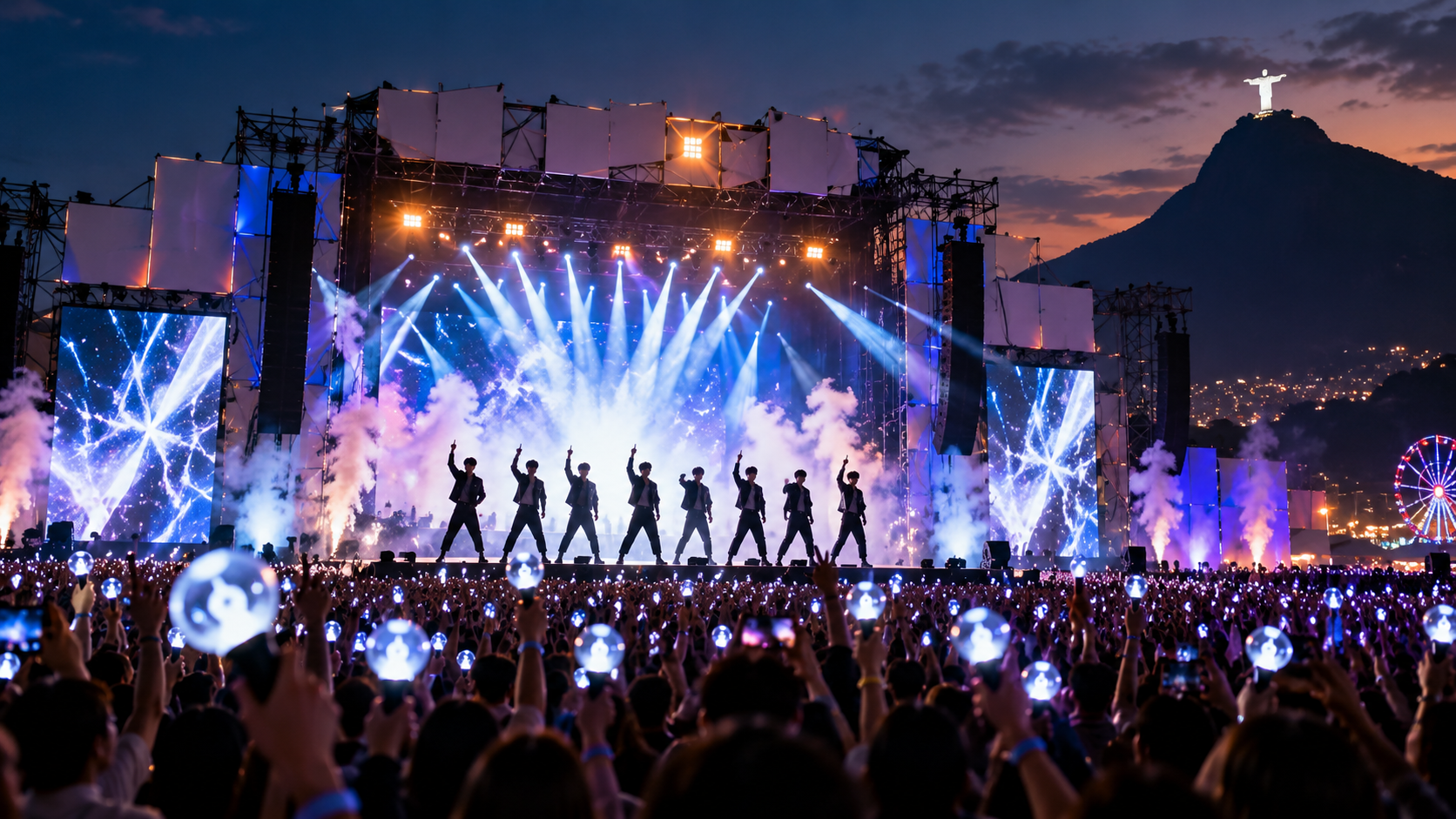
On September 11, between the Bogotá and Buenos Aires dates, Stray Kids headlined Rock in Rio in Brazil.
They became the first K-pop act to headline the legendary festival, performing in front of approximately 100,000 people.
Combined with the 270,000 fans reported for STRAYCITY, Stray Kids reached roughly 370,000 concertgoers in Latin America during September alone.
The two achievements are closely related, but they represent different milestones.
Rock in Rio showed that Stray Kids could stand at the top of the lineup at one of the world’s major established festivals.
STRAYCITY showed something else: they could become the foundation for a new festival concept of their own.
That difference is what makes the STRAYCITY story especially interesting.
Why Latin America Matters for Stray Kids
Latin America has become one of the clearest examples of Stray Kids’ growth outside their traditional Asian markets.
Their 2025 stadium tour established the size of the fandom. Their 2026 Rock in Rio appearance demonstrated their position on the broader festival circuit. STRAYCITY then tested whether that popularity could support a new branded event.
There is also a cultural reason the format makes sense.
STRAYCITY combines the intensity of a Stray Kids concert with the scale and variety of a music festival — an environment well suited to a group known for powerful live performances, large crowds and highly participatory songs.
Tracks including “MANIAC,” “God’s Menu,” “S-Class,” “MIROH,” “TOPLINE” and “Thunderous” have become natural large-crowd songs, while newer material gives the group a continually expanding festival setlist.
The STRAYCITY performances used live-band arrangements, large video screens, fireworks and other outdoor-festival production elements.
STRAYCITY Is More Than a Concert Name
Perhaps the most important part of STRAYCITY is the name itself.
Major artists regularly headline festivals.
Far fewer reach the point where promoters can build a new large-scale festival concept around the artist’s identity.
STRAYCITY turns “Stray” into something bigger than a tour title. It imagines a temporary city built around Stray Kids, their music and the community surrounding them.
That creates possibilities beyond one Latin American run.
If the format continues in other countries or regions, STRAYCITY could develop into a recurring part of the group’s global live strategy rather than remaining a one-time event.
That possibility is not guaranteed, and future locations will depend on what JYP Entertainment and Live Nation announce next. But the first Latin American run has already demonstrated that the concept can operate at substantial scale.
Where STRAYCITY Fits in Stray Kids’ History
Looking back at Stray Kids’ international growth, several stages are becoming visible.
First came increasingly large world tours.
Then came headline appearances at major international festivals, including Lollapalooza Paris, BST Hyde Park, Lollapalooza Chicago and Governors Ball.
In 2025, the dominATE tour pushed the group further into stadium territory.
In 2026, Rock in Rio added another historic festival milestone.
And now STRAYCITY introduces a different idea: a festival with Stray Kids not simply on the lineup, but at the center of the entire concept.
That makes September 2026 an important chapter in the group’s touring history.
FAQ
What is Stray Kids’ STRAYCITY?
STRAYCITY is a festival project jointly planned by JYP Entertainment and Live Nation with Stray Kids as the central headliner. The first Latin American run took place in Bogotá, Buenos Aires and Mexico City in September 2026.
How many people attended STRAYCITY in Latin America?
The five STRAYCITY performances across the three cities drew approximately 270,000 people in total.
Where was STRAYCITY held in 2026?
The Latin American run included Bogotá in Colombia, Buenos Aires in Argentina and Mexico City in Mexico. Bogotá hosted one show, while Buenos Aires and Mexico City each hosted two.
Is STRAYCITY the same as a Stray Kids world tour?
No. STRAYCITY was created as a festival-style event centered on Stray Kids and also featured NEXZ and local artists, with lineups varying by location.
How many fans did Stray Kids reach in Latin America in September 2026?
STRAYCITY drew approximately 270,000 people, while Stray Kids’ Rock in Rio headline performance drew about 100,000. That puts their September 2026 Latin American audience at roughly 370,000 people across those events.
Final Thoughts
The biggest number from STRAYCITY may be 270,000, but the real significance of the festival goes beyond attendance.
Stray Kids have spent years building a global audience through world tours, stadium concerts and major festival appearances. STRAYCITY shows what can happen when that audience becomes large enough to support something created around the group itself.
Across Bogotá, Buenos Aires and Mexico City, Stray Kids were no longer simply visitors on another tour or performers on someone else’s festival lineup. They became the center of a new festival concept carrying their own identity.
Combined with their historic Rock in Rio headline performance, September 2026 became one of the most significant months in Stray Kids’ history in Latin America.
The next question is no longer whether Stray Kids can fill major venues in the region.
It is how far STRAYCITY can grow from here.