Tag: K-pop guide

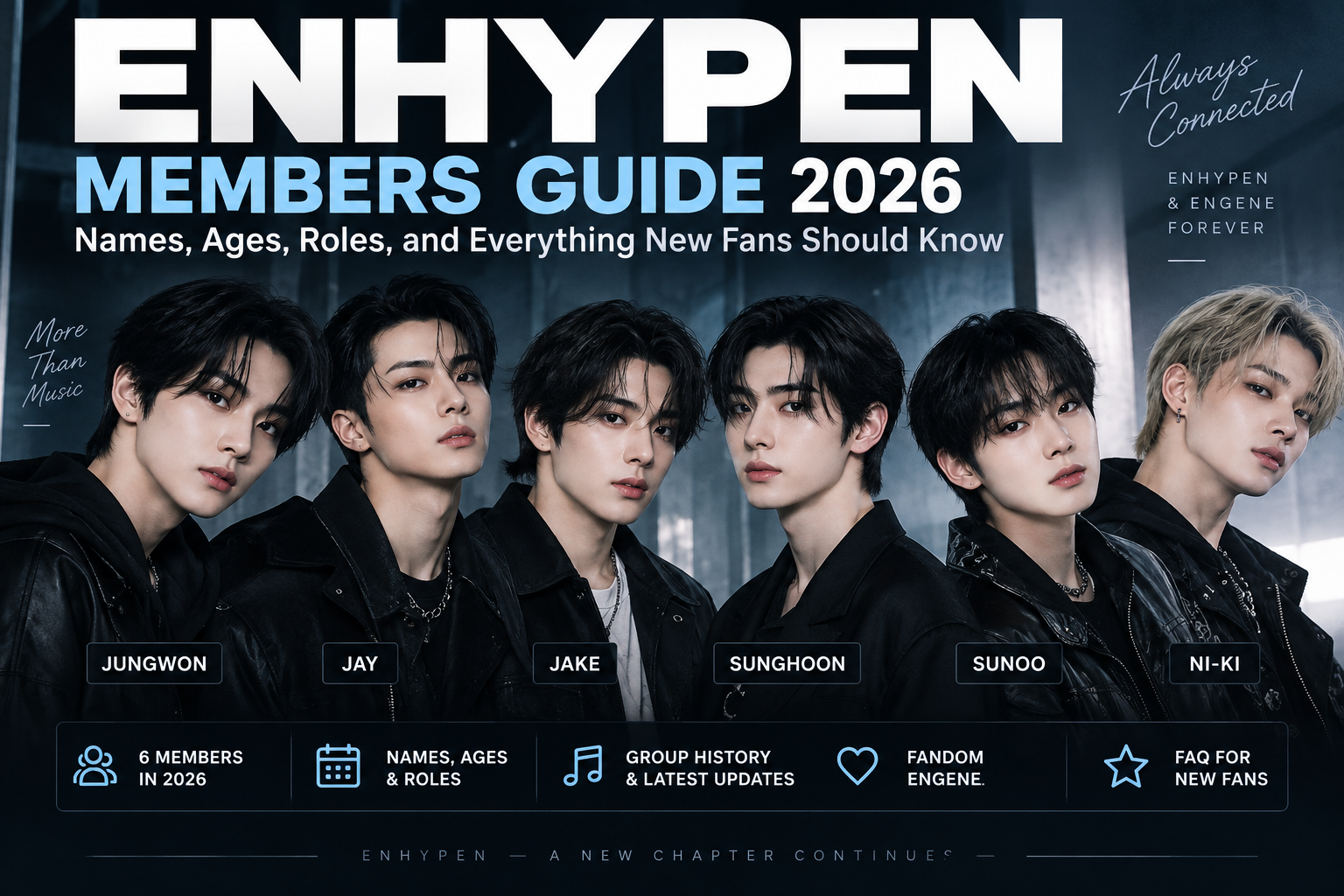
  • ENHYPEN Members Guide 2026: Names, Ages, Roles, and Everything New Fans Should Know

    ENHYPEN Members Guide 2026: Names, Ages, Roles, and Everything New Fans Should Know

    If you are just discovering ENHYPEN, you may come across different answers when searching for the group’s members.

    Some older profiles list seven members, while newer information shows six.

    There is a simple reason for that.

    ENHYPEN originally debuted as a seven-member group, but in 2026 HEESEUNG parted ways with the group to pursue his own musical direction and prepare for solo activities under BELIFT LAB.

    As of 2026, ENHYPEN continues as a six-member group consisting of:

    JUNGWON, JAY, JAKE, SUNGHOON, SUNOO, and NI-KI.

    This guide explains the current ENHYPEN members, their ages, backgrounds, strengths, and what new fans should know about the group in 2026.

    ENHYPEN Members at a Glance

    MemberBirth DateAge in 2026*Nationality / Background
    JUNGWONFebruary 9, 200422South Korean
    JAYApril 20, 200224Korean-American background
    JAKENovember 15, 200223Korean-Australian background
    SUNGHOONDecember 8, 200223South Korean
    SUNOOJune 24, 200323South Korean
    NI-KIDecember 9, 200520Japanese

    *International ages as of September 2026.

    ENHYPEN does not need to be understood only through rigid official positions. Like many modern K-pop groups, the members contribute across vocals, dance, performance, and group chemistry.

    Let’s meet them one by one.

    1. JUNGWON

    Full Name: Yang Jung-won
    Birthday: February 9, 2004
    Nationality: South Korean

    JUNGWON is one of the most recognizable members of ENHYPEN and has played an important leadership role in the group’s history.

    He became known to fans through the survival program I-LAND, where the members who would eventually form ENHYPEN were selected.

    Despite being younger than several other members, JUNGWON has often been associated with a calm and balanced presence within the team.

    What Is JUNGWON Known For?

    Fans often recognize JUNGWON for his distinctive vocal tone, precise performance style, and strong stage presence.

    His ability to balance a youthful image with controlled performances has made him an important part of ENHYPEN’s identity.

    For new fans trying to recognize the members, JUNGWON is often remembered for his expressive eyes and distinctive facial features.

    2. JAY

    Full Name: Park Jong-seong
    Birthday: April 20, 2002
    Nationality / Background: Korean-American background

    JAY is one of ENHYPEN’s older members and is known for his strong personality, performance energy, and direct communication style.

    He spent part of his childhood in the United States, which contributes to his international background.

    What Is JAY Known For?

    JAY brings intensity and confidence to ENHYPEN’s performances.

    Fans also appreciate the contrast between his powerful stage presence and the more humorous or thoughtful moments he shows in variety and behind-the-scenes content.

    His international experience also helps make him approachable to global audiences discovering the group.

    3. JAKE

    Full Name: Sim Jae-yun
    Birthday: November 15, 2002
    Nationality / Background: Korean-Australian background

    JAKE grew up in Australia before moving to South Korea to pursue becoming a K-pop idol.

    His journey is particularly interesting because he had a relatively short training period before appearing on I-LAND.

    He ultimately earned a place in ENHYPEN and has continued developing as a vocalist and performer.

    What Is JAKE Known For?

    JAKE is often associated with a warm, approachable personality.

    His English fluency has also helped ENHYPEN communicate with international audiences during interviews and global promotions.

    On stage, his confidence and performance skills have grown significantly since the group’s early years.

    4. SUNGHOON

    Full Name: Park Sung-hoon
    Birthday: December 8, 2002
    Nationality: South Korean

    SUNGHOON has one of the most unusual pre-debut backgrounds among K-pop idols.

    Before becoming an idol, he competed as a figure skater.

    Years of skating gave him experience performing under pressure long before his K-pop debut.

    From Figure Skating to K-Pop

    SUNGHOON’s transition from competitive figure skating to idol training became one of the most widely discussed parts of his story.

    The two careers may appear completely different, but both require discipline, body control, musical interpretation, and the ability to perform in front of an audience.

    Those qualities translated naturally into his work with ENHYPEN.

    What Is SUNGHOON Known For?

    He is frequently recognized for elegant visuals and controlled performance style.

    For new fans, his figure-skating history is one of the easiest details to remember.

    5. SUNOO

    Full Name: Kim Sun-oo
    Birthday: June 24, 2003
    Nationality: South Korean

    SUNOO became well known during I-LAND for his expressive personality and ability to communicate emotion on stage.

    Within ENHYPEN, he often brings a bright and distinctive energy that contrasts effectively with some of the group’s darker concepts.

    What Is SUNOO Known For?

    SUNOO is particularly recognizable for his facial expressions and ability to adapt to different concepts.

    That versatility matters in ENHYPEN because the group’s music and visual storytelling frequently move between darker, dramatic themes and more emotional or youthful moments.

    His personality has also made him memorable in variety and fan-oriented content.

    6. NI-KI

    Full Name: Nishimura Riki
    Birthday: December 9, 2005
    Nationality: Japanese

    NI-KI is the youngest current member of ENHYPEN.

    In K-pop terminology, that makes him the group’s maknae.

    Despite being the youngest member, NI-KI has long attracted attention for his dancing ability.

    What Is NI-KI Known For?

    Dance is the most obvious answer.

    NI-KI developed dance skills from a young age and became known during I-LAND as a particularly strong performer.

    His movement, control, and ability to handle demanding choreography have made him an important part of ENHYPEN’s performance identity.

    For many fans discovering ENHYPEN through dance performances, NI-KI is one of the first members who stands out.

    What Happened to HEESEUNG?

    This is an important question for anyone discovering ENHYPEN in 2026.

    HEESEUNG was one of the seven original members of ENHYPEN.

    He debuted with the group in 2020 and played a major role in ENHYPEN’s first several years.

    In 2026, BELIFT LAB announced that after discussions about the members’ future directions, HEESEUNG would part ways with ENHYPEN.

    According to the company’s announcement, HEESEUNG had a distinct musical vision that he wanted to pursue.

    ENHYPEN therefore continued official activities as six members, while HEESEUNG began preparing for a solo album as an artist under BELIFT LAB.

    This explains why older ENHYPEN videos, albums, photos, and guides show seven members while current activities feature six.

    For new fans, both parts of the group’s history matter.

    HEESEUNG remains an important part of ENHYPEN’s history even though he is no longer a current member.

    How Was ENHYPEN Formed?

    ENHYPEN was created through I-LAND, a survival program that aired in 2020.

    The program followed trainees competing for the opportunity to debut in a new boy group.

    The original final lineup consisted of:

    JUNGWON, HEESEUNG, JAY, JAKE, SUNGHOON, SUNOO, and NI-KI.

    ENHYPEN officially debuted on November 30, 2020 with the mini album BORDER : DAY ONE.

    Their debut introduced a group that would become known for strong visual storytelling, synchronized performance, and recurring themes involving identity, connection, transformation, fate, and supernatural imagery.

    What Does the Name ENHYPEN Mean?

    The group’s name is inspired by the hyphen (-).

    A hyphen connects different words to create new meanings.

    Similarly, ENHYPEN’s name represents members connecting with one another, discovering each other, and growing together.

    The idea of connection has remained important not only to the group’s name but also to its relationship with fans.

    What Is ENHYPEN’s Fandom Called?

    ENHYPEN’s official fandom name is ENGENE.

    The name carries multiple meanings.

    It suggests that fans act like an “engine” that helps ENHYPEN move forward.

    It also reflects the idea that ENHYPEN and their fans share a connection that helps them grow together.

    If you are new to K-pop, fandom names are an important part of idol culture. They create a shared identity between artists and their fan communities.

    Who Is the Oldest Member of ENHYPEN in 2026?

    Among the six current members, JAY, born April 20, 2002, is the oldest.

    JAKE and SUNGHOON were also born in 2002.

    Who Is the Youngest Member of ENHYPEN?

    NI-KI, born December 9, 2005, is the youngest current member.

    That makes NI-KI the group’s maknae.

    The word “maknae” simply means the youngest person in a group in Korean, but in K-pop it is also commonly used when talking about the youngest member’s role and relationships within a group.

    Who Is ENHYPEN’s Best Dancer?

    There is no objective answer to who is “best,” because performance preferences are subjective.

    However, NI-KI is especially well known for dance and has been recognized for his performance ability since before ENHYPEN’s debut.

    The group as a whole is also known for synchronized choreography and strong performance concepts, so focusing on only one member can overlook an important part of ENHYPEN’s appeal.

    ENHYPEN in 2026

    2026 represents an important new chapter in ENHYPEN’s history.

    The group entered a six-member era while continuing its musical activities.

    On August 21, 2026, ENHYPEN released its eighth mini album, THE SIN : BLISS.

    The album continues the narrative introduced in THE SIN : VANISH, developing the group’s ongoing storytelling around love, taboo, escape, and connection.

    For longtime fans, this period represents a major transition.

    For new fans, it is an opportunity to discover both ENHYPEN’s current identity and the history that brought the group here.

    ENHYPEN Members FAQ

    How many members are in ENHYPEN in 2026?

    ENHYPEN currently has six members: JUNGWON, JAY, JAKE, SUNGHOON, SUNOO, and NI-KI.

    Did ENHYPEN originally have seven members?

    Yes. ENHYPEN debuted with seven members in 2020. HEESEUNG was part of the original lineup before leaving the group in 2026.

    Is HEESEUNG still in ENHYPEN?

    No. BELIFT LAB announced in 2026 that HEESEUNG would part ways with ENHYPEN and prepare for solo activities under the company.

    Who is the oldest current ENHYPEN member?

    JAY is the oldest current member.

    Who is the youngest ENHYPEN member?

    NI-KI is the youngest member.

    What is ENHYPEN’s fandom name?

    The fandom is called ENGENE.

    When did ENHYPEN debut?

    ENHYPEN debuted on November 30, 2020.

    A Simple Way for New Fans to Learn the Members

    If six names still feel difficult to remember, start with one distinctive detail about each member:

    JUNGWON — recognizable vocal tone and leadership history
    JAY — powerful presence and Korean-American background
    JAKE — grew up in Australia
    SUNGHOON — former competitive figure skater
    SUNOO — expressive performer and bright personality
    NI-KI — Japanese maknae known especially for dance

    Then watch a few performances and behind-the-scenes videos.

    Very quickly, the names begin to connect with faces, voices, personalities, and performance styles.

    Final Thoughts

    ENHYPEN’s story is still evolving.

    The group began with seven young performers brought together through I-LAND and developed into one of the internationally recognized groups of its generation.

    In 2026, ENHYPEN entered another chapter as a six-member group consisting of JUNGWON, JAY, JAKE, SUNGHOON, SUNOO, and NI-KI.

    For new ENGENEs, learning the members is only the beginning.

    Understanding where they came from, how the group was formed, what changed in 2026, and how each member contributes makes ENHYPEN’s music and performances much more interesting to follow.

    And if you keep seeing seven members in older ENHYPEN content, now you know why.
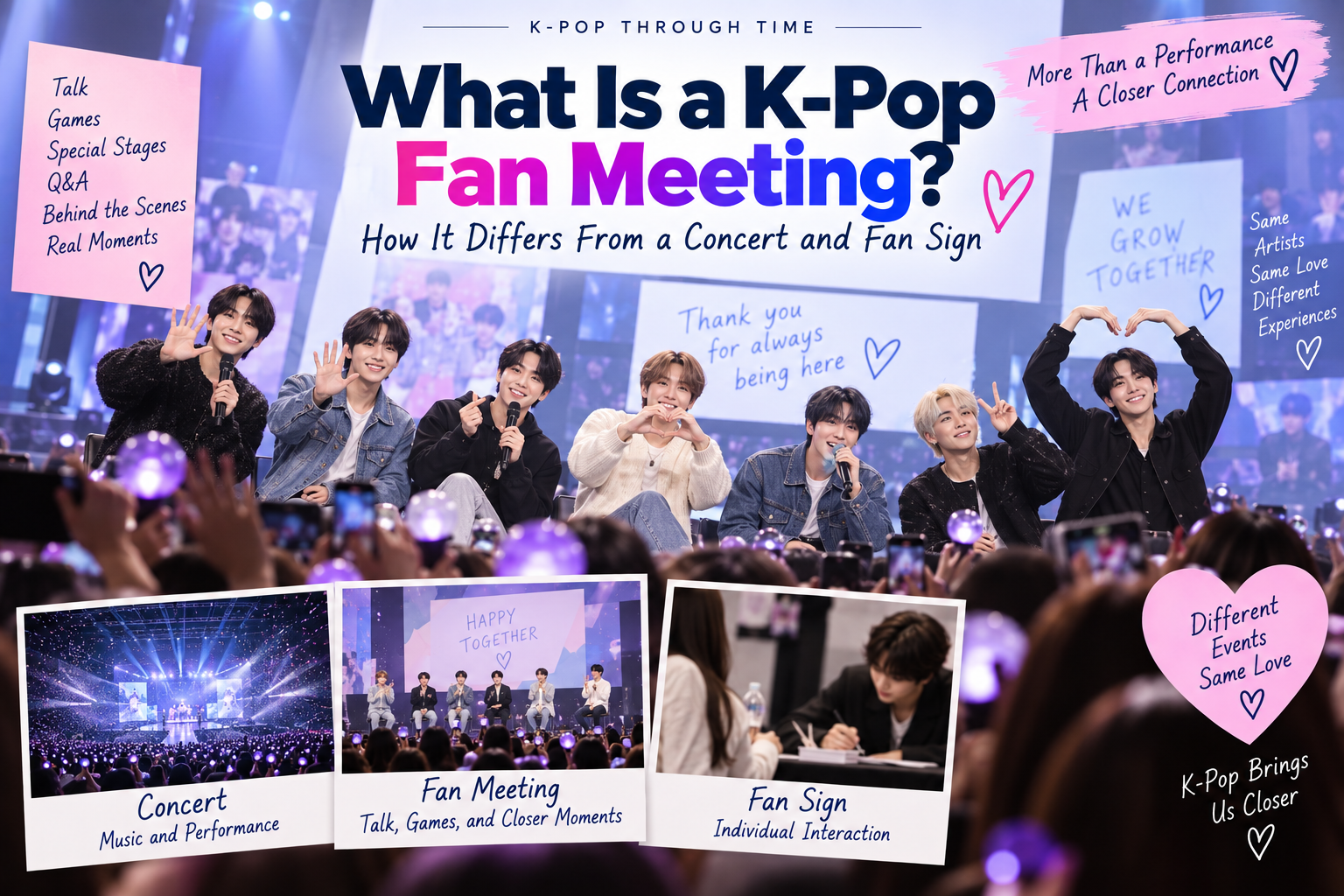

  • What Is a K-Pop Fan Meeting? How It Differs From a Concert and Fan Sign

    What Is a K-Pop Fan Meeting? How It Differs From a Concert and Fan Sign

    If you are new to K-pop, the different types of fan events can be confusing.

    You may hear that an artist is holding a concert, a fan sign, or a fan meeting.

    All three events bring artists and fans together, but they are not the same experience.

    A concert focuses mainly on music and performance. A fan sign offers brief individual interactions with selected fans. A fan meeting falls somewhere in between, combining performances, conversations, games, and special moments designed specifically for fans.

    So what exactly happens at a K-pop fan meeting?

    What Is a K-Pop Fan Meeting?

    A K-pop fan meeting is a special event where artists spend time with fans through a mixture of entertainment and interaction.

    Unlike a regular concert, the schedule may include much more than songs.

    Artists might talk with the audience, answer questions, play games, perform special stages, watch old videos, share stories, or participate in activities prepared specifically for the fandom.

    The atmosphere is often more relaxed and personal than a large concert.

    Fan Meeting vs. Concert

    The biggest difference is the main purpose of the event.

    A concert is primarily built around musical performances.

    Fans usually attend expecting a setlist filled with songs, choreography, stage production, costumes, lighting, and other performance elements.

    A fan meeting, however, focuses more heavily on communication between artists and fans.

    Music is still important, but performances may take up only part of the event.

    There can be long talking segments, games, audience participation, and humorous moments that would not normally appear during a standard concert.

    Fan Meeting vs. Fan Sign

    A fan meeting is also different from a fan sign.

    At a fan sign, selected fans generally interact with idols individually for a short period while receiving autographs.

    At a fan meeting, a much larger audience watches the event together.

    Most attendees will not have an individual conversation with the artist.

    Instead, the interaction happens collectively through conversations, games, audience responses, and special activities.

    A simple way to think about it is:

    Concert = performance-focused

    Fan sign = brief individual interaction

    Fan meeting = group entertainment and fan interaction

    What Happens at a Fan Meeting?

    Every fan meeting is different, but several activities are common.

    Artists may begin by greeting the audience and talking about recent activities.

    There may be question-and-answer segments, games between members, challenges, behind-the-scenes stories, or discussions about memorable moments.

    Some events also include surprise missions or activities suggested by fans.

    Because the format is flexible, fan meetings can reveal more of an artist’s personality than a tightly planned music performance.

    Are There Performances at Fan Meetings?

    Yes.

    Fan meetings often include musical performances, but usually fewer songs than a full concert.

    Artists might perform popular songs, fan favorites, acoustic versions, solo stages, covers, or songs they rarely perform elsewhere.

    Sometimes a fan meeting includes a special performance created specifically for that event.

    This is one reason fans may consider fan meetings unique even if they have already attended the artist’s concert.

    Games and Challenges

    Games are a familiar part of many K-pop fan meetings.

    Members might compete against one another, answer trivia questions, complete missions, or participate in playful challenges.

    These segments often create funny and unpredictable moments.

    Fans get to see idols outside the highly polished environment of a music-show stage or music video.

    That relaxed atmosphere is part of the appeal.

    Talking With Fans

    Conversation is another major part of fan meetings.

    Artists may discuss their music, recent activities, memories, future goals, or experiences with the fandom.

    They may also read questions or messages submitted by fans.

    These conversations can make the event feel more intimate, even when hundreds or thousands of people are attending.

    Special Videos and Behind-the-Scenes Content

    Fan meetings sometimes include videos that are not normally available elsewhere.

    These may show rehearsals, backstage moments, funny missions, interviews, or messages prepared for fans.

    Artists may watch the videos together with the audience and react to them in real time.

    This gives fans another opportunity to see a more casual side of their favorite artists.

    Fan Meetings and Anniversaries

    Fan meetings are often connected to meaningful dates.

    An artist may organize one to celebrate a debut anniversary, the anniversary of a fandom, or another milestone.

    Anniversary fan meetings can include discussions about past years, old photographs, memorable performances, and messages of appreciation.

    For long-time fans, these events can feel like celebrating shared history with the artist.

    What Is a Fan Concert?

    Another term you may encounter is fan concert or sometimes fan-con.

    A fan concert generally combines characteristics of both a fan meeting and a concert.

    It may contain more musical performances than a traditional fan meeting while still including talking segments, games, and fan interaction.

    There is no universal formula, however.

    Different entertainment companies and artists may use these terms somewhat differently.

    Can International Fans Attend?

    Yes.

    Many K-pop artists hold fan meetings outside South Korea, especially as their international audiences grow.

    Cities across Asia and other parts of the world may be included in fan meeting tours.

    Some events may also offer online streaming options.

    Ticketing procedures vary, so international fans should always check official announcements for dates, venues, ticket sales, and participation rules.

    Do Fan Meetings Have Special Merchandise?

    Often, yes.

    Some fan meetings have merchandise designed specifically for the event.

    This can include photocards, posters, clothing, accessories, photo sets, or other collectibles.

    Because these products may be connected to one particular event, they can become memorable souvenirs for fans who attended.

    However, purchasing merchandise is optional and is not necessary to enjoy the event.

    Why Do Fans Love Fan Meetings?

    Concerts allow fans to experience the power of live music.

    Fan signs provide short personal interactions.

    Fan meetings offer something different: the feeling of spending a longer, more relaxed period with the artist.

    Fans can hear stories, watch members joke with one another, enjoy unusual performances, and participate in moments created specifically for the fandom.

    This can make the relationship between artist and fandom feel more personal.

    The Role of Fandom at a Fan Meeting

    Fan meetings are often designed around a particular fandom.

    The fandom name, inside jokes, memorable moments, fan chants, and shared history between artists and fans may all become part of the program.

    Someone unfamiliar with the artist can still enjoy the event, but long-time fans may recognize references that carry special meaning.

    In this sense, a fan meeting can feel like a celebration of the community surrounding an artist.

    Are Fan Meetings Smaller Than Concerts?

    Sometimes, but not always.

    Some fan meetings take place in relatively small venues, creating a more intimate atmosphere.

    Popular artists may hold fan meetings in large arenas or organize multiple dates because of high demand.

    The defining difference is therefore not necessarily the size of the venue.

    It is the style and purpose of the event.

    Do You Need to Attend a Fan Meeting to Be a Dedicated Fan?

    No.

    Like concerts, fan signs, albums, and merchandise, fan meetings are simply one way to experience K-pop.

    Tickets, travel, and other expenses can make attendance difficult or impossible for many fans.

    Someone who enjoys the music from home is no less of a fan than someone who attends multiple events.

    K-pop fandom can be experienced in many different ways.

    Fan Meeting, Concert, or Fan Sign: Which Is Best?

    There is no single answer.

    If you mainly want to hear many songs performed live, a concert may be the best choice.

    If you dream of having a brief individual interaction with an idol, a fan sign offers a very different experience.

    If you enjoy conversations, games, special stages, and a relaxed atmosphere, a fan meeting may be especially appealing.

    Each event reveals a different side of K-pop.

    Final Thoughts

    A K-pop fan meeting is more than a smaller version of a concert.

    It is an event designed around the relationship between artists and their fans.

    Music may be part of the experience, but so are conversations, games, special videos, unexpected performances, and moments of shared laughter.

    Concerts show us artists as performers.

    Fan signs can create brief one-to-one encounters.

    Fan meetings give artists and fans the chance to spend time together as a community.

    And that combination of music, personality, interaction, and shared memories is what makes the K-pop fan meeting a distinctive part of fandom culture.


  • What Is a K-Pop Fan Sign? How Fans Meet Their Favorite Idols

    What Is a K-Pop Fan Sign? How Fans Meet Their Favorite Idols

    For many K-pop fans, seeing their favorite artist at a concert is already an unforgettable experience.

    But imagine sitting directly across from your favorite idol, speaking with them for a short time, and receiving a signed album.

    That is the basic idea behind a K-pop fan sign.

    Fan signs have become an important part of K-pop fan culture. They give selected fans an opportunity to interact with artists more personally than they normally could at a concert or large public event.

    But how do fan signs actually work? How are fans selected? And what is the difference between an in-person fan sign and a video call event?

    Let’s take a closer look.

    What Is a K-Pop Fan Sign?

    A fan sign, sometimes called a fansign or fan signing event, is an organized event where selected fans can meet K-pop artists and receive autographs.

    At a traditional in-person fan sign, members of a group usually sit at a table while fans meet them one by one.

    Each interaction is relatively short, but fans may have a brief conversation with each member while their album is being signed.

    For many fans, the appeal is simple: it provides a rare opportunity for direct interaction with an artist they normally see only through screens or performances.

    How Do Fans Get Into a Fan Sign?

    Fan signs usually have limited capacity, so not everyone who wants to attend can participate.

    One common method involves purchasing eligible albums during a specific entry period.

    Fans submit their information according to the event rules, and winners are selected from eligible entries.

    The exact system varies depending on the organizer, retailer, artist, and event.

    Because of this, fans should always read the official rules carefully rather than assuming every fan sign works the same way.

    Why Do Fans Buy Multiple Albums?

    You may have seen photographs of fans purchasing many copies of the same K-pop album.

    Fan sign entry systems are one reason this can happen.

    For some events, purchasing more eligible albums can provide additional entries into the selection process.

    As a result, highly dedicated fans may purchase multiple copies when trying to increase their chances of being selected.

    However, buying many albums does not necessarily guarantee a win.

    The rules and selection process can differ between events.

    What Happens at an In-Person Fan Sign?

    At an in-person fan sign, winners arrive at a designated venue and follow the organizer’s instructions.

    Fans typically bring or receive an album that will be signed.

    When their turn comes, they move along the table and interact briefly with the members.

    A fan might tell an idol which song they love, congratulate them on a comeback, or share a short supportive message.

    Because time is limited, many fans think carefully about what they want to say before the event.

    Why Are Fan Signs Different From Concerts?

    Concerts are designed around performance.

    Thousands of fans may watch the same artist at once.

    Fan signs are much smaller and focus on brief individual interactions.

    At a concert, the artist performs for the audience.

    At a fan sign, the experience is centered more on conversation, autographs, and direct communication.

    Both can be meaningful fan experiences, but they serve very different purposes.

    What Is a Video Call Fan Sign?

    K-pop fan signs are no longer limited to physical venues.

    A video call fan sign allows selected fans to speak with idols through a video call.

    These events became especially visible as the K-pop industry expanded its methods of connecting with international audiences.

    For overseas fans, video call events can remove the need to travel to Korea just to participate in a short fan interaction.

    The call is usually limited to a specific amount of time, and organizers provide detailed instructions about the platform and procedure.

    How Long Does a Fan Sign Interaction Last?

    There is no universal time limit.

    The length of an interaction depends on the event format and organizer.

    In-person events may give fans a brief opportunity with each member, while video call events often operate under carefully controlled time limits.

    Because the interaction can feel very short, experienced participants often prepare a few simple things they want to say.

    Trying to fit too much into the conversation can make the experience more stressful than enjoyable.

    What Do Fans Talk About?

    Fan sign conversations can cover many light and respectful topics.

    Fans may talk about a favorite song, performance, album, hairstyle, memorable stage, or encouraging message.

    Some prepare a question they have always wanted to ask.

    Others simply want to say thank you.

    The best conversations usually respect the artist’s boundaries and the event’s rules.

    A fan sign is a chance to create a positive interaction—not an opportunity to demand private information or make an artist uncomfortable.

    What Are Post-it Questions?

    At some fan signs, fans have traditionally used small notes or prepared questions as part of the interaction.

    Depending on event rules, a fan might ask an artist to choose between options or answer a simple question.

    However, organizers may restrict what can be written or asked.

    Rules can change between events, so fans should check the specific guidelines before preparing anything.

    Can International Fans Attend Fan Signs?

    Yes, depending on the event.

    International K-pop fans may participate in some in-person fan signs if they meet the entry requirements and can attend the venue.

    Video call events have also made direct fan interactions more accessible across borders.

    However, purchasing procedures, identification requirements, language barriers, shipping costs, and time zones can make participation more complicated for overseas fans.

    Carefully checking the official event information is essential.

    Do You Need to Speak Korean?

    Not necessarily.

    Some international fans prepare a few Korean sentences, while others communicate in English or another language depending on the artist.

    Language ability varies among idols, and the interaction time is limited.

    Simple communication is often more practical than preparing a long speech.

    Fans sometimes write down key phrases beforehand so they do not forget them when they become nervous.

    Fan Signs and Album Promotions

    Fan signs are closely connected to K-pop comeback promotions.

    After a new album is released, artists may participate in several fan sign events organized with retailers or other partners.

    This creates another way for artists to meet fans while promoting the new release.

    It also connects physical album culture with direct fan participation.

    For this reason, fan signs often appear during the same period as music shows, interviews, performances, and other comeback activities.

    Fan Signs and Photocard Culture

    Fan sign events can also intersect with K-pop collecting culture.

    Depending on the event or retailer, album purchases may come with special photocards or other benefits.

    Collectors may refer to some event-specific or retailer-specific cards when discussing their collections.

    This means fan sign promotions can become interesting even to fans who are not primarily trying to win a conversation with an idol.

    Some may simply be interested in the exclusive collectibles connected to the event.

    Why Are Fan Signs So Important to Fans?

    K-pop is built partly around a strong sense of connection between artists and fandoms.

    Music videos and performances allow fans to watch artists.

    Social media allows fans to follow them.

    Concerts allow fans to experience performances together.

    Fan signs add another dimension: brief personal interaction.

    For a fan who has followed an artist for years, even a short conversation can become a lasting memory.

    The Emotional Side of Fan Signs

    Fans sometimes prepare for fan signs for days.

    They may decide what to wear, practice what to say, prepare questions, and worry about becoming nervous.

    Then the actual interaction may last only a short time.

    But the length of the conversation does not necessarily determine its emotional significance.

    A simple smile, encouraging response, or memorable exchange can become something a fan remembers long after the event ends.

    Are Fan Signs Necessary to Be a “Real Fan”?

    Absolutely not.

    Attending fan signs can require money, time, travel, and sometimes luck.

    Many fans will never attend one.

    That does not make their connection to the music any less meaningful.

    Some fans collect albums. Some attend concerts. Some watch performances online. Others simply listen to the songs they love.

    There is no single correct way to enjoy K-pop.

    A Healthy Approach to Fan Sign Culture

    Fan signs can be exciting, but it is important to keep spending and expectations in perspective.

    Buying large numbers of albums in pursuit of an event entry can become expensive.

    Fans should decide what fits comfortably within their own budget rather than feeling pressure to compete with other fans.

    It is also important to remember that idols are people with personal boundaries.

    Respectful interactions help make fan signs positive experiences for both artists and fans.

    Final Thoughts

    A K-pop fan sign is a special event that allows selected fans to interact directly with their favorite artists, usually while receiving signed albums.

    Traditional fan signs offer face-to-face meetings, while video call fan signs make similar experiences possible across greater distances.

    The events also connect several parts of K-pop culture—albums, comebacks, fandoms, collecting, and artist-fan communication.

    For those lucky enough to participate, the most memorable part may not be the autograph itself.

    It may simply be those few moments when the person they have watched on countless stages is suddenly sitting across from them, listening and responding.

    That brief connection is what makes the K-pop fan sign such a distinctive part of fandom culture.


  • What Is a K-Pop Album Unboxing? Why Fans Love the Surprise

    What Is a K-Pop Album Unboxing? Why Fans Love the Surprise

    If you have ever searched for a K-pop album online, you may have come across videos with titles such as “K-pop album unboxing,” “photocard pulls,” or “album haul.”

    At first, it may seem unusual.

    Why would thousands—or even millions—of people want to watch someone open an album?

    The answer lies in the unique way K-pop physical albums are designed.

    A K-pop album is often more than a CD. It can contain photobooks, photocards, posters, stickers, postcards, and other surprises. Because some of these items are random, opening an album can become an experience of its own.

    That is where K-pop album unboxing comes in.

    What Is a K-Pop Album Unboxing?

    A K-pop album unboxing is exactly what it sounds like: someone opens a newly purchased album and shows what is inside.

    But unlike opening a simple CD case, a K-pop unboxing can involve many different items.

    The person may show the album cover, packaging, photobook, CD, lyric booklet, photocards, posters, stickers, and other inclusions.

    They may also compare different versions of the same album.

    For viewers, an unboxing video provides a detailed look at the physical album before they decide whether to purchase it themselves.

    Why Are K-Pop Albums So Good for Unboxing?

    Physical K-pop albums are often designed as collectible packages.

    The music is obviously important, but considerable attention can also be given to the album’s visual concept and packaging.

    A release may include:

    • A photobook
    • Photocards
    • A CD
    • A lyric booklet
    • Posters or folded posters
    • Postcards
    • Stickers
    • Special cards or other collectibles

    The exact contents vary from album to album.

    This means opening a new K-pop album can feel more like opening a carefully designed package than simply removing a disc from a case.

    The Excitement of Random Photocard Pulls

    One of the most anticipated moments in many unboxing videos is the photocard reveal.

    Albums often contain randomly selected photocards featuring different members.

    The buyer usually does not know which member they will receive until the album is opened.

    Fans commonly call this a photocard pull.

    If someone unexpectedly receives a card of their favorite member—their bias—the reaction can be especially exciting.

    This element of chance gives each unboxing a small moment of suspense.

    What Does “Inclusions” Mean?

    In K-pop collecting, you may hear fans use the word “inclusions.”

    This generally refers to the extra physical items included with an album.

    Photocards are one type of inclusion, but the term can also cover postcards, posters, stickers, bookmarks, mini posters, photo strips, and other items.

    Different albums offer different combinations of inclusions.

    For collectors, these extras are an important part of the physical album experience.

    Why Does One Album Have Several Versions?

    Many K-pop albums are released in multiple versions.

    The music may be the same, but each version can feature different cover designs, photobooks, concept photos, packaging, or collectible items.

    For example, one version might use a bright concept while another presents a darker visual style.

    This gives fans the option to choose the design they prefer.

    Collectors may also purchase more than one version when they want to own the different concepts.

    What Is an Album Haul?

    An album haul is slightly different from a single album unboxing.

    Instead of opening just one album, a fan may show several albums purchased at the same time.

    An album haul might include multiple versions of one release, albums from several artists, or a collection of purchases accumulated over time.

    These videos can give viewers a broader look at K-pop album packaging and collecting culture.

    Why Do Fans Watch Unboxing Videos Before Buying?

    Unboxing videos can be practical.

    Online store photographs do not always show every detail of an album.

    By watching an unboxing, a fan can see the actual size of the album, the photobook design, the packaging, and the included items.

    This can help someone decide which version they prefer before spending money.

    For international fans who may need to pay additional shipping costs, seeing the album clearly before purchasing can be particularly useful.

    Unboxing as Part of Fan Culture

    Unboxing videos are not only product demonstrations.

    They can also feel like shared fan experiences.

    Viewers may recognize the excitement of seeing new concept photos, discovering random photocards, or comparing favorite album versions.

    Comments often become places where fans discuss their own pulls, favorite designs, or collecting experiences.

    In this way, a simple unboxing video can become part of a larger conversation within K-pop fandom.

    The Role of Album Design

    K-pop album design often reflects the concept of a particular comeback.

    Colors, typography, photographs, symbols, and packaging may all connect to the music or visual identity of that era.

    Opening the album can therefore reveal another layer of the comeback concept.

    A photobook might contain images that were not used in the main promotional photos.

    The packaging itself may also include creative details that fans only discover after opening it.

    This is another reason unboxing videos can be interesting even to people who do not collect albums themselves.

    What Are Pre-Order Benefits?

    Fans watching album unboxings may also hear the term pre-order benefit, often shortened to POB.

    A pre-order benefit is an extra item offered when an album is ordered during a specific pre-release period, often through a particular retailer.

    These benefits can include exclusive photocards or other collectibles.

    Because different retailers may offer different benefits, two fans purchasing the same album from different stores might receive different extras.

    These items are separate from the standard contents of the album and can become part of photocard collecting culture.

    Do You Need to Buy Every Version?

    No.

    Multiple versions and random collectibles can make K-pop albums exciting, but fans do not need to purchase everything.

    Some people buy only one version of an album.

    Others choose their favorite cover or concept.

    Some fans collect every version, while others do not buy physical albums at all.

    There is no requirement to spend money to prove that you are a fan.

    The collecting side of K-pop should remain something people participate in because they enjoy it.

    Are Unboxing Videos Only for Collectors?

    Not at all.

    Some viewers watch because they are considering purchasing an album.

    Others simply want to see the concept photos or packaging.

    International fans may watch albums that are difficult to obtain where they live.

    And some people simply enjoy the surprise of seeing which photocards appear.

    You can enjoy an album unboxing without ever becoming a collector yourself.

    Album Unboxing and the Digital Music Era

    Streaming has made music instantly accessible around the world.

    Yet physical K-pop albums continue to attract attention partly because they offer something digital music cannot provide: a tangible experience.

    Fans can hold the photobook, display the album, organize photocards, and keep physical memories connected to a particular musical era.

    Unboxing highlights this difference.

    The music may be available instantly online, but the physical album offers another way to experience the release.

    Why the Surprise Matters

    The word “surprise” is important when understanding K-pop album unboxing culture.

    You may know which album you purchased, but you may not know exactly which random items are inside.

    Which photocard will you pull?

    Which member will appear?

    What will the photobook look like in person?

    These small unknowns make opening the package more interactive.

    For many fans, that anticipation is part of the enjoyment.

    Final Thoughts

    A K-pop album unboxing is much more than watching someone remove plastic packaging.

    It provides a close look at the visual and collectible side of K-pop albums—from photobooks and album designs to photocards, inclusions, and multiple versions.

    Random photocard pulls add an element of surprise, while detailed unboxing videos can help fans decide which albums or versions they want to purchase.

    They also reveal something important about modern K-pop culture.

    Even in an age dominated by streaming, physical albums can still create excitement because they combine music, design, collecting, and surprise in one package.

    And sometimes, the most memorable moment comes right at the end—when a fan turns over that final photocard and discovers exactly who they pulled.


  • What Is a K-Pop Photocard? Why Fans Love Collecting Them

    What Is a K-Pop Photocard? Why Fans Love Collecting Them

    If you have ever watched a K-pop album unboxing video, you may have noticed one small item that creates a surprisingly big reaction.

    A fan opens an album, turns through the photobook, and suddenly becomes excited about a small card featuring one of the members.

    That card is called a photocard.

    Photocards have become one of the most recognizable parts of K-pop album culture. They may be small, but for many fans they are much more than simple photographs.

    So what exactly is a K-pop photocard, and why do fans enjoy collecting them so much?

    What Is a K-Pop Photocard?

    A K-pop photocard is a small collectible card featuring a photo of an idol or, sometimes, several members of a group.

    Photocards are commonly included inside physical K-pop albums, although they can also appear in merchandise, fan events, special releases, and promotional products.

    They are usually designed to fit easily into card sleeves, binders, or small holders.

    What makes them especially exciting is that fans often do not know which member’s card they will receive until they open the album.

    Why Are Photocards Random?

    Many K-pop albums include photocards randomly.

    Imagine a group with several members. An album might have different photocards for each member, but a buyer receives only one or a few of them.

    That means opening the album becomes a small surprise.

    Fans may hope to receive a card featuring their favorite member, often called their bias.

    If they receive another member instead, they may keep the card, collect the entire group, or trade it with another fan.

    This random system has helped create a large collecting and trading culture around photocards.

    What Does “Pull” Mean?

    K-pop fans often use the word “pull” when talking about photocards.

    If someone says, “I pulled my bias,” it means they opened an album and randomly received a photocard of their favorite member.

    Fans often film album unboxings because the moment of discovering which photocard they pulled can be part of the fun.

    For collectors, opening an album can therefore feel different from simply buying a CD.

    There is an element of surprise involved.

    Why Do Fans Collect Photocards?

    There is no single reason.

    Some fans collect photocards because they enjoy having small physical memories connected to their favorite artists.

    Others enjoy completing sets.

    A collector might try to collect every member from a particular album era, every version of one member’s photocards, or cards from several different albums.

    For some people, organizing the collection itself becomes an enjoyable hobby.

    Photocards can be placed in binders, displayed in holders, or carefully stored in protective sleeves.

    What Is a Bias Photocard?

    A bias photocard simply refers to a photocard featuring a fan’s favorite member.

    Many collectors focus primarily on one member rather than trying to collect every member of a group.

    This can make collecting more manageable, especially for groups with many members or albums with numerous photocard versions.

    Other fans prefer to collect the entire group.

    There is no single correct way to build a photocard collection.

    Why Are Some Photocards Hard to Find?

    Not all photocards are equally easy to obtain.

    Some may come from older albums that are no longer widely available.

    Others may have been distributed only through specific stores, events, concerts, fan meetings, or limited promotions.

    A card can also become highly sought after because fans particularly like the photo, styling, pose, or era.

    Availability and collector demand can therefore make certain cards much harder to find than ordinary album photocards.

    What Are POB Photocards?

    Another term collectors may encounter is POB, which usually means pre-order benefit.

    Some stores or retailers offer exclusive photocards to fans who pre-order an album through them.

    Different stores may offer different card designs.

    As a result, a single album era can produce many photocards beyond those included inside the standard album itself.

    For new collectors, this can initially feel overwhelming.

    The important thing to remember is that collecting everything is not necessary. Fans can choose what they personally enjoy.

    What Is Photocard Trading?

    Because album photocards are often random, fans frequently trade cards with one another.

    For example, one fan may receive Member A but want Member B. Another fan may have Member B and be looking for Member A.

    They can agree to exchange the cards.

    Photocard trading takes place through fan communities, social media, local meetups, and other collector networks.

    This trading culture has become an important social part of the hobby.

    What Is Photocard Selling?

    Fans also buy and sell individual photocards.

    This allows collectors to search for a specific card without repeatedly buying albums and hoping to receive it randomly.

    Prices can vary greatly depending on availability, demand, condition, and the type of card.

    However, popularity does not automatically mean that a card has a fixed value. Collector markets can change, and prices can differ between sellers and communities.

    For beginners, it is wise to compare carefully before purchasing expensive cards.

    How Do Fans Protect Their Photocards?

    Collectors often use protective sleeves to help prevent scratches, fingerprints, and other damage.

    Cards may then be stored in binder pages or protective holders.

    Some fans also display photocards in decorative holders attached to bags or placed on desks.

    Because collectors may care about the condition of a card, careful storage becomes part of the hobby.

    Photocards and K-Pop Album Culture

    Photocards are closely connected to the physical album experience in K-pop.

    A physical album may include a photobook, CD, lyric booklet, stickers, posters, postcards, and photocards.

    Different versions of the same album may also contain different photos and collectible items.

    This turns the physical album into something more than a container for music.

    For many fans, it becomes a collectible object representing a particular comeback or period in an artist’s career.

    Why Do Albums Have So Many Photocards?

    Over time, photocard systems have become increasingly varied.

    An album may contain several possible cards for each member, while additional versions may be offered through retailers or special events.

    This gives collectors more items to discover and trade.

    At the same time, it means that completing every possible set can become difficult and expensive.

    Fans do not need to collect every card to participate in K-pop fandom. Many people simply keep the photocards they naturally receive from albums.

    Are Photocards Official Merchandise?

    Many photocards are official items produced or authorized as part of albums, merchandise, events, or promotions.

    However, fans may also encounter unofficial photocards created by other fans or sellers.

    These are sometimes called fan-made cards.

    Fan-made cards can be enjoyable collectibles, but they should not be confused with official album or event photocards when buying, selling, or trading.

    Knowing the source of a card is especially important when money is involved.

    Why Are Photocards So Popular?

    Part of their appeal comes from the combination of music, collecting, surprise, and personal connection.

    They are small enough to store easily but varied enough to create an entire collecting hobby.

    They also give fans a physical reminder of an album era, concert, event, or favorite member.

    And because cards can be traded, collecting can help fans interact with other people who share the same interests.

    In this sense, photocards are not simply pictures. They have become part of the social culture surrounding K-pop fandom.

    Do You Need Photocards to Be a K-Pop Fan?

    Absolutely not.

    Some fans love collecting albums and photocards. Others listen only through streaming services.

    Some attend concerts, while others enjoy music videos, performances, or online content.

    There is no requirement to buy merchandise in order to be a genuine fan.

    Photocard collecting is simply one of many ways people choose to enjoy K-pop.

    Final Thoughts

    A K-pop photocard may look like a simple picture card, but it represents a fascinating part of modern K-pop culture.

    Random album pulls create excitement. Trading creates interaction between fans. Collecting allows people to preserve memories of favorite members, albums, and comeback eras.

    From ordinary album cards to pre-order benefits and limited promotional releases, photocards have developed into a collecting culture of their own.

    But the most important thing is not how many cards someone owns.

    For fans who enjoy the hobby, the value often comes from the memories, excitement, and personal meaning attached to each card.

    And sometimes, opening an album and unexpectedly pulling your bias is simply part of the fun.


  • What Is a K-Pop Mini Album? EPs, Singles, and Full Albums Explained

    What Is a K-Pop Mini Album? EPs, Singles, and Full Albums Explained

    If you are new to K-pop, album terminology can quickly become confusing.

    A group announces a single album. A few months later, they release a mini album. Then fans celebrate the arrival of a full album.

    So what is the difference?

    Although these terms may sound complicated at first, they mainly describe different types and sizes of music releases. Understanding them makes it much easier to follow K-pop comebacks, track lists, and album announcements.

    What Is a K-Pop Mini Album?

    A mini album is one of the most common release formats in K-pop.

    It usually contains several songs but is shorter than a full-length studio album. Internationally, a similar format is often called an EP, which stands for “extended play.”

    A mini album gives artists enough space to present several songs and explore a concept without producing a full-length album.

    For many K-pop groups, mini albums are an important part of their regular comeback schedule.

    Is a Mini Album the Same as an EP?

    In many situations, yes.

    The terms mini album and EP are often used to describe similar releases.

    However, terminology can vary depending on the artist, entertainment company, music platform, or market. A release described as a mini album in Korean promotional materials may appear as an EP on an international streaming service.

    Rather than focusing only on the label, it is often more useful to look at the number of tracks and how the release is being promoted.

    What Is a K-Pop Single?

    A single usually focuses on one main song.

    It may be released digitally without a large physical album package, although promotional strategies differ between artists.

    Singles can be used to introduce new music between larger album releases, test a new musical direction, celebrate a special occasion, or begin a new promotional period.

    Some singles also become major hits even though they are not part of a full album at the time of release.

    What Is a Single Album?

    Here is where K-pop terminology becomes especially interesting.

    A single album is not necessarily just one song.

    In K-pop, a single album often contains a small number of tracks—perhaps a main song plus one or two additional tracks.

    It may also be released physically with packaging similar to larger K-pop albums.

    That means fans might receive a photobook, photocards, posters, or other collectible items even though the musical release itself contains only a few songs.

    What Is a Full Album?

    A full album, sometimes called a studio album or full-length album, generally contains more songs than a mini album.

    Because it offers more tracks, a full album gives artists greater space to explore different musical styles and themes.

    For fans, a full album can be particularly exciting because it provides more new music to discover beyond the main promotional song.

    However, full albums often require more time and resources to produce, which is one reason mini albums are so common in K-pop.

    Why Are Mini Albums So Common in K-Pop?

    K-pop operates around highly organized promotional cycles.

    A comeback can involve concept photos, teasers, music videos, choreography, music-show performances, interviews, fan events, and other content.

    Releasing mini albums allows artists to introduce new music regularly while still creating a complete concept around each release.

    Instead of waiting several years between full albums, an artist may return more frequently with mini albums or singles.

    This helps keep fans engaged while allowing each comeback to have its own identity.

    What Is Usually Inside a Mini Album?

    A mini album often contains a title track and several additional songs.

    The title track usually receives the main promotional attention, including a music video and music-show performances.

    The remaining tracks are commonly described by fans as B-sides.

    These B-sides can explore different musical styles and sometimes become fan favorites even without receiving the same level of promotion as the title track.

    What Is a Repackaged Album?

    Another term K-pop fans often encounter is the repackaged album.

    A repackage typically takes an existing album and releases an expanded or revised version with additional material.

    This may include new songs and a new main promotional track.

    Rather than being an entirely unrelated project, a repackage often extends the era of the original album and gives fans additional music and promotions.

    What Is a Pre-Release Single?

    Sometimes an artist releases a song before the main album arrives.

    This is known as a pre-release single.

    The purpose is often to build anticipation for the upcoming album and introduce listeners to its musical direction.

    A pre-release single may receive its own music video and significant promotion, but it does not always become the album’s primary title track.

    When the complete album arrives, another song may take center stage.

    Physical Albums Are a Big Part of K-Pop

    One thing that makes K-pop albums distinctive is the importance of physical packaging.

    A physical K-pop album can be more than a CD.

    Depending on the release, it may include photobooks, photocards, posters, stickers, lyric books, postcards, or other collectible items.

    Albums may also be sold in several versions with different photos or design concepts.

    For many fans, buying an album is therefore both a way to listen to music and a way to collect something connected to the artist and the comeback era.

    Why Are There Multiple Versions of the Same Album?

    It is common for a K-pop album to be released in several versions.

    The songs may be identical, but the packaging, concept photos, covers, or included collectibles can differ.

    This allows one album to present several visual interpretations of the same musical era.

    Collectors may choose their favorite version, while some fans purchase multiple versions to collect different designs or inclusions.

    Do More Songs Mean a More Important Release?

    Not necessarily.

    A full album contains more music, but that does not automatically make it more successful or culturally important than a mini album or single.

    A single song can become one of an artist’s biggest hits.

    Likewise, a mini album can define an important era in a group’s career.

    In K-pop, the impact of a release depends on many factors, including the music, concept, performances, timing, promotion, and audience response.

    Mini Album vs. Full Album: The Simple Difference

    The easiest way to understand the distinction is this:

    A single or single album is generally the smallest release.

    A mini album or EP contains several songs but is shorter than a typical full album.

    A full album generally contains a larger collection of songs and represents a more extensive musical project.

    The exact number of tracks can vary, so these categories should be understood as general industry terms rather than strict mathematical rules.

    Why Understanding Album Types Helps K-Pop Fans

    Once you understand these terms, K-pop announcements become much easier to follow.

    When an entertainment company announces a mini album, you know to expect several new songs.

    When fans talk about a full album, you know they are anticipating a larger collection of music.

    And when you see the words “single album,” you will know that it may contain more than just one track.

    These small pieces of vocabulary make a surprisingly big difference when exploring K-pop.

    Final Thoughts

    K-pop releases come in many forms, from singles and single albums to mini albums, EPs, full albums, and repackaged albums.

    Among them, the mini album has become especially familiar because it fits naturally into K-pop’s comeback-driven promotional system.

    But no matter how many tracks a release contains, each format can introduce a new sound, concept, performance, and chapter in an artist’s career.

    Understanding the different album types allows you to look beyond the terminology and enjoy what matters most—the music and the story surrounding each new release.


  • What Is a K-Pop Title Track? Why It Matters More Than Other Songs

    What Is a K-Pop Title Track? Why It Matters More Than Other Songs

    When a K-pop group releases a new album, fans often talk about the “title track.”

    If you are new to K-pop, this term can be confusing. Does it simply mean a song with the same name as the album? Is it always the first song on the track list?

    Not necessarily.

    In K-pop, a title track usually means the main song chosen to represent and promote an album or release. It is often the song that receives the most attention from the company, the artists, the media, and fans.

    Understanding the title track is important because it sits at the center of many K-pop comebacks.

    What Is a Title Track in K-Pop?

    A K-pop album may contain several songs, but usually one song is selected as the primary promotional track.

    That song is commonly called the title track.

    The title track typically receives an official music video and becomes the song performed most frequently during music-show promotions.

    It is often the first song that casual listeners hear from a new album.

    Because of this, the title track plays an important role in creating the public image of a comeback.

    Does the Title Track Have the Same Name as the Album?

    Not always.

    This is one reason the term can confuse international listeners.

    In some music markets, a “title track” often refers to a song that shares the same title as an album. In K-pop usage, however, the term commonly refers to the main promoted song, regardless of whether its name matches the album.

    The album and its title track can therefore have completely different names.

    How Is a Title Track Chosen?

    Choosing a title track can be an important decision.

    Entertainment companies and artists may consider many factors, including the song’s concept, choreography potential, memorable hooks, performance impact, and how well it represents the album.

    The selected song needs to attract attention while also introducing listeners to the artist’s latest musical direction.

    Sometimes several songs may be considered before the final title track is chosen.

    The Title Track Defines the Comeback

    In many cases, the title track becomes closely associated with the entire comeback.

    Its sound, choreography, fashion, music video, and stage performances help establish the identity of that promotional era.

    A powerful title track might introduce a darker concept, while another could present a bright summer image or a more experimental sound.

    For this reason, fans often remember different periods of an artist’s career through their title tracks.

    Title Tracks and Music Videos

    One of the biggest differences between a title track and many other album songs is the music video.

    Title tracks usually receive the main official music video connected to the comeback.

    K-pop music videos can involve elaborate sets, fashion, choreography, visual effects, and storytelling. As a result, the video becomes an important part of how the title track is experienced.

    For international fans especially, a music video may be their first introduction to a new K-pop release.

    Title Tracks and Choreography

    Performance is another major reason title tracks matter.

    Many K-pop title tracks are designed with stage performances in mind. Choreography can become almost as recognizable as the song itself.

    A memorable dance move may spread through short-form videos, dance challenges, fan covers, and social media.

    This means a successful title track is often more than an audio recording. It can become a complete visual and performance experience.

    Title Tracks on Music Shows

    During a comeback promotion period, idols frequently perform their title track on Korean music shows.

    The same song may appear across several programs with different outfits, stage designs, camera work, and performance details.

    Fans follow these stages closely and may support the song as it competes for music-show wins.

    This promotional exposure helps make the title track the most visible song from the album.

    What About B-Sides?

    Songs on an album that are not the primary title track are often called B-sides in K-pop fan discussions.

    But being a B-side does not mean that a song is less valuable or lower in quality.

    In fact, some B-sides become extremely popular among fans and may even gain wider attention through performances, social media, or word of mouth.

    The main difference is usually which song receives the primary promotional focus.

    Can an Album Have More Than One Title Track?

    Yes.

    Some K-pop releases use double title tracks or promote more than one song as a major track.

    This allows artists to show different musical styles or concepts within the same release.

    One song might emphasize performance and choreography, while another highlights vocals or a different emotional atmosphere.

    Promotional strategies vary between artists and entertainment companies, so there is no single rule that applies to every K-pop release.

    Title Track vs. Pre-Release Single

    Another term fans often encounter is pre-release single.

    A pre-release song is released before the main album arrives. It can build anticipation and introduce part of the album’s musical direction.

    However, the pre-release single is not necessarily the main title track.

    When the full album is released, another song may become the primary track for promotions.

    This strategy gives fans more music before the official comeback and can extend the promotional period.

    Why Do Fans Care So Much About the Title Track?

    The title track often becomes the song most closely associated with an artist’s new era.

    It may receive the largest promotional campaign, the most prominent performances, and the greatest public exposure.

    For fans, the title track also provides the first major clue about how an artist has changed since the previous comeback.

    Has the sound changed?

    Is the concept different?

    Has the choreography evolved?

    What kind of image is the artist presenting this time?

    A single title track can answer many of these questions.

    Can a B-Side Become More Popular Than the Title Track?

    Absolutely.

    Sometimes listeners discover a B-side that becomes a fan favorite or attracts unexpected attention.

    Social media can also give album tracks a second life. A dance clip, performance video, or viral moment can introduce a B-side to audiences who may never have listened to the full album.

    This shows that being selected as the title track provides promotional advantages, but it does not guarantee that it will ultimately become everyone’s favorite song.

    Final Thoughts

    The K-pop title track is more than simply the first song on an album or a song that shares the album’s name.

    It is usually the main promotional song chosen to represent a release.

    Through music videos, choreography, music-show performances, and other promotional activities, the title track often becomes the centerpiece of a K-pop comeback.

    At the same time, the growing popularity of B-sides reminds us that every album can contain songs worth discovering beyond its main single.

    Understanding the difference between title tracks, B-sides, and pre-release singles makes it much easier to follow K-pop releases—and to understand why fans get so excited whenever a new track list appears.


  • What Does “Sub-Rapper” Mean in K-Pop? Supporting Rap Parts and Group Roles

    What Does “Sub-Rapper” Mean in K-Pop? Supporting Rap Parts and Group Roles

    What Is a Sub-Rapper in K-Pop?

    If you are learning about K-pop positions, you may have seen terms such as main rapper, lead rapper, and sub-rapper.

    These titles can be confusing, especially because the meaning of “main,” “lead,” and “sub” in traditional K-pop terminology may be different from what international fans expect.

    Traditionally, a sub-rapper is a member who contributes supporting rap parts within a K-pop group but does not usually hold the main or lead rapper position.

    A sub-rapper may perform shorter rap sections, rhythmic lines, transitions, or parts that suit their individual voice and style.

    However, being called a sub-rapper does not mean that a member is unimportant or incapable of rapping.

    K-pop positions describe roles within a group, not permanent rankings of talent.

    Main vs. Lead vs. Sub-Rapper: What Is the Difference?

    Traditional K-pop rap positions can generally be understood through three categories.

    Main Rapper

    The main rapper usually handles the most prominent or technically demanding rap sections.

    They may perform longer verses, faster flows, complex rhythms, or major rap-focused moments.

    Lead Rapper

    The lead rapper usually performs important rap sections and supports the main rapper.

    They may bring a different tone, rhythm, or delivery style to the group’s rap line.

    Sub-Rapper

    The sub-rapper generally performs supporting or shorter rap sections and may have another primary role within the group.

    This structure is useful for understanding traditional K-pop positions, but not every group follows it.

    What Does a Sub-Rapper Usually Do?

    The exact role varies depending on the group and song, but several patterns are common.

    Perform Supporting Rap Sections

    Sub-rappers may perform shorter rap verses or rhythmic lines within a song.

    These sections can appear between vocal parts, before a chorus, during a bridge, or in other transitions.

    Even a short rap section can become memorable if the member’s voice fits the moment particularly well.

    Create Contrast Between Members

    One of K-pop’s musical strengths is the variety of voices within a group.

    A sub-rapper may have a deeper, brighter, softer, or more playful delivery than the main rapper.

    Producers can use these differences to create contrast.

    Instead of hearing one rap voice throughout a track, listeners experience several different tones and personalities.

    Connect Vocal and Rap Sections

    K-pop songs often move quickly between singing and rapping.

    A sub-rapper can help create a smooth transition between these sections.

    Some lines may sit somewhere between traditional singing and rap, using rhythmic delivery rather than a fully melodic vocal line.

    Members who can move between these styles can be particularly useful in K-pop arrangements.

    Handle Multiple Positions

    Many sub-rappers have another major role.

    A member might primarily be a vocalist, dancer, visual, or center while also performing occasional rap sections.

    This is common because K-pop idols are generally trained in several performance areas.

    Does “Sub-Rapper” Mean Someone Is a Weak Rapper?

    No.

    The position should not automatically be interpreted as a judgment of talent.

    There are several reasons a member might be classified as a sub-rapper.

    They may have another primary position.

    The group may already have one or more specialized rappers.

    Their voice may be used only when a particular song requires it.

    They may also develop significantly after debut.

    An idol’s skills can change through training, recording experience, touring, songwriting, and live performance.

    A position assigned early in a career does not necessarily describe the artist’s abilities years later.

    Does a Sub-Rapper Always Get Fewer Lines?

    Not necessarily.

    Line distribution changes from song to song.

    A sub-rapper may have only a short section in one track but receive a much more noticeable role in another.

    Producers may consider:

    • song concept
    • rhythm and flow
    • vocal tone
    • pronunciation
    • language
    • choreography
    • stage arrangement
    • individual delivery
    • balance between members

    A hip-hop-influenced comeback may provide more opportunities for rappers, while a vocal-focused ballad may contain very little rap.

    Positions therefore do not guarantee a fixed amount of time in every song.

    Can a Sub-Rapper Perform a Major Rap Verse?

    Yes.

    There is no rule preventing a sub-rapper from performing an important rap section.

    If a member’s tone, rhythm, or delivery fits a particular verse, the producer may give them that part regardless of their official position.

    This is especially common when groups experiment with different concepts.

    A member who normally receives short rap lines might suddenly become much more prominent in a song built around their strengths.

    Can a Group Have Several Sub-Rappers?

    Yes.

    Large K-pop groups may have several members who occasionally perform rap sections.

    Some may primarily be dancers.

    Others may be vocalists who can also use rhythmic delivery.

    This allows producers to distribute rap parts across several different voices.

    It also means that the group’s rap line may be more flexible than a simple hierarchy of main, lead, and sub positions suggests.

    Sub-Rapper vs. Sub-Vocalist

    A sub-rapper generally contributes supporting rap sections.

    A sub-vocalist generally contributes supporting singing parts.

    However, one member may sometimes do both.

    A vocalist might perform a rhythmic verse in one song, while a rapper may sing a melodic line in another.

    Modern K-pop frequently blends musical roles, making the boundary between vocalist and rapper less rigid than it may appear in official profiles.

    Can a Sub-Rapper Also Be a Main Dancer?

    Absolutely.

    K-pop members commonly hold multiple positions.

    A member might be a main dancer and sub-rapper, meaning dance is one of their primary specialties while rap is an additional contribution.

    Another member could be a vocalist who occasionally performs rap lines.

    These combinations reflect the multi-skilled nature of idol training.

    Members are often expected to develop abilities in singing, dancing, rap, stage performance, and entertainment before debut.

    Rap Style Is More Than Speed

    Fans sometimes associate strong rapping mainly with speed.

    But rap involves much more than performing words quickly.

    Important elements can include:

    • rhythm
    • flow
    • tone
    • articulation
    • phrasing
    • timing
    • emotional delivery
    • individuality

    A sub-rapper with a distinctive tone can make a short section memorable even without performing the fastest or longest verse.

    In a group setting, having different rap styles can also make a song more dynamic.

    Do K-Pop Rappers Write Their Own Lyrics?

    Some do, but not all.

    Performing a rap verse and writing that verse are two different activities.

    Some K-pop rappers participate extensively in lyric writing, songwriting, and music production.

    Others mainly perform parts created by professional songwriters and producers.

    A member’s official position as main, lead, or sub-rapper does not automatically reveal their level of creative involvement.

    If you want to know whether a particular idol wrote their rap lyrics, official song credits are a more reliable source than position titles.

    Idol Rapper vs. Hip-Hop Rapper

    K-pop rap exists within the larger idol performance system.

    An idol rapper may train not only in rap but also in dance, vocals, stage performance, camera work, and other skills.

    Some idols begin with little rap experience and develop their abilities through the trainee system.

    Others have a strong interest in hip-hop before debut and later become active songwriters, producers, or solo rappers.

    Because these backgrounds vary widely, it is better to evaluate individual artists based on their actual work rather than assuming that all idol rappers have the same experience.

    Why Rap Sections Matter in K-Pop Songs

    Rap can serve several purposes within a K-pop track.

    It may increase energy, change the rhythm, create contrast with melodic vocals, or provide a transition between sections.

    A rap verse can also give a song a different personality.

    In some tracks, rap is central to the entire musical concept.

    In others, it appears only briefly.

    This variety explains why a sub-rapper’s role may change dramatically between different comebacks.

    Why Sub-Rappers Matter in Live Performances

    Rap is not only an audio element.

    During live K-pop stages, a rap section can create a change in visual energy as well.

    The performer may move to the center of the formation, interact with the camera, or lead a transition into a chorus or dance break.

    A sub-rapper who receives a short but distinctive section can therefore have a memorable stage moment.

    This demonstrates why the importance of a role cannot always be measured simply by the number of lines.

    Official Positions vs. Fan-Made Positions

    Not every position found on fan profiles is official.

    Fans sometimes assign terms such as main rapper, lead rapper, or sub-rapper based on their interpretation of songs and performances.

    The entertainment company may never have announced those positions.

    This distinction is particularly important with newer K-pop groups.

    When researching a group, it is useful to separate:

    officially announced positions

    from

    positions commonly assigned by fans.

    They may not be the same.

    Do New K-Pop Groups Still Use Sub-Rapper Positions?

    Some do, but detailed positions are becoming less common in parts of modern K-pop.

    Earlier idol groups were often introduced with clearly defined roles such as:

    leader, main vocalist, lead vocalist, sub-vocalist, main rapper, lead rapper, sub-rapper, main dancer, lead dancer, center, and visual.

    Some newer groups prefer broader labels or no fixed positions at all.

    Members may instead be presented as versatile performers who can change roles depending on the song.

    Why K-Pop Positions Are Becoming More Flexible

    The rise of the all-rounder concept has changed the way fans think about idol positions.

    A member may sing during one comeback, perform rap sections during another, and receive an important dance moment in a different song.

    This flexibility allows producers to focus on what works best for each track rather than following a rigid hierarchy.

    Traditional terms such as main rapper, lead rapper, and sub-rapper are still useful for understanding the history and structure of K-pop groups.

    But they should not be treated as rules that determine everything a member can do.

    Final Thoughts

    A sub-rapper is traditionally a member who contributes supporting rap sections within a K-pop group.

    The simplest way to understand the traditional rap structure is:

    Main rapper: usually handles the most prominent or technically demanding rap sections.

    Lead rapper: usually performs important rap sections and supports the main rapper.

    Sub-rapper: usually contributes supporting or shorter rap sections and may have another primary role.

    However, these titles are not permanent rankings of ability.

    Members develop, musical concepts change, and producers may assign parts differently from song to song.

    Modern K-pop is also becoming increasingly flexible, with many idols moving between singing, rapping, and dancing.

    Understanding the term “sub-rapper” is therefore less about deciding who is the “third-best” rapper and more about understanding how different members contribute to the group’s overall sound and performance.

  • What Does “Sub-Vocalist” Mean in K-Pop? Supporting Vocals, Line Distribution and Group Roles

    What Does “Sub-Vocalist” Mean in K-Pop? Supporting Vocals, Line Distribution and Group Roles

    What Is a Sub-Vocalist in K-Pop?

    If you are learning about K-pop member positions, you may have seen terms such as main vocalist, lead vocalist, and sub-vocalist.

    The difference between these roles can be confusing, especially because different K-pop groups use positions in different ways.

    Traditionally, a sub-vocalist is a member who contributes to the vocal parts of a group but does not usually hold the main or lead vocal position.

    Sub-vocalists may sing verses, shorter melodic lines, supporting sections, or parts that match their individual vocal tone.

    However, the term does not mean that the member is unimportant or unable to sing.

    K-pop positions describe roles within a group, not permanent rankings of talent.

    Main vs. Lead vs. Sub-Vocalist: What Is the Difference?

    Traditional K-pop vocal positions can be understood through three general categories.

    Main Vocalist

    The main vocalist is usually considered one of the strongest or most technically skilled singers in the group.

    They may handle difficult high notes, powerful choruses, ad-libs, and other demanding vocal sections.

    Lead Vocalist

    The lead vocalist usually performs important vocal sections and supports the main vocalist.

    Lead vocalists may frequently sing verses, pre-choruses, choruses, or other memorable melodic parts.

    Sub-Vocalist

    A sub-vocalist usually performs supporting vocal parts and may have another primary position, such as dancer, rapper, visual, or center.

    This traditional structure is useful for understanding K-pop terminology, but it is not a strict rule followed by every group.

    What Does a Sub-Vocalist Usually Do?

    The exact responsibilities of a sub-vocalist depend on the group and the song.

    Still, several common patterns can be found.

    Sing Supporting Vocal Lines

    Sub-vocalists often perform shorter vocal lines that help complete a song’s structure.

    These lines may appear in verses, transitions, choruses, or other sections.

    Even a short line can become memorable when it matches a member’s vocal tone or personality.

    Add Different Vocal Colors

    K-pop groups often contain members with very different voices.

    Some voices are bright and light, while others may sound deeper, softer, breathier, or more rhythmic.

    A producer may give a particular line to a sub-vocalist because that member’s voice creates the right mood.

    This means line distribution is not based only on vocal technique.

    Vocal color can also be an important part of the decision.

    Support Group Choruses

    K-pop choruses often include layered vocals.

    Sub-vocalists can contribute to group singing, harmonies, backing vocals, and repeated phrases that make a chorus sound fuller.

    Listeners may not always notice every individual layer, but these supporting vocals can contribute significantly to the overall sound.

    Perform While Handling Other Roles

    Many sub-vocalists have another major responsibility within the group.

    For example, a member may primarily be a dancer or rapper while also contributing vocal lines.

    Because K-pop performances combine singing, dancing, visual presentation, and stage presence, members often perform more than one role.

    Does “Sub-Vocalist” Mean a Member Is a Weak Singer?

    No.

    This is one of the most common misunderstandings about K-pop positions.

    A sub-vocalist position does not automatically mean that a member cannot sing well.

    There are several reasons for this.

    First, positions are often assigned around the time of debut.

    An idol’s abilities can improve significantly through years of training and performing.

    Second, a member may have been selected primarily for another strength, such as dance or rap.

    Third, the group’s musical style may determine which voices receive the most technically demanding sections.

    A sub-vocalist can therefore become a capable or even highly skilled singer while still being known by an older official position.

    Does a Sub-Vocalist Always Get Fewer Lines?

    Not necessarily.

    Line distribution can change from song to song.

    A sub-vocalist may receive relatively few lines in one track but have a much more noticeable role in another.

    Producers consider many factors when assigning lines, including:

    • vocal tone
    • range
    • song concept
    • rhythm
    • pronunciation
    • emotional delivery
    • choreography
    • stage arrangement
    • overall balance between members

    A song with a softer concept might highlight one member, while a powerful dance track might highlight another.

    For this reason, official positions should not be used to predict exactly how many seconds each member will sing.

    Can a Sub-Vocalist Sing the Chorus?

    Yes.

    There is no rule saying that only main or lead vocalists can sing choruses.

    A sub-vocalist may sing part of a chorus when their voice fits the melody or concept.

    They may also begin a song, perform a pre-chorus, sing a bridge, or receive another memorable section.

    K-pop producers often distribute parts according to the needs of each individual song.

    The position provides general information about a member’s role, but the song itself ultimately determines who sings each section.

    Can a K-Pop Group Have Several Sub-Vocalists?

    Yes.

    This is especially common in larger groups.

    A group might have one or two main vocalists, one or more lead vocalists, and several members who contribute supporting vocals.

    Those members may also hold other positions.

    For example, one sub-vocalist could primarily be a dancer, while another could also perform rap sections.

    This creates a flexible team in which members contribute different combinations of skills.

    Sub-Vocalist vs. Sub-Rapper

    The terms may sound similar, but they refer to different performance areas.

    A sub-vocalist primarily contributes supporting singing parts.

    A sub-rapper generally contributes supporting rap sections.

    A member can sometimes perform both.

    Modern K-pop songs frequently move between singing, rhythmic delivery, and rap, so the boundaries between these roles are not always clear.

    This is another reason why fixed position labels are becoming less important in some newer groups.

    Can a Sub-Vocalist Become a Lead or Main Vocalist?

    Positions can evolve.

    An idol who debuted as a sub-vocalist may improve significantly through vocal lessons, touring, recording, and years of live performances.

    Their role within the group’s music may gradually become larger.

    In some cases, companies officially update positions.

    In other cases, no formal announcement is made even though the member begins receiving more challenging vocal parts.

    This demonstrates an important point about K-pop positions:

    They describe a role, but they do not define the limits of an artist’s future development.

    Why Vocal Tone Can Matter as Much as Position

    Technical skill is important, but K-pop producers also consider how different voices work together.

    Imagine a song performed entirely by singers with very similar vocal tones.

    Even if every singer were technically excellent, the track might lose some of the contrast that makes a group interesting.

    Different voices create different textures.

    A sub-vocalist with a distinctive tone may therefore receive a memorable line because their voice provides exactly the contrast the song needs.

    This helps explain why fans sometimes remember a short line from a sub-vocalist as one of the most recognizable moments in a song.

    How Line Distribution Affects Fan Discussions

    Line distribution is one of the most frequently debated topics among K-pop fans.

    Fans may compare how many lines different members receive and question whether the distribution is fair.

    Vocal positions can influence these discussions, but they do not explain everything.

    A producer must consider the entire song, including vocal range, rhythm, concept, choreography, and how different voices connect with one another.

    Equal line distribution is therefore not always the same as effective line distribution.

    At the same time, fans may reasonably hope to hear more from members whose voices they enjoy.

    These discussions are part of the way audiences engage with K-pop performances.

    Official Positions vs. Fan-Made Positions

    Not every position listed on fan websites is official.

    Fans sometimes analyze performances and assign labels such as main vocalist, lead vocalist, or sub-vocalist even when the entertainment company has not announced those positions.

    This can create confusion.

    A fan-made profile may describe a member as a sub-vocalist, while another source may simply list them as a vocalist.

    When researching a group, it is useful to distinguish between:

    official positions announced by the company or members

    and

    positions commonly used by fans.

    The two are not always identical.

    Do New K-Pop Groups Still Use Sub-Vocalist Positions?

    Some do, but many newer groups use fewer detailed position labels.

    Earlier generations of K-pop often introduced members with clearly defined roles such as:

    leader, main vocalist, lead vocalist, sub-vocalist, main rapper, lead rapper, main dancer, lead dancer, center, and visual.

    Modern groups may use simpler descriptions or avoid fixed positions altogether.

    One reason is that idols are increasingly expected to be versatile performers.

    A member may sing in one track, rap in another, and take a major dance role during a different performance.

    The growth of the all-rounder concept reflects this change.

    Why K-Pop Vocal Positions Are Becoming More Flexible

    The K-pop industry continues to evolve.

    Training systems increasingly encourage idols to develop several skills rather than specialize in only one area.

    Music production has also become more diverse.

    One comeback may emphasize vocals, while another may focus on performance, rap, or experimental production.

    As a result, fixed positions do not always describe what members actually do across an entire career.

    Terms such as main vocalist, lead vocalist, and sub-vocalist remain useful for understanding traditional K-pop group structures.

    But modern K-pop often treats these categories more flexibly.

    Final Thoughts

    A sub-vocalist is traditionally a member who contributes supporting vocal parts within a K-pop group.

    The simplest way to understand the traditional vocal structure is:

    Main vocalist: usually handles the most technically demanding vocal sections.

    Lead vocalist: usually performs important vocal sections and supports the main vocalist.

    Sub-vocalist: usually contributes supporting vocal lines and may have another primary role within the group.

    However, these titles should not be interpreted as permanent rankings of talent.

    Members improve, songs require different voices, and group roles can change over time.

    In modern K-pop, the most important question is often not whether someone is officially a main, lead, or sub-vocalist.

    It is how each member’s voice contributes to the group’s overall sound and identity.

  • What Does “Lead Rapper” Mean in K-Pop? Role, Rap Parts and Responsibilities

    What Does “Lead Rapper” Mean in K-Pop? Role, Rap Parts and Responsibilities

    What Is a Lead Rapper in K-Pop?

    If you are new to K-pop, terms such as main rapper, lead rapper, and sub-rapper can be confusing.

    The words “main” and “lead” sound very similar, and in everyday English, “lead rapper” might sound like the most important rapper in a group.

    Traditionally, K-pop uses these terms differently.

    A lead rapper is generally one of the important rappers in a K-pop group. They may perform substantial rap sections, support the main rapper, and sometimes combine rapping with vocals, dance, or other performance roles.

    However, K-pop positions are not strict rules.

    Different groups organize their members differently, and many newer groups no longer emphasize detailed official positions.

    So what exactly does a lead rapper do?

    Main Rapper vs. Lead Rapper: What Is the Difference?

    Traditionally, the main rapper is considered the member with the strongest or most specialized rap role in the group.

    Main rappers may handle technically demanding verses, faster flows, longer rap sections, or major rap-focused moments.

    The lead rapper is usually another prominent rapper who supports the main rapper and performs important rap sections throughout a song.

    A simple way to remember the traditional distinction is:

    Main rapper = usually handles the most prominent or technically demanding rap sections.

    Lead rapper = usually performs important rap sections and supports the group’s overall rap line.

    But this distinction is not universal.

    In some groups, the difference between main and lead rapper may be very noticeable. In others, their roles can overlap considerably.

    Why Is It Called “Lead Rapper” If the Main Rapper Is Usually the Top Position?

    This terminology can be confusing for international fans.

    In ordinary English, “lead” often describes the person who takes the primary role.

    Traditional K-pop terminology works differently.

    Within many idol groups, main generally refers to the highest specialized position in a particular area, while lead refers to another prominent member who supports that role.

    The same pattern appears elsewhere in K-pop.

    Groups may have a main vocalist and lead vocalist, or a main dancer and lead dancer.

    Understanding this naming system makes K-pop member profiles much easier to follow.

    What Does a Lead Rapper Usually Do?

    The exact responsibilities vary from group to group, but several patterns are common.

    Perform Important Rap Verses

    Lead rappers often receive noticeable rap sections within songs.

    These sections may appear in verses, transitions, bridges, or other moments where the arrangement needs a change in rhythm and energy.

    Support the Main Rapper

    A song may include more than one rap section.

    Having multiple capable rappers allows producers to divide those sections between different voices and styles.

    A lead rapper can complement the main rapper rather than simply imitate them.

    Create Contrast Between Vocal and Rap Sections

    K-pop frequently moves between singing and rapping within the same song.

    A lead rapper can help create a clear shift in rhythm, tone, and energy.

    This contrast is one of the characteristics that gives many K-pop songs their dynamic structure.

    Perform Rap and Vocal Parts

    Some lead rappers are not limited to rapping.

    They may also sing, particularly when the song contains fewer rap sections or when their vocal tone fits a particular melody.

    This kind of versatility is increasingly common in modern K-pop.

    Contribute to Stage Performance

    Rapping in K-pop is also a performance role.

    Delivery, facial expressions, movement, camera awareness, and stage presence can all influence how effective a rap section feels during a live stage.

    Does the Main Rapper Always Get More Rap Lines?

    Not necessarily.

    Positions do not guarantee a specific amount of time in every song.

    Rap distribution can depend on:

    • the concept of the song
    • the number of rap sections
    • flow and rhythm
    • vocal tone
    • language and pronunciation
    • choreography
    • stage performance
    • producer preferences

    Some songs may contain long rap sections, while others may contain almost none.

    As a result, a lead rapper could receive more noticeable lines in one comeback and fewer in another.

    Official positions describe general roles rather than fixed percentages of a song.

    Can a Group Have More Than One Lead Rapper?

    Yes.

    K-pop groups can have multiple rappers, especially when the group has many members.

    Different rappers may also bring different qualities.

    One member may have a deeper voice.

    Another may use a faster or more rhythmic delivery.

    Another may move easily between singing and rapping.

    These differences allow producers to create contrast within a track.

    The rap line can therefore function as a team rather than as a simple ranking from first to second to third.

    Main Rapper vs. Lead Rapper vs. Sub-Rapper

    A simplified traditional structure might look like this:

    Main Rapper

    Usually handles the most prominent or technically challenging rap sections.

    Lead Rapper

    Usually performs significant rap sections and supports the main rapper.

    Sub-Rapper

    Usually receives supporting or shorter rap sections and may have another primary role within the group.

    These definitions are useful for understanding traditional K-pop positions, but they should not be treated as universal rules.

    Not every group officially uses all three labels.

    Is a Lead Rapper Less Skilled Than a Main Rapper?

    Not necessarily.

    Position titles should not automatically be interpreted as permanent rankings of talent.

    Members improve after debut.

    Different rappers also have different strengths.

    One rapper may excel at speed, while another has distinctive rhythm, tone, pronunciation, songwriting ability, or stage presence.

    A particular song may fit the lead rapper’s style better than the main rapper’s style.

    The most useful question is therefore not simply, “Who is better?”

    It is, “What does each rapper contribute to the group’s sound?”

    Rap Style and Vocal Tone Matter

    Rap is not defined only by speed.

    Tone, rhythm, phrasing, articulation, flow, and personality can all shape a rapper’s identity.

    This matters especially in K-pop, where songs often move quickly between different members.

    A distinctive rap voice can immediately change the energy of a track.

    Producers may therefore assign a section to a lead rapper because their tone fits that moment particularly well.

    Just as vocal color matters to singers, individual rap style matters to rappers.

    Do K-Pop Rappers Write Their Own Lyrics?

    Sometimes, but not always.

    This is an important distinction between performing a rap part and creating the rap itself.

    Some K-pop rappers actively participate in lyric writing, songwriting, and music production.

    Others primarily perform rap sections written by professional songwriters or producers.

    Both situations exist within the idol industry.

    Being officially designated as a main or lead rapper does not automatically tell you how much a member contributes to songwriting.

    If you want to know whether a particular idol writes their own rap lyrics, checking official song credits is more reliable than assuming based on their position.

    Idol Rapper vs. Hip-Hop Rapper

    The term idol rapper is often used when discussing rap within K-pop groups.

    K-pop and hip-hop overlap, but they are not identical systems.

    A K-pop idol may be selected or trained to rap as part of a larger performance team that also emphasizes choreography, visuals, vocals, and entertainment.

    Some idol rappers later develop extensive songwriting, production, or solo hip-hop careers.

    Others remain primarily performers within their groups.

    For this reason, it is better to evaluate individual artists by their actual music and creative involvement rather than assuming every K-pop rapper has the same background.

    Can a Lead Rapper Also Be a Vocalist or Dancer?

    Absolutely.

    Multiple positions are common in K-pop.

    A member might be both a lead rapper and lead dancer.

    Another could perform rap sections while also singing.

    This versatility reflects the way idols are trained.

    Before debut, trainees may study dance, vocals, rap, stage performance, and other skills.

    As a result, an official rap position describes one responsibility within the group, not everything the member is capable of doing.

    Why Rap Lines Are Important in K-Pop Songs

    Rap sections can serve several musical purposes.

    They can change the pace of a song, create contrast with melodic sections, increase energy, or provide a transition between different parts of the arrangement.

    In some tracks, rap is central to the song’s identity.

    In others, it is used briefly as an accent.

    This variety is one reason rap roles can change significantly from comeback to comeback.

    A group may release a hip-hop-influenced track with extensive rap sections and then follow it with a vocal-focused song where the rappers receive very different parts.

    Why Lead Rappers Matter During Live Performances

    K-pop rap is not only about recorded audio.

    During live performances, rappers also contribute to the visual and rhythmic energy of the stage.

    A strong rap section can create a dramatic shift in momentum.

    The rapper may move into a prominent formation, interact directly with the camera, or lead the transition into a chorus or dance break.

    Lead rappers help distribute these performance responsibilities across the group.

    This can make a stage feel more varied and dynamic.

    Do New K-Pop Groups Still Use Lead Rapper Positions?

    Not always.

    Many earlier K-pop groups were introduced with clearly defined positions such as:

    leader, main vocalist, lead vocalist, main rapper, lead rapper, main dancer, lead dancer, center, and visual.

    Some newer groups use fewer fixed labels.

    Companies may instead present members as versatile performers without specifying detailed rankings within vocals, rap, or dance.

    This reflects a broader shift toward the all-rounder concept in modern K-pop.

    A member may rap heavily in one song and sing more in another.

    Official Positions vs. Fan-Made Positions

    Fans often create detailed profiles that assign members positions based on performances.

    These can be useful for discussion, but they are not always official.

    If the group’s company or members have never confirmed that someone is a lead rapper, the label may simply be a fan interpretation.

    This is particularly important for newer groups that intentionally avoid fixed positions.

    When researching a K-pop group, distinguish between:

    officially announced positions

    and

    positions commonly assigned by fans.

    They are not necessarily the same.

    Are Rap Positions Becoming Less Important?

    In many groups, yes.

    Modern K-pop increasingly emphasizes versatility.

    A vocalist may rap in one song.

    A rapper may sing during another comeback.

    A member without an official rap position may perform a short rap section because their voice suits the track.

    Traditional labels such as main rapper and lead rapper remain useful for understanding K-pop terminology and the history of the idol system.

    But they should not be treated as rigid rules that determine every line of every song.

    Final Thoughts

    A lead rapper is traditionally one of the important rappers in a K-pop group.

    They often perform significant rap sections, support the main rapper, create contrast within songs, and contribute to the energy of live performances.

    The simplest distinction is:

    Main rapper: usually handles the most prominent or technically demanding rap sections.

    Lead rapper: usually performs important rap sections and supports the group’s overall rap line.

    But modern K-pop is increasingly flexible.

    Not every group officially uses detailed rap positions, and members may move between singing, rapping, and dancing depending on the song.

    Understanding the term “lead rapper” is therefore not about identifying the “second-best” rapper.

    It is about understanding how different performers contribute to the rhythm, sound, and identity of a K-pop group.