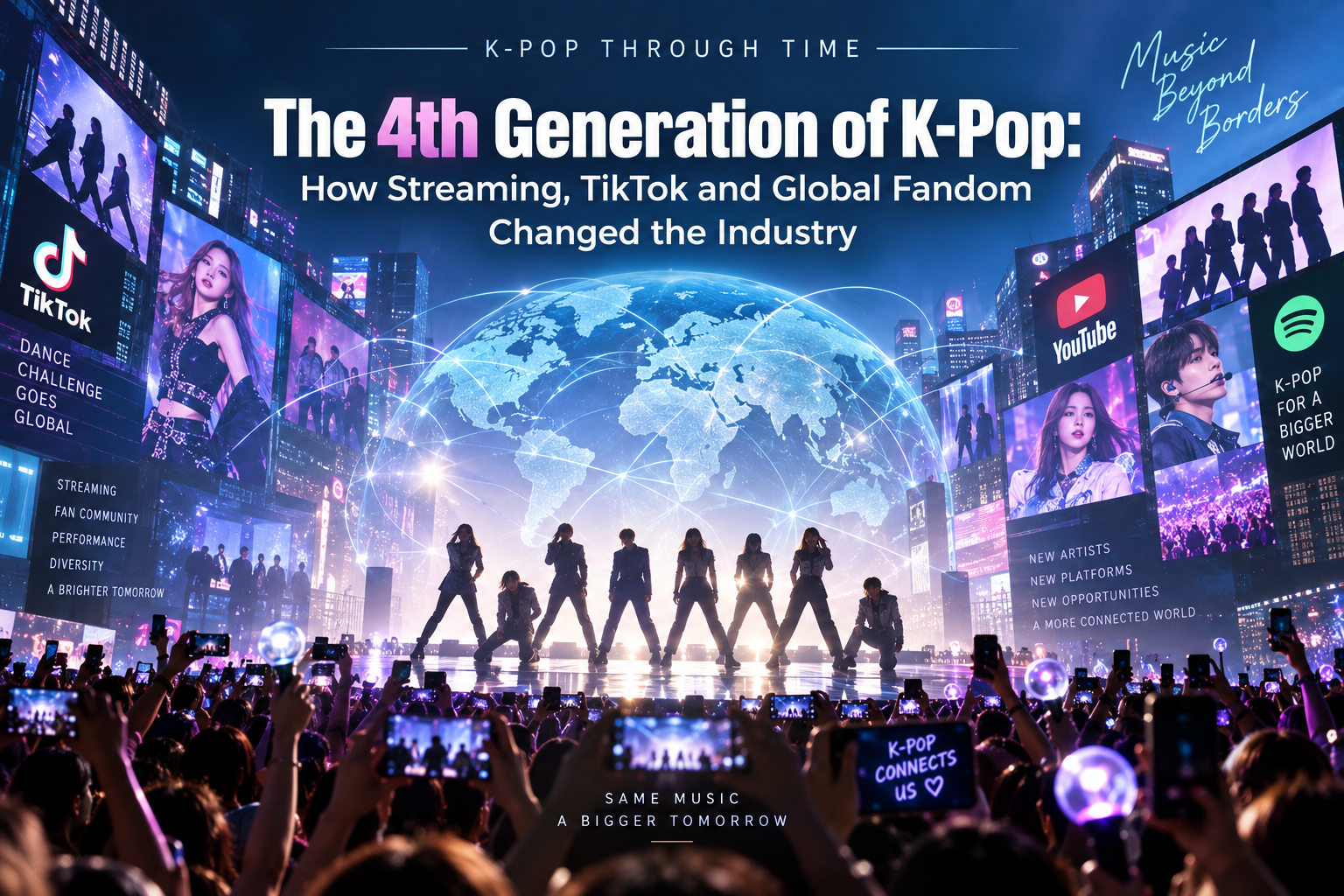
What Is the Fourth Generation of K-Pop?
By the time K-pop entered the late 2010s and early 2020s, becoming “global” was no longer a distant ambition.
The foundations had already been built.
Earlier generations established the idol training system, expanded the Korean Wave across Asia, embraced YouTube and social media, and demonstrated that Korean artists could build enormous international audiences.
The fourth generation inherited that world.
For many newer groups, international fans were present almost from the moment of debut. Music videos were released to worldwide audiences simultaneously. Albums could reach overseas buyers quickly, and fans could follow performances, livestreams, interviews, dance practices, and social-media updates regardless of where they lived.
The central question had changed.
Earlier generations often asked:
How can K-pop reach the world?
The fourth generation increasingly faced a different challenge:
How can a K-pop group stand out when the whole world is already watching?
When Did the Fourth Generation Begin?
As with every K-pop generation, there is no universally accepted starting date.
The boundaries are debated, and some artists may be classified differently depending on the source or fan community.
In general, the fourth generation is commonly associated with groups that emerged from the late 2010s into the early 2020s.
Artists frequently connected with this era include Stray Kids, ATEEZ, TXT, ITZY, aespa, ENHYPEN, IVE, and LE SSERAFIM, among others.
They entered an industry transformed by streaming, smartphones, global e-commerce, social media, and increasingly sophisticated international fandoms.
This technological environment affected almost every stage of an idol group’s career.
Stray Kids and the Importance of Musical Identity
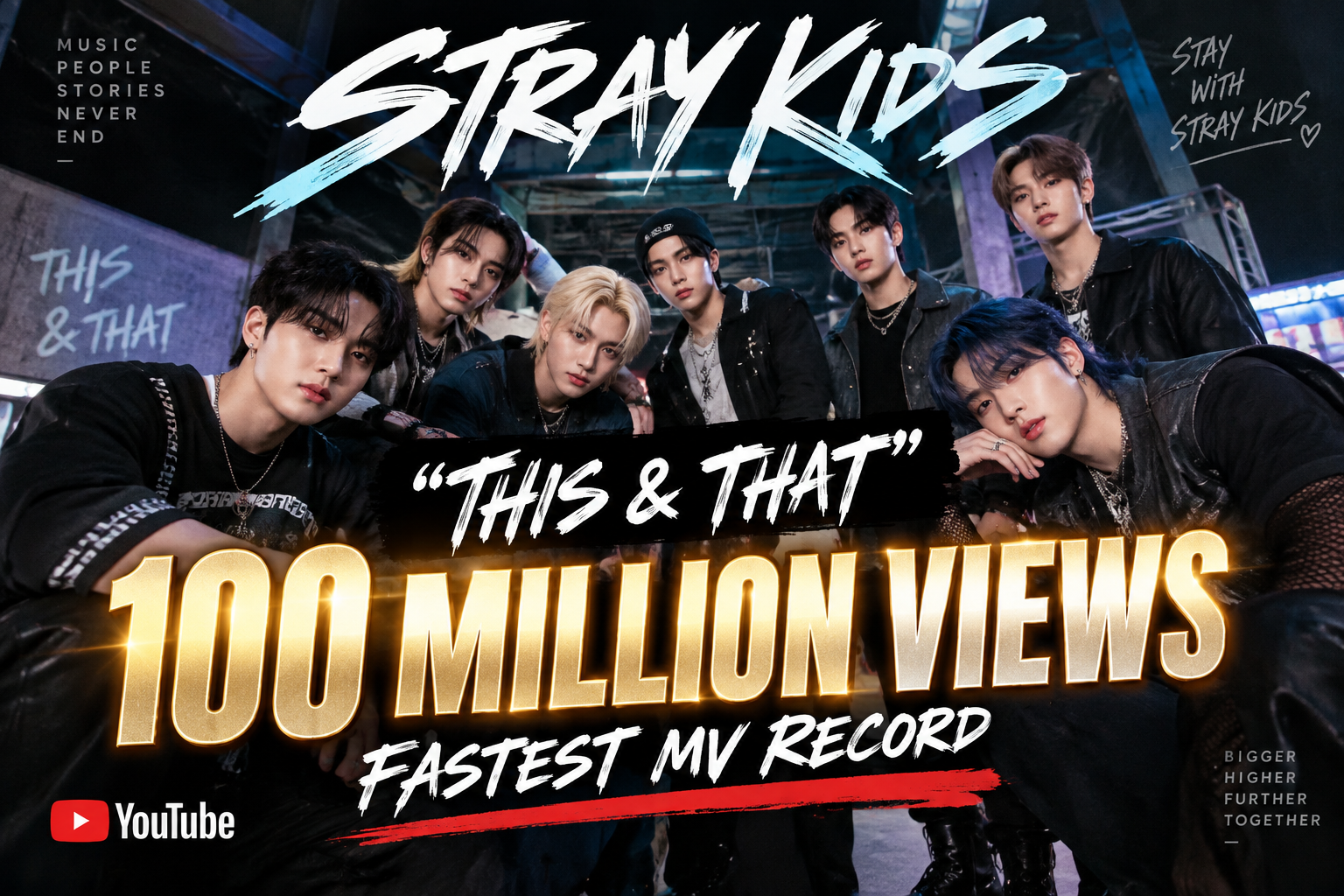
Stray Kids, who debuted under JYP Entertainment in 2018, became one of the era’s most prominent examples of a group developing a strong musical identity alongside substantial member participation in music creation.
Their work often emphasized powerful production, intense performance, and a recognizable sonic character.
This mattered in an increasingly crowded industry.
As more groups competed for attention, having polished choreography and attractive visual concepts was no longer enough by itself.
Successful artists needed to become recognizable.
A listener encountering only a short section of a song or performance needed a reason to remember the group and search for more.
Fourth-generation competition therefore placed growing importance on identity—musical, visual, conceptual, and personal.
ATEEZ and the Global Potential of Performance
ATEEZ, who also debuted in 2018, demonstrated another important feature of the era: an artist could develop significant international momentum even without beginning at one of the industry’s historically largest agencies.
Strong performances, ambitious concepts, touring, and highly engaged fandom helped the group build recognition across international markets.
This reflected a broader change in the structure of K-pop discovery.
Traditional agency power still mattered enormously. Large companies had advantages in investment, distribution, media access, established fan attention, and promotional infrastructure.
But digital platforms created additional pathways.
An impressive performance could circulate online.
A fan could recommend a group across borders.
A concert clip could introduce an artist to thousands of new viewers.
Global fandom could begin growing before mainstream domestic recognition reached the same scale.
The route to success was becoming less predictable.
TXT and a Generation Raised Inside Global K-Pop
When TOMORROW X TOGETHER (TXT) debuted under Big Hit Entertainment in 2019, they entered a company whose global position had been transformed by BTS.
That context illustrated how dramatically K-pop had changed within only a few years.
New groups could now debut in an environment where international media attention, global fan communities, overseas distribution, and worldwide digital promotion were already part of the industry’s infrastructure.
TXT developed themes around youth, friendship, growth, uncertainty, and transition while building an audience across multiple markets.
Their career reflected a defining characteristic of fourth-generation K-pop:
Global expansion did not necessarily have to happen after domestic success.
Domestic and international growth could occur at the same time.
ITZY and the Continuing Evolution of Girl-Group Identity
ITZY, who debuted under JYP Entertainment in 2019, arrived with an identity centered strongly on confidence and individuality.
Their early releases demonstrated how girl-group concepts continued to evolve beyond older expectations about what female idols should look, sound, or perform like.
Powerful choreography became increasingly central.
Performance videos and dance practices could attract audiences of their own.
This was particularly important in the fourth-generation environment because fans were consuming music through many different formats.
A song might be discovered through its official music video.
But it could just as easily be discovered through a dance clip, a concert performance, a short-form video, or a fan-created edit.
Music and performance were becoming inseparable parts of digital discovery.
aespa and the Expansion of K-Pop’s Digital Imagination
When aespa debuted under SM Entertainment in 2020, their early concept incorporated virtual and digital elements into the group’s identity.
The idea reflected a larger cultural moment.
Online life was becoming increasingly intertwined with offline identity. Gaming, virtual worlds, artificial characters, social platforms, and digital communities were becoming familiar parts of everyday culture.
K-pop had always been interested in elaborate concepts and fictional worlds.
The fourth generation pushed those experiments further.
Music could be connected to narrative universes.
Visual symbols could continue across multiple releases.
Fans could interpret clues and debate storylines.
A comeback could function not only as a collection of songs but as another chapter in a larger fictional world.
Then the Pandemic Changed Everything
Just as the fourth generation was developing, the COVID-19 pandemic disrupted the global entertainment industry.
Concerts were canceled or postponed.
International travel became difficult.
In-person fan events were restricted.
For newly debuted groups, this created an extraordinary problem.
K-pop had become a global performance industry at precisely the moment when artists could no longer easily meet global audiences face to face.
But the industry had one major advantage.
Its digital infrastructure was already mature.
Livestreams, online concerts, social-media communication, video content, virtual fan events, and other forms of remote interaction became even more important.
Groups that could not physically travel around the world could still build communities around the world.
The pandemic accelerated a transformation that was already underway.
TikTok Changed the Speed of Music Discovery
At the same time, short-form video was becoming one of the most influential forces in popular music.
TikTok changed the way songs could spread.
A listener no longer needed to encounter an entire music video or even a complete song.
Sometimes a few seconds were enough.
A memorable dance movement, chorus, beat, lyric, or visual moment could become the starting point for millions of short videos.
This created a new form of music discovery.
Songs could travel through challenges, memes, edits, dance clips, and user-generated content.
For K-pop—an industry already built around choreography, visual performance, memorable concepts, and highly active fandoms—the format was especially powerful.
But it also created a new pressure.
In an environment of endless scrolling, artists were competing not only for listeners.
They were competing for seconds of attention.
And that would fundamentally influence how fourth-generation K-pop was promoted, performed, and consumed.
ENHYPEN and the Rise of the Global Fan From Day One
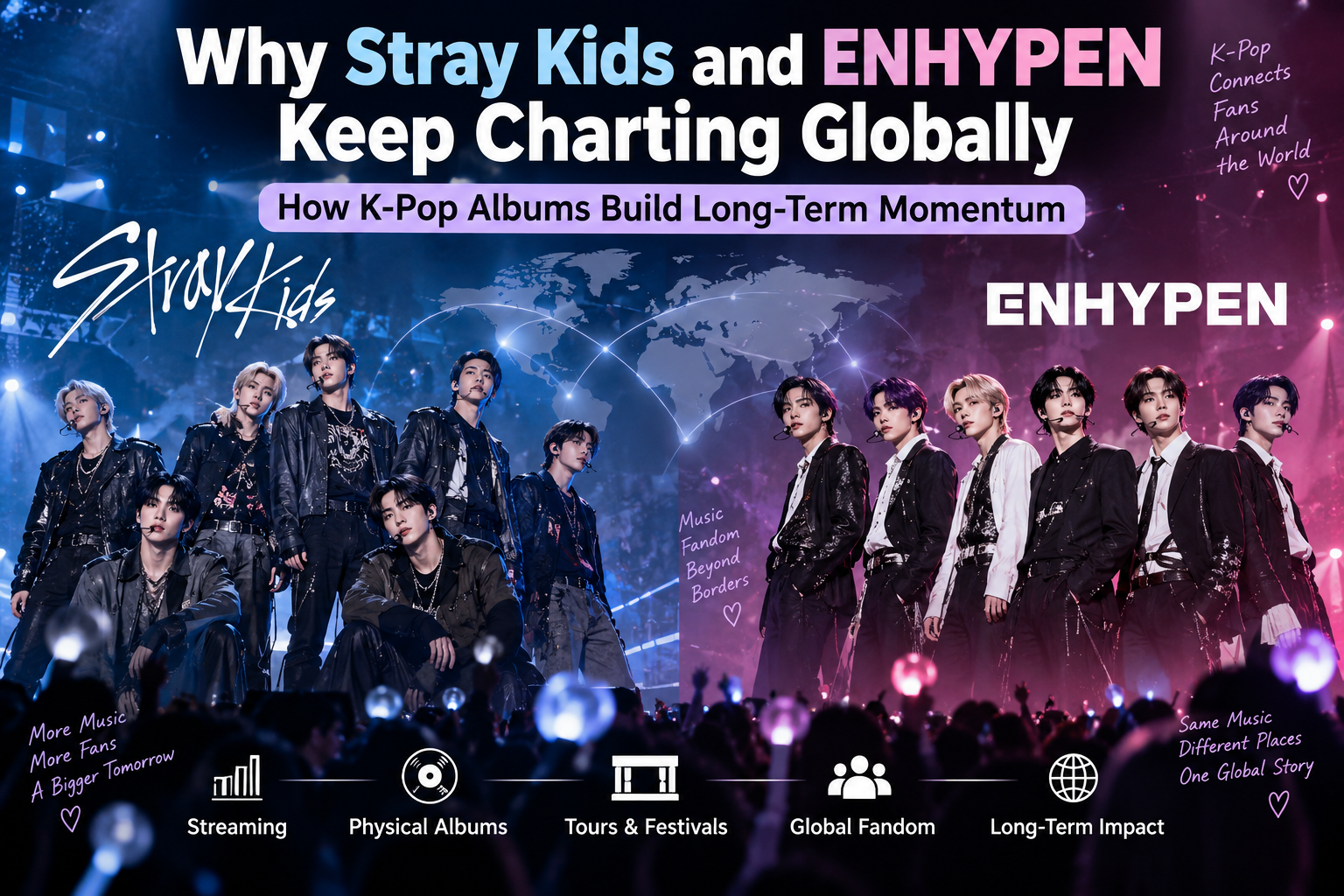
ENHYPEN, formed through the survival program I-LAND and debuting in 2020, illustrated how dramatically the relationship between debut and international fandom had changed.
Viewers from different countries could follow the members before the group officially debuted.
This meant that fandom formation could begin before the first album was released.
That was a major departure from earlier eras.
Traditionally, an idol group would debut in South Korea, establish recognition, and then gradually pursue overseas markets. By the fourth generation, digital platforms and internationally accessible survival programs could create audiences across borders from the beginning.
Fans were no longer simply waiting for Korean popularity to determine which artists they should follow.
They could participate in the discovery process themselves.
The Debut Stage Became Global
This change affected the meaning of a K-pop debut.
A new group’s first music video could immediately receive comments from viewers in multiple languages.
International fans could preorder albums.
Fan accounts could translate interviews within hours.
Performance clips could circulate across social platforms before traditional media had fully evaluated the group.
The first weeks of an idol career were therefore no longer purely domestic.
For many fourth-generation acts, the debut stage itself had become global.
That increased opportunity—but it also increased pressure.
New groups were expected to develop a distinctive identity almost immediately.
IVE and the Power of Immediate Impact
When IVE debuted in 2021, the group quickly demonstrated the importance of strong songs, recognizable member presence, visual identity, and highly repeatable performance moments.
Their rapid rise showed that fourth-generation competition could move extremely quickly.
Digital audiences did not necessarily require years to decide that a group mattered.
A successful release could generate enormous attention in a short period of time.
But maintaining that attention was harder.
One popular song might create visibility.
Building a lasting career required repeated releases capable of strengthening the group’s identity rather than simply reproducing the same formula.
This distinction between viral attention and sustainable fandom became increasingly important in the streaming era.
LE SSERAFIM and the Performance-Driven Era
LE SSERAFIM, debuting in 2022, entered an environment where performance itself had become a major form of global content.
Choreography was no longer something audiences saw mainly on televised music programs.
It existed everywhere.
Dance practices, studio performances, fancams, concert clips, challenge videos, award-show stages, and short-form content could all become separate points of discovery.
This encouraged groups to develop performances that remained compelling even when removed from the traditional music-video format.
The result was an era in which a K-pop song increasingly lived several lives at once:
as audio,
as a music video,
as choreography,
as short-form content,
as a live performance,
and as fan-generated media.
The Extraordinary Competition Among Fourth-Generation Girl Groups
One of the defining features of this period was the remarkable strength and diversity of girl groups.
ITZY emphasized confidence and high-energy performance.
aespa combined powerful music with futuristic imagery and digital-world concepts.
IVE developed an elegant, self-assured pop identity.
LE SSERAFIM built a performance-centered image around ambition, confidence, and resilience.
Other influential acts contributed additional sounds and approaches to an increasingly competitive landscape.
Rather than one dominant formula defining the era, audiences encountered multiple interpretations of what a successful K-pop girl group could be.
This variety helped broaden the market.
Listeners could move between groups based on music, choreography, fashion, personality, concept, or visual style.
Streaming Changed What Success Looked Like
The rise of global streaming platforms also changed how K-pop success could be measured.
Physical album sales remained extremely important, particularly because K-pop albums often functioned as collectible objects containing photobooks, photocards, and other exclusive materials.
But streaming created another layer of visibility.
Listeners could access songs instantly without purchasing an album.
International audiences could participate in a comeback at the same moment as Korean audiences.
Playlist placement could introduce songs to people outside established fandoms.
Streaming data also provided companies with faster evidence of where international audiences were developing.
The geography of fandom became easier to see.
That information could influence touring, promotion, partnerships, and future market strategies.
Short-Form Video Changed Song Promotion
TikTok and other short-form platforms did more than create another place to advertise songs.
They changed promotional behavior itself.
The dance challenge became a recognizable part of K-pop comeback culture.
Idols from different groups could appear together performing a short section of choreography.
These collaborations created cross-fandom exposure while also presenting idols in a more casual format than traditional television stages.
A promotional clip could be filmed quickly and distributed globally almost instantly.
This made marketing faster, more collaborative, and more participatory.
Fans were not simply watching official promotion.
They could recreate it.
The Advantage—and Risk—of Virality
Virality offered enormous opportunities.
A short clip could expose a song to millions of people who had never intentionally searched for K-pop.
But virality also had limitations.
A person who watches a fifteen-second challenge is not automatically a long-term fan.
A trend can disappear as quickly as it appears.
Algorithms can redirect attention toward something new within days.
This created a central challenge for fourth-generation artists:
How do you convert attention into attachment?
The most successful groups needed more than viral moments.
They needed recognizable music, compelling members, strong performances, consistent content, and a reason for casual viewers to become invested fans.
Global Fandom Became an Organized Network
Fourth-generation fandom was not simply larger geographically.
It was increasingly organized as a network.
Fans translated content.
They created streaming guides.
They organized album purchases.
They shared voting information.
They produced edits, memes, tutorials, and explanatory videos.
They created online communities dedicated to particular members or groups.
In many cases, fans acted as informal international promoters.
This activity was not controlled entirely by entertainment companies.
It emerged from fandom itself.
The relationship between company marketing and fan activity therefore became increasingly interconnected.
Official content generated fan activity, and fan activity generated additional visibility for official content.
Language Became Less of a Barrier—but It Did Not Disappear
K-pop’s international expansion also demonstrated that a song did not necessarily need to be entirely in English to reach global listeners.
Audiences had become increasingly comfortable encountering music in languages they did not speak fluently.
Subtitles, fan translations, lyric explanations, and online communities helped reduce language barriers.
At the same time, companies increasingly experimented with English-language releases, multilingual versions, international collaborations, and members with diverse linguistic backgrounds.
The goal was not always to replace Korean.
Instead, the industry developed multiple ways to make Korean-centered pop culture more accessible internationally.
This distinction is important.
K-pop’s globalization was not simply a process of becoming more Western.
It was also a process of teaching global audiences how to participate in a cultural industry that continued to retain a strong Korean center.
International Fans Became Part of Business Strategy
By the fourth generation, international fandom could no longer be treated as a bonus.
It influenced fundamental business decisions.
Companies considered overseas album distribution earlier.
International touring plans became more ambitious.
Global brand partnerships became increasingly valuable.
Social-media communication targeted multiple markets.
Content was often designed with international circulation in mind.
Even smaller agencies could recognize that a dedicated overseas fandom might become commercially significant.
This changed the economics of the idol industry.
The domestic Korean market remained crucial, but it was now one part of a much larger commercial landscape.
From Exporting K-Pop to Building for Global Audiences
Perhaps the biggest shift was conceptual.
Earlier K-pop globalization often involved taking a successful Korean product and introducing it overseas.
Fourth-generation K-pop increasingly developed within a global environment from the beginning.
That does not mean every group was created specifically for Western audiences, nor does it mean domestic popularity became unimportant.
Rather, the distinction between “Korean promotion” and “international promotion” became less clear.
A music video uploaded in Seoul could immediately become content in São Paulo, Los Angeles, Bangkok, Paris, Manila, Tokyo, or Jakarta.
A fan community could form across several continents simultaneously.
K-pop was moving beyond the idea of export.
It was becoming a globally networked industry.
And that transformation would bring both extraordinary opportunities and new problems.
Performance Became a Global Competitive Advantage
Fourth-generation K-pop developed in an environment where almost every performance could become global content.
A television stage filmed in Seoul might be watched hours later by fans across several continents. A dance practice could attract millions of views. A fancam focused on a single member could introduce an entire group to new listeners.
This changed the value of performance.
Precise choreography had long been part of K-pop, but fourth-generation groups faced audiences who could replay, slow down, compare, edit, and redistribute performances endlessly.
Groups such as Stray Kids, ATEEZ, TXT, ITZY, aespa, ENHYPEN, IVE, and LE SSERAFIM therefore competed not only through songs but through the complete visual experience surrounding those songs.
Stage presence became digital currency.
The Algorithm Became a New Gatekeeper
Digital platforms weakened some of the traditional barriers that once determined which artists could reach international audiences.
But they created another powerful force: the algorithm.
YouTube recommendations, streaming playlists, TikTok feeds, and other personalized systems increasingly influenced what people encountered.
This could benefit K-pop enormously.
Someone who had never deliberately searched for Korean music might encounter a dance challenge or performance clip and become curious about the original song.
But algorithmic discovery also created uncertainty.
Entertainment companies could plan a comeback carefully, but they could not completely control which fifteen-second moment would become popular—or whether the algorithm would amplify it at all.
The industry gained access to a larger audience while becoming increasingly dependent on platforms it did not control.
More Content, More Competition for Attention
The fourth generation also accelerated K-pop’s already demanding content cycle.
Fans could expect concept photographs, trailers, teasers, music videos, dance practices, behind-the-scenes footage, livestreams, short-form challenges, variety content, interviews, and social-media updates.
This abundance helped maintain fan engagement between releases.
But it created a paradox.
The more content the industry produced, the more content every individual artist had to compete against.
K-pop groups were no longer competing only with other K-pop groups.
They were competing with global musicians, influencers, games, television, streaming entertainment, and an endless social-media feed.
The scarce resource was no longer access to content.
It was human attention.
Physical Albums Survived the Streaming Revolution
One of the most interesting features of modern K-pop is the continued importance of physical albums.
In many music markets, streaming reduced the role of CDs as the primary way people consumed recorded music.
K-pop developed a different relationship with the physical album.
Albums became collectible experiences.
Photobooks, photocards, posters, multiple versions, limited inclusions, and elaborate packaging gave fans reasons to own a physical object even when they listened to the music digitally.
This model supported strong album sales and encouraged collectors to purchase multiple versions.
It also demonstrated a broader strength of the K-pop business model:
The industry learned to combine digital access with physical ownership rather than treating them as opposites.
But Commercial Success Created New Questions
The collectible-album model also generated criticism.
Multiple versions and randomized inclusions can encourage repeated purchases, raising questions about consumer pressure and environmental waste.
The rapid production of merchandise and physical products creates additional sustainability concerns.
These debates matter because K-pop’s global growth has increased the scale of its commercial footprint.
Success creates responsibility.
As the industry grows, questions about sustainability, ethical marketing, and the environmental cost of fandom are likely to become more important.
The Human Cost of Constant Visibility
Fourth-generation idols also operate in an environment of unprecedented visibility.
Social media can create closeness between artists and fans, but constant visibility has a cost.
Every performance can be analyzed.
Every interview can be clipped.
Minor mistakes can spread internationally.
Appearance, behavior, relationships, and personal decisions may become subjects of intense public discussion.
Young performers can face pressure from training, competition, touring, public expectations, and continuous online judgment.
This creates an important tension at the center of modern K-pop.
Fans often value a feeling of closeness to idols.
But idols also need boundaries, privacy, rest, and space to exist as people rather than permanent content.
The future health of the industry will depend partly on how well companies and fan cultures recognize that distinction.
Globalization Also Changed Who Can Become a K-Pop Idol
As K-pop’s audience became more international, the industry itself became increasingly diverse.
Non-Korean members had existed in earlier generations, but multinational lineups became more familiar as companies recruited talent from different countries.
This served several purposes.
International members could bring linguistic and cultural knowledge.
They could help groups communicate with overseas audiences.
And their presence reflected the fact that K-pop’s talent pool was becoming increasingly international.
This raises a fascinating question:
Does K-pop have to be made only by Koreans to remain K-pop?
The industry’s evolution suggests that nationality alone is not enough to define the genre.
K-pop is also shaped by its training systems, production practices, performance culture, entertainment companies, promotional structures, fan relationships, and historical roots in South Korea.
What Makes K-Pop “K-Pop” in a Global Age?
This question becomes more complicated as Korean entertainment companies develop artists for international markets and collaborate with producers, songwriters, choreographers, and business partners around the world.
K-pop has never existed in cultural isolation.
It has absorbed and reinterpreted influences from American pop, hip-hop, R&B, electronic music, Japanese popular culture, and many other sources.
What makes modern K-pop distinctive is not that every musical element originated in Korea.
Rather, it is the particular entertainment ecosystem that South Korea developed around those influences.
Fourth-generation globalization made that ecosystem increasingly international without completely removing its Korean center.
From the Fourth Generation to What Comes Next
By the early and mid-2020s, another debate began appearing among fans and media:
Had K-pop already entered a fifth generation?
As always, there is no official authority responsible for declaring a new generation.
Generational labels are useful ways of discussing historical change, but they should not be treated as rigid scientific categories.
What matters more than the label is the transformation taking place underneath it.
New groups are entering an industry shaped by short-form video, global streaming, artificial intelligence, virtual performers, multinational talent, increasingly sophisticated fandom platforms, and international business strategies.
The next era may therefore be defined less by K-pop’s ability to reach the world and more by how deeply global structures become embedded inside K-pop itself.
Why the Fourth Generation Matters
The fourth generation may not have needed to prove that K-pop could become global.
Previous generations had already done that.
Its historical importance lies elsewhere.
It demonstrated what happens after globalization becomes normal.
Stray Kids and ATEEZ showed how powerful performance and distinctive identity could build major international audiences.
TXT and ENHYPEN reflected an industry where global fandom could develop from the beginning of a career.
ITZY helped reinforce the importance of high-impact performance.
aespa explored the relationship between K-pop and digital-world concepts.
IVE and LE SSERAFIM emerged during an extraordinarily competitive period for girl groups and demonstrated how quickly new acts could achieve widespread visibility.
Together, these artists helped define an era in which K-pop no longer had to knock on the world’s door.
The door was already open.
The challenge was standing out once everyone could enter.
Four Generations, One Continuing Transformation
Looking across the history of modern K-pop reveals a remarkable progression.
The first generation helped build the idol system.
The second generation expanded the Korean Wave across Asia and used the early digital world to reach new audiences.
The third generation transformed that growing international interest into sustained global influence.
The fourth generation inherited a worldwide audience and learned to compete inside an algorithm-driven, streaming-centered, short-form-video culture.
Each generation did not erase the one before it.
It inherited its infrastructure and responded to a new technological and cultural environment.
That is why K-pop history is best understood not as a sequence of disconnected eras but as a continuing transformation.
The Next Question for K-Pop
K-pop has already answered one of the biggest questions in its history:
Can music centered in South Korea become a worldwide cultural force?
The answer is clearly yes.
The more interesting questions now concern what comes next.
Can the industry remain innovative in an increasingly crowded global market?
Can it balance commercial growth with artist well-being?
Can physical fandom culture become more sustainable?
Can global expansion occur without erasing the cultural identity that made K-pop distinctive?
And as Korean entertainment companies create increasingly international groups, where will the boundary between K-pop and global pop eventually lie?
Those questions will shape the next chapter.
Because the history of K-pop is no longer simply the story of Korean music traveling outward.
It is increasingly the story of how Korea and the world are reshaping popular music together.
Continue Through the History of K-Pop
This article is part of the continuing history explored on K-Pop Through Time.
The earlier chapters examine the origins of modern K-pop, the first generation that established the idol system, the second generation that expanded the Korean Wave, and the third generation that turned K-pop into a sustained global cultural force.
The fourth generation shows what happened after global success became part of the industry’s normal environment.
Next, we will move beyond generations and examine one of the most important forces behind K-pop’s worldwide success:
How the K-pop trainee system works—and why it became one of the most influential and controversial parts of the Korean entertainment industry.