
Tag: K-pop Collecting

  • What Is a K-Pop Album Unboxing? Why Fans Love the Surprise

    What Is a K-Pop Album Unboxing? Why Fans Love the Surprise

    If you have ever searched for a K-pop album online, you may have come across videos with titles such as “K-pop album unboxing,” “photocard pulls,” or “album haul.”

    At first, it may seem unusual.

    Why would thousands—or even millions—of people want to watch someone open an album?

    The answer lies in the unique way K-pop physical albums are designed.

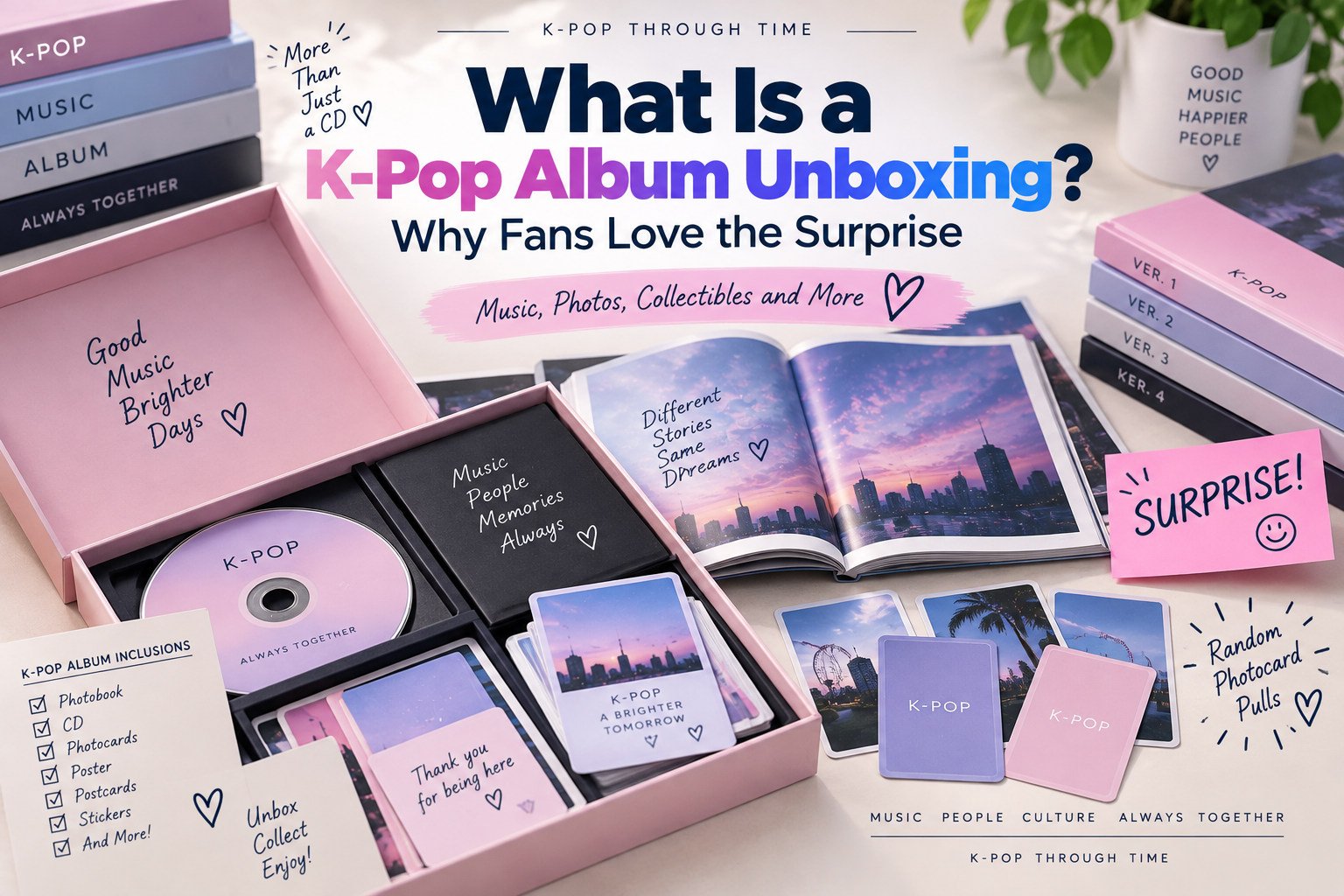
    A K-pop album is often more than a CD. It can contain photobooks, photocards, posters, stickers, postcards, and other surprises. Because some of these items are random, opening an album can become an experience of its own.

    That is where K-pop album unboxing comes in.

    What Is a K-Pop Album Unboxing?

    A K-pop album unboxing is exactly what it sounds like: someone opens a newly purchased album and shows what is inside.

    But unlike opening a simple CD case, a K-pop unboxing can involve many different items.

    The person may show the album cover, packaging, photobook, CD, lyric booklet, photocards, posters, stickers, and other inclusions.

    They may also compare different versions of the same album.

    For viewers, an unboxing video provides a detailed look at the physical album before they decide whether to purchase it themselves.

    Why Are K-Pop Albums So Good for Unboxing?

    Physical K-pop albums are often designed as collectible packages.

    The music is obviously important, but considerable attention can also be given to the album’s visual concept and packaging.

    A release may include:

    • A photobook
    • Photocards
    • A CD
    • A lyric booklet
    • Posters or folded posters
    • Postcards
    • Stickers
    • Special cards or other collectibles

    The exact contents vary from album to album.

    This means opening a new K-pop album can feel more like opening a carefully designed package than simply removing a disc from a case.

    The Excitement of Random Photocard Pulls

    One of the most anticipated moments in many unboxing videos is the photocard reveal.

    Albums often contain randomly selected photocards featuring different members.

    The buyer usually does not know which member they will receive until the album is opened.

    Fans commonly call this a photocard pull.

    If someone unexpectedly receives a card of their favorite member—their bias—the reaction can be especially exciting.

    This element of chance gives each unboxing a small moment of suspense.

    What Does “Inclusions” Mean?

    In K-pop collecting, you may hear fans use the word “inclusions.”

    This generally refers to the extra physical items included with an album.

    Photocards are one type of inclusion, but the term can also cover postcards, posters, stickers, bookmarks, mini posters, photo strips, and other items.

    Different albums offer different combinations of inclusions.

    For collectors, these extras are an important part of the physical album experience.

    Why Does One Album Have Several Versions?

    Many K-pop albums are released in multiple versions.

    The music may be the same, but each version can feature different cover designs, photobooks, concept photos, packaging, or collectible items.

    For example, one version might use a bright concept while another presents a darker visual style.

    This gives fans the option to choose the design they prefer.

    Collectors may also purchase more than one version when they want to own the different concepts.

    What Is an Album Haul?

    An album haul is slightly different from a single album unboxing.

    Instead of opening just one album, a fan may show several albums purchased at the same time.

    An album haul might include multiple versions of one release, albums from several artists, or a collection of purchases accumulated over time.

    These videos can give viewers a broader look at K-pop album packaging and collecting culture.

    Why Do Fans Watch Unboxing Videos Before Buying?

    Unboxing videos can be practical.

    Online store photographs do not always show every detail of an album.

    By watching an unboxing, a fan can see the actual size of the album, the photobook design, the packaging, and the included items.

    This can help someone decide which version they prefer before spending money.

    For international fans who may need to pay additional shipping costs, seeing the album clearly before purchasing can be particularly useful.

    Unboxing as Part of Fan Culture

    Unboxing videos are not only product demonstrations.

    They can also feel like shared fan experiences.

    Viewers may recognize the excitement of seeing new concept photos, discovering random photocards, or comparing favorite album versions.

    Comments often become places where fans discuss their own pulls, favorite designs, or collecting experiences.

    In this way, a simple unboxing video can become part of a larger conversation within K-pop fandom.

    The Role of Album Design

    K-pop album design often reflects the concept of a particular comeback.

    Colors, typography, photographs, symbols, and packaging may all connect to the music or visual identity of that era.

    Opening the album can therefore reveal another layer of the comeback concept.

    A photobook might contain images that were not used in the main promotional photos.

    The packaging itself may also include creative details that fans only discover after opening it.

    This is another reason unboxing videos can be interesting even to people who do not collect albums themselves.

    What Are Pre-Order Benefits?

    Fans watching album unboxings may also hear the term pre-order benefit, often shortened to POB.

    A pre-order benefit is an extra item offered when an album is ordered during a specific pre-release period, often through a particular retailer.

    These benefits can include exclusive photocards or other collectibles.

    Because different retailers may offer different benefits, two fans purchasing the same album from different stores might receive different extras.

    These items are separate from the standard contents of the album and can become part of photocard collecting culture.

    Do You Need to Buy Every Version?

    No.

    Multiple versions and random collectibles can make K-pop albums exciting, but fans do not need to purchase everything.

    Some people buy only one version of an album.

    Others choose their favorite cover or concept.

    Some fans collect every version, while others do not buy physical albums at all.

    There is no requirement to spend money to prove that you are a fan.

    The collecting side of K-pop should remain something people participate in because they enjoy it.

    Are Unboxing Videos Only for Collectors?

    Not at all.

    Some viewers watch because they are considering purchasing an album.

    Others simply want to see the concept photos or packaging.

    International fans may watch albums that are difficult to obtain where they live.

    And some people simply enjoy the surprise of seeing which photocards appear.

    You can enjoy an album unboxing without ever becoming a collector yourself.

    Album Unboxing and the Digital Music Era

    Streaming has made music instantly accessible around the world.

    Yet physical K-pop albums continue to attract attention partly because they offer something digital music cannot provide: a tangible experience.

    Fans can hold the photobook, display the album, organize photocards, and keep physical memories connected to a particular musical era.

    Unboxing highlights this difference.

    The music may be available instantly online, but the physical album offers another way to experience the release.

    Why the Surprise Matters

    The word “surprise” is important when understanding K-pop album unboxing culture.

    You may know which album you purchased, but you may not know exactly which random items are inside.

    Which photocard will you pull?

    Which member will appear?

    What will the photobook look like in person?

    These small unknowns make opening the package more interactive.

    For many fans, that anticipation is part of the enjoyment.

    Final Thoughts

    A K-pop album unboxing is much more than watching someone remove plastic packaging.

    It provides a close look at the visual and collectible side of K-pop albums—from photobooks and album designs to photocards, inclusions, and multiple versions.

    Random photocard pulls add an element of surprise, while detailed unboxing videos can help fans decide which albums or versions they want to purchase.

    They also reveal something important about modern K-pop culture.

    Even in an age dominated by streaming, physical albums can still create excitement because they combine music, design, collecting, and surprise in one package.

    And sometimes, the most memorable moment comes right at the end—when a fan turns over that final photocard and discovers exactly who they pulled.

  • What Is a K-Pop Photocard? Why Fans Love Collecting Them

    What Is a K-Pop Photocard? Why Fans Love Collecting Them

    If you have ever watched a K-pop album unboxing video, you may have noticed one small item that creates a surprisingly big reaction.

    A fan opens an album, turns through the photobook, and suddenly becomes excited about a small card featuring one of the members.

    That card is called a photocard.

    Photocards have become one of the most recognizable parts of K-pop album culture. They may be small, but for many fans they are much more than simple photographs.

    So what exactly is a K-pop photocard, and why do fans enjoy collecting them so much?

    What Is a K-Pop Photocard?

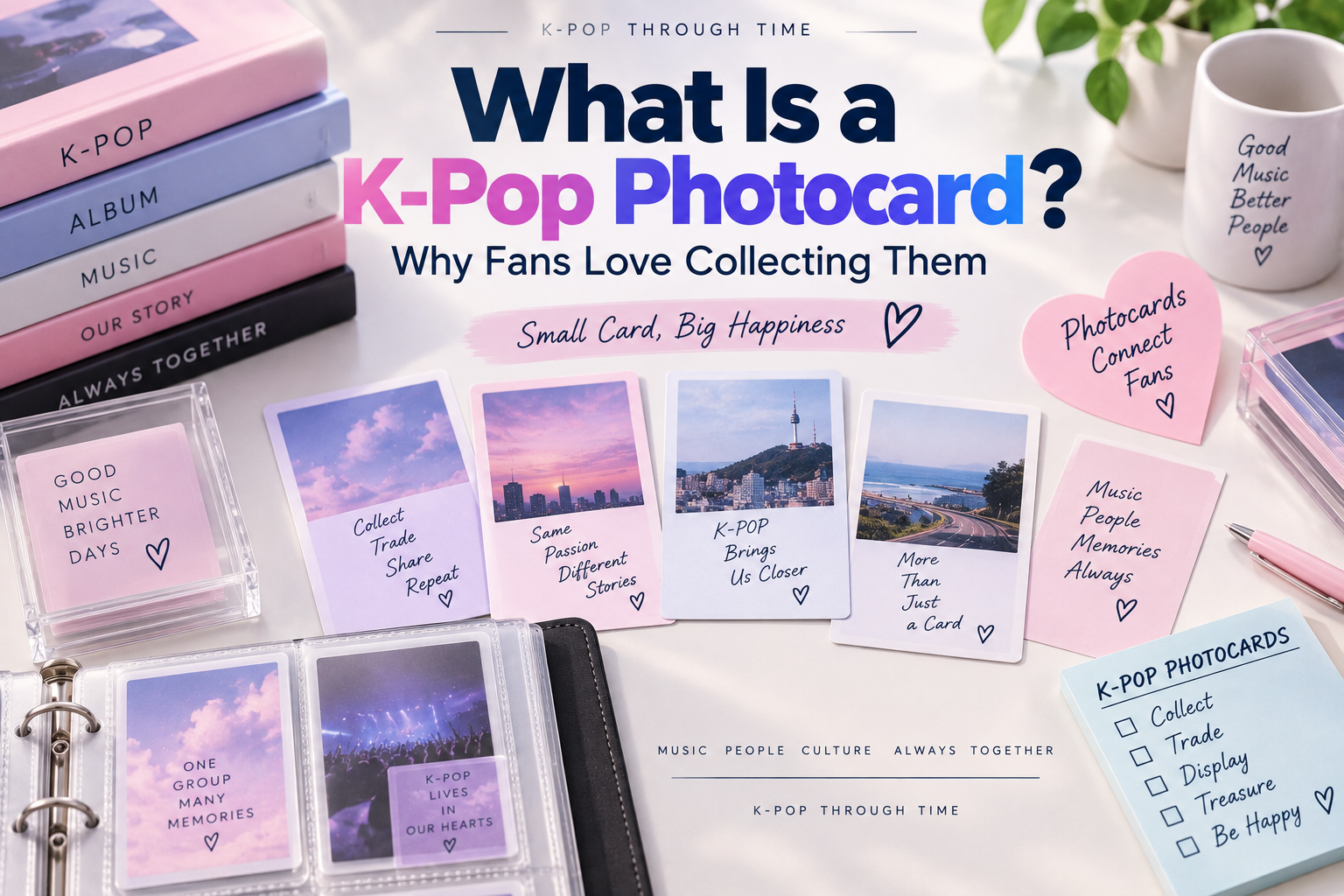
    A K-pop photocard is a small collectible card featuring a photo of an idol or, sometimes, several members of a group.

    Photocards are commonly included inside physical K-pop albums, although they can also appear in merchandise, fan events, special releases, and promotional products.

    They are usually designed to fit easily into card sleeves, binders, or small holders.

    What makes them especially exciting is that fans often do not know which member’s card they will receive until they open the album.

    Why Are Photocards Random?

    Many K-pop albums include photocards randomly.

    Imagine a group with several members. An album might have different photocards for each member, but a buyer receives only one or a few of them.

    That means opening the album becomes a small surprise.

    Fans may hope to receive a card featuring their favorite member, often called their bias.

    If they receive another member instead, they may keep the card, collect the entire group, or trade it with another fan.

    This random system has helped create a large collecting and trading culture around photocards.

    What Does “Pull” Mean?

    K-pop fans often use the word “pull” when talking about photocards.

    If someone says, “I pulled my bias,” it means they opened an album and randomly received a photocard of their favorite member.

    Fans often film album unboxings because the moment of discovering which photocard they pulled can be part of the fun.

    For collectors, opening an album can therefore feel different from simply buying a CD.

    There is an element of surprise involved.

    Why Do Fans Collect Photocards?

    There is no single reason.

    Some fans collect photocards because they enjoy having small physical memories connected to their favorite artists.

    Others enjoy completing sets.

    A collector might try to collect every member from a particular album era, every version of one member’s photocards, or cards from several different albums.

    For some people, organizing the collection itself becomes an enjoyable hobby.

    Photocards can be placed in binders, displayed in holders, or carefully stored in protective sleeves.

    What Is a Bias Photocard?

    A bias photocard simply refers to a photocard featuring a fan’s favorite member.

    Many collectors focus primarily on one member rather than trying to collect every member of a group.

    This can make collecting more manageable, especially for groups with many members or albums with numerous photocard versions.

    Other fans prefer to collect the entire group.

    There is no single correct way to build a photocard collection.

    Why Are Some Photocards Hard to Find?

    Not all photocards are equally easy to obtain.

    Some may come from older albums that are no longer widely available.

    Others may have been distributed only through specific stores, events, concerts, fan meetings, or limited promotions.

    A card can also become highly sought after because fans particularly like the photo, styling, pose, or era.

    Availability and collector demand can therefore make certain cards much harder to find than ordinary album photocards.

    What Are POB Photocards?

    Another term collectors may encounter is POB, which usually means pre-order benefit.

    Some stores or retailers offer exclusive photocards to fans who pre-order an album through them.

    Different stores may offer different card designs.

    As a result, a single album era can produce many photocards beyond those included inside the standard album itself.

    For new collectors, this can initially feel overwhelming.

    The important thing to remember is that collecting everything is not necessary. Fans can choose what they personally enjoy.

    What Is Photocard Trading?

    Because album photocards are often random, fans frequently trade cards with one another.

    For example, one fan may receive Member A but want Member B. Another fan may have Member B and be looking for Member A.

    They can agree to exchange the cards.

    Photocard trading takes place through fan communities, social media, local meetups, and other collector networks.

    This trading culture has become an important social part of the hobby.

    What Is Photocard Selling?

    Fans also buy and sell individual photocards.

    This allows collectors to search for a specific card without repeatedly buying albums and hoping to receive it randomly.

    Prices can vary greatly depending on availability, demand, condition, and the type of card.

    However, popularity does not automatically mean that a card has a fixed value. Collector markets can change, and prices can differ between sellers and communities.

    For beginners, it is wise to compare carefully before purchasing expensive cards.

    How Do Fans Protect Their Photocards?

    Collectors often use protective sleeves to help prevent scratches, fingerprints, and other damage.

    Cards may then be stored in binder pages or protective holders.

    Some fans also display photocards in decorative holders attached to bags or placed on desks.

    Because collectors may care about the condition of a card, careful storage becomes part of the hobby.

    Photocards and K-Pop Album Culture

    Photocards are closely connected to the physical album experience in K-pop.

    A physical album may include a photobook, CD, lyric booklet, stickers, posters, postcards, and photocards.

    Different versions of the same album may also contain different photos and collectible items.

    This turns the physical album into something more than a container for music.

    For many fans, it becomes a collectible object representing a particular comeback or period in an artist’s career.

    Why Do Albums Have So Many Photocards?

    Over time, photocard systems have become increasingly varied.

    An album may contain several possible cards for each member, while additional versions may be offered through retailers or special events.

    This gives collectors more items to discover and trade.

    At the same time, it means that completing every possible set can become difficult and expensive.

    Fans do not need to collect every card to participate in K-pop fandom. Many people simply keep the photocards they naturally receive from albums.

    Are Photocards Official Merchandise?

    Many photocards are official items produced or authorized as part of albums, merchandise, events, or promotions.

    However, fans may also encounter unofficial photocards created by other fans or sellers.

    These are sometimes called fan-made cards.

    Fan-made cards can be enjoyable collectibles, but they should not be confused with official album or event photocards when buying, selling, or trading.

    Knowing the source of a card is especially important when money is involved.

    Why Are Photocards So Popular?

    Part of their appeal comes from the combination of music, collecting, surprise, and personal connection.

    They are small enough to store easily but varied enough to create an entire collecting hobby.

    They also give fans a physical reminder of an album era, concert, event, or favorite member.

    And because cards can be traded, collecting can help fans interact with other people who share the same interests.

    In this sense, photocards are not simply pictures. They have become part of the social culture surrounding K-pop fandom.

    Do You Need Photocards to Be a K-Pop Fan?

    Absolutely not.

    Some fans love collecting albums and photocards. Others listen only through streaming services.

    Some attend concerts, while others enjoy music videos, performances, or online content.

    There is no requirement to buy merchandise in order to be a genuine fan.

    Photocard collecting is simply one of many ways people choose to enjoy K-pop.

    Final Thoughts

    A K-pop photocard may look like a simple picture card, but it represents a fascinating part of modern K-pop culture.

    Random album pulls create excitement. Trading creates interaction between fans. Collecting allows people to preserve memories of favorite members, albums, and comeback eras.

    From ordinary album cards to pre-order benefits and limited promotional releases, photocards have developed into a collecting culture of their own.

    But the most important thing is not how many cards someone owns.

    For fans who enjoy the hobby, the value often comes from the memories, excitement, and personal meaning attached to each card.

    And sometimes, opening an album and unexpectedly pulling your bias is simply part of the fun.