A “Comeback” in K-Pop Does Not Mean What You Might Think
For someone encountering K-pop for the first time, the word comeback can be confusing.
In English-language music culture, a comeback often describes an artist returning after a long absence, a career decline, or years away from the public eye.
In K-pop, the word usually means something much broader.
An idol group can release music several times within a relatively short period and each new promotional cycle may still be described as a comeback.
The artist did not disappear.
The career did not end.
Instead, a new era is beginning.
A K-pop comeback can involve a new song or album, visual concept, choreography, music video, promotional appearances, fan activities, performances, merchandise, and a carefully planned sequence of announcements.
That is why a comeback often feels less like the release of a single song and more like the launch of an entire campaign.
The Comeback Is a Cycle
To understand modern K-pop, it helps to stop thinking only in terms of individual songs.
Think in terms of cycles.
An artist completes one promotional period.
Preparation begins for another release.
Music is selected and recorded.
A concept develops.
Choreography is created.
Visual material is produced.
A release date is announced.
Teasers begin.
The music arrives.
Promotions intensify.
Fans stream, buy, discuss, collect, and share.
Performances continue for a period of time.
Then the cycle eventually slows.
Later, another one begins.
This rhythm has become one of the defining structures of the idol industry.
Why the Word Became So Important
K-pop developed within an entertainment system where artists are often promoted through coordinated periods of intense public activity.
A release is therefore not simply a file appearing on a streaming platform.
It marks the moment when many parts of the entertainment system begin working together visibly.
Music.
Performance.
Television.
Social media.
Fashion.
Photography.
Fan communication.
Physical albums.
Live appearances.
Marketing.
All of these can converge around the same release.
The word comeback became useful because it describes more than the music itself.
It describes the return of an artist to an active promotional phase.
A Comeback Begins Long Before Release Day
Fans may first notice a comeback when a mysterious image appears online.
But the actual work can begin much earlier.
Songs need to be chosen.
Lyrics may need to be written or adapted.
Vocals must be recorded.
Choreography has to be developed and rehearsed.
Styling decisions must be made.
Album photography and music videos require planning and production.
Physical albums need design and manufacturing.
Promotional schedules have to be coordinated.
The visible comeback may last weeks.
The invisible preparation can take much longer.
Music Comes First—but Not Alone
At the center of a comeback is the music.
K-pop songs may involve Korean and international songwriters, producers, composers, arrangers, and recording professionals.
Companies and artists may consider whether a song fits the group’s identity, vocal abilities, performance style, current direction, and album concept.
Our guide to how K-pop songs are made explores this production process in greater detail.
But once a song is selected, another question becomes equally important:
What world will be built around it?
That question leads to the concept.
What Is a K-Pop Concept?
The word concept appears constantly in discussions of K-pop.
It can refer to the visual and thematic identity surrounding a release.
A concept might feel bright, nostalgic, futuristic, elegant, rebellious, mysterious, youthful, cinematic, playful, or dark.
But a strong concept is not simply a costume.
It can influence:
album photography,
music video design,
stage styling,
makeup,
graphic design,
teaser images,
performance details,
and even the way an album is packaged.
The goal is often to make the release recognizable as a distinct era in the artist’s career.
One Group Can Have Many Eras
This ability to change is one of K-pop’s most recognizable characteristics.
A group may present a powerful image during one comeback and a softer image during the next.
Colors change.
Fashion changes.
The sound may change.
The choreography changes.
The album design changes.
Even logos and typography may temporarily change.
For fans, these differences make each release easier to remember as a particular era.
A career becomes a sequence of visual and musical chapters.
Reinvention Is Part of the Appeal
In many music industries, dramatic changes in image can be risky.
K-pop often makes transformation part of the expectation.
Fans may actively wonder:
What will the next concept be?
What will the members look like?
What kind of song will they release?
Will the choreography be difficult?
Will the album continue an earlier story?
This uncertainty creates anticipation.
A comeback promises something familiar—the artist fans already know—and something new at the same time.
The Entertainment Company Coordinates the System
A comeback requires coordination across many different areas.
Entertainment companies may work with internal teams and outside specialists responsible for music production, performance, styling, design, video, marketing, distribution, publicity, and more.
This is one reason understanding how K-pop entertainment companies operate is important.
A comeback demonstrates the company system in motion.
Creative decisions and business decisions meet in the same project.
A release has artistic goals.
It also has schedules, budgets, production deadlines, sales targets, promotional strategies, and commercial partnerships.
The Idol’s Role Is More Than Recording
The artists themselves may spend long periods preparing.
Recording is only one part of the work.
They may learn and repeatedly practice choreography.
They may prepare live vocals.
They participate in photo shoots and video production.
They film promotional content.
They attend rehearsals.
They prepare interviews.
They may communicate with fans through multiple platforms.
And once promotions begin, schedules can become extremely busy.
The polished three-minute stage viewers see is the visible result of much more preparation.
The Trainee System Helps Explain This
The intensity of comeback preparation makes more sense when viewed alongside the K-pop trainee system.
Idols are commonly trained across multiple areas such as singing, dancing, performance, media communication, and teamwork before and after debut.
A comeback asks them to use many of these skills simultaneously.
They are not only recording artists.
They are performers working within a highly visual and media-driven entertainment system.
Choreography Is Built Into the Release
In K-pop, choreography is often not something added after a song becomes successful.
It can be part of the release strategy from the beginning.
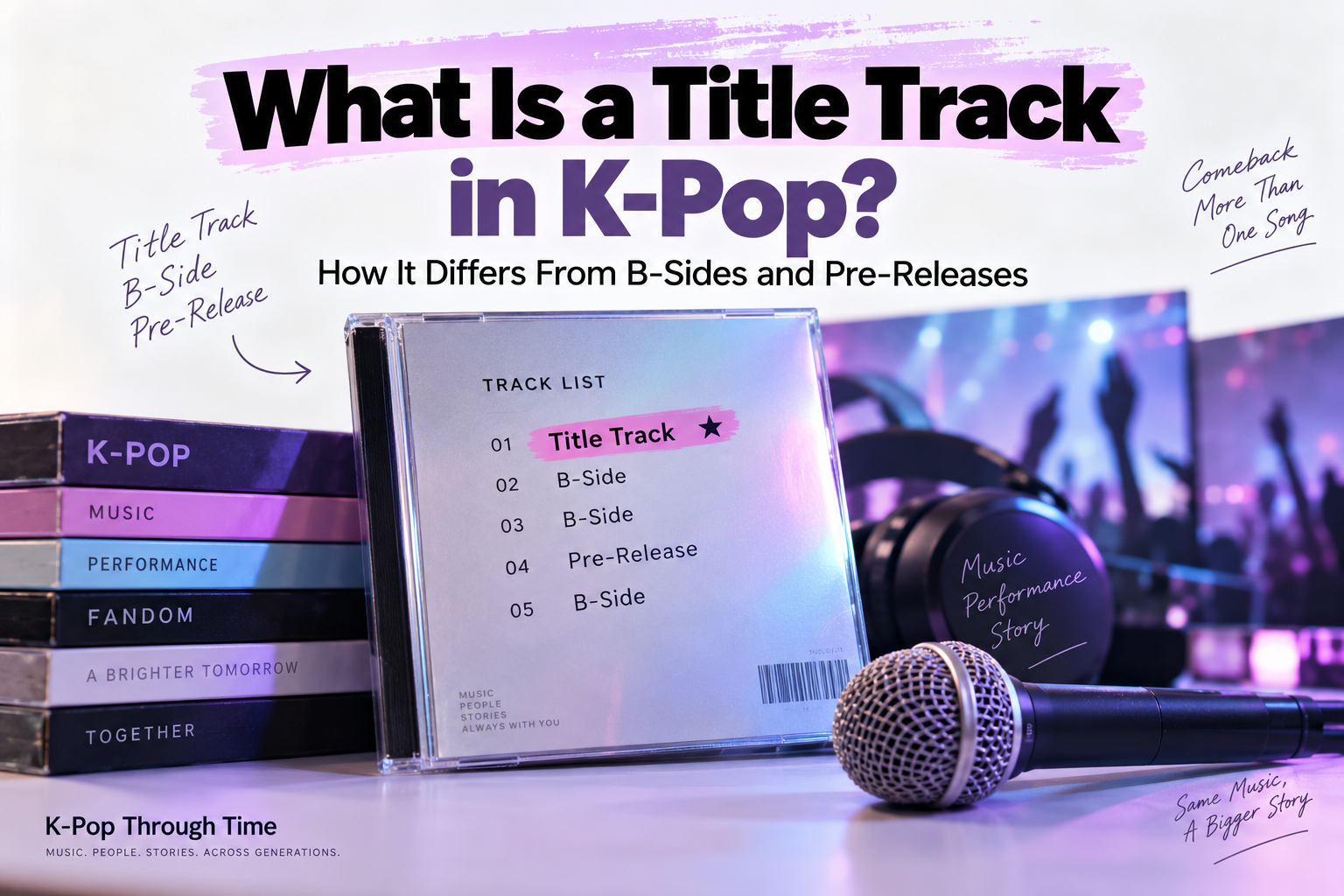
A title track may need movements that work on a television stage.
Certain gestures may become recognizable highlights.
Group formations may be designed for camera work.
A memorable section may spread through short-form video.
Performance therefore becomes another way audiences experience the song.
Sometimes listeners remember a movement almost as quickly as they remember the chorus.
The “Point Choreography”
Many K-pop performances include a memorable movement or sequence that audiences can easily recognize.
Fans sometimes refer to this as a point choreography or highlight movement.
It can help give a song a visual identity.
In the social-media era, a recognizable movement can travel far beyond the original performance.
Dance covers, challenges, reaction videos, and short clips can expose the song to audiences who may never have watched the full music video.
This connection between sound and movement is central to K-pop’s visual culture.
Visual Identity Begins Before the Music Video
The visual campaign may begin before audiences hear the song.
A company might reveal:
a logo,
a poster,
a schedule,
concept photographs,
individual member images,
album packaging,
short films,
or other clues.
Each piece provides information while withholding something else.
The purpose is not only to inform fans that music is coming.
It is to create anticipation.
The Comeback Scheduler
One recognizable promotional tool is the comeback scheduler.
This is a calendar or graphic showing when different promotional materials will be released.
For example, fans may learn that concept photos will appear on one date, a track list on another, a music video teaser later, and the album at the end.
The schedule turns waiting into an organized experience.
Fans know that another piece of the comeback is coming.
Each date becomes a small event.
Teasers Turn Promotion Into a Story
Teasers are especially important because they encourage interpretation.
A ten-second video can generate hours of discussion.
A photograph can lead to theories about the concept.
A few seconds of instrumental audio may cause fans to debate the genre of the title track.
A symbol in a poster may be connected to an earlier album.
Whether every theory is correct is almost beside the point.
The audience is already participating before the song has been released.
Concept Photos Have Multiple Jobs
Concept photos are promotional images, but they can also define the visual language of the era.
They introduce styling.
They establish colors.
They suggest mood.
They provide material for social media.
They can influence fan expectations about the music video and album.
And because K-pop places strong emphasis on visual presentation, concept photography can become memorable in its own right.
Fans may later identify an era simply from a hairstyle, outfit, or color palette.
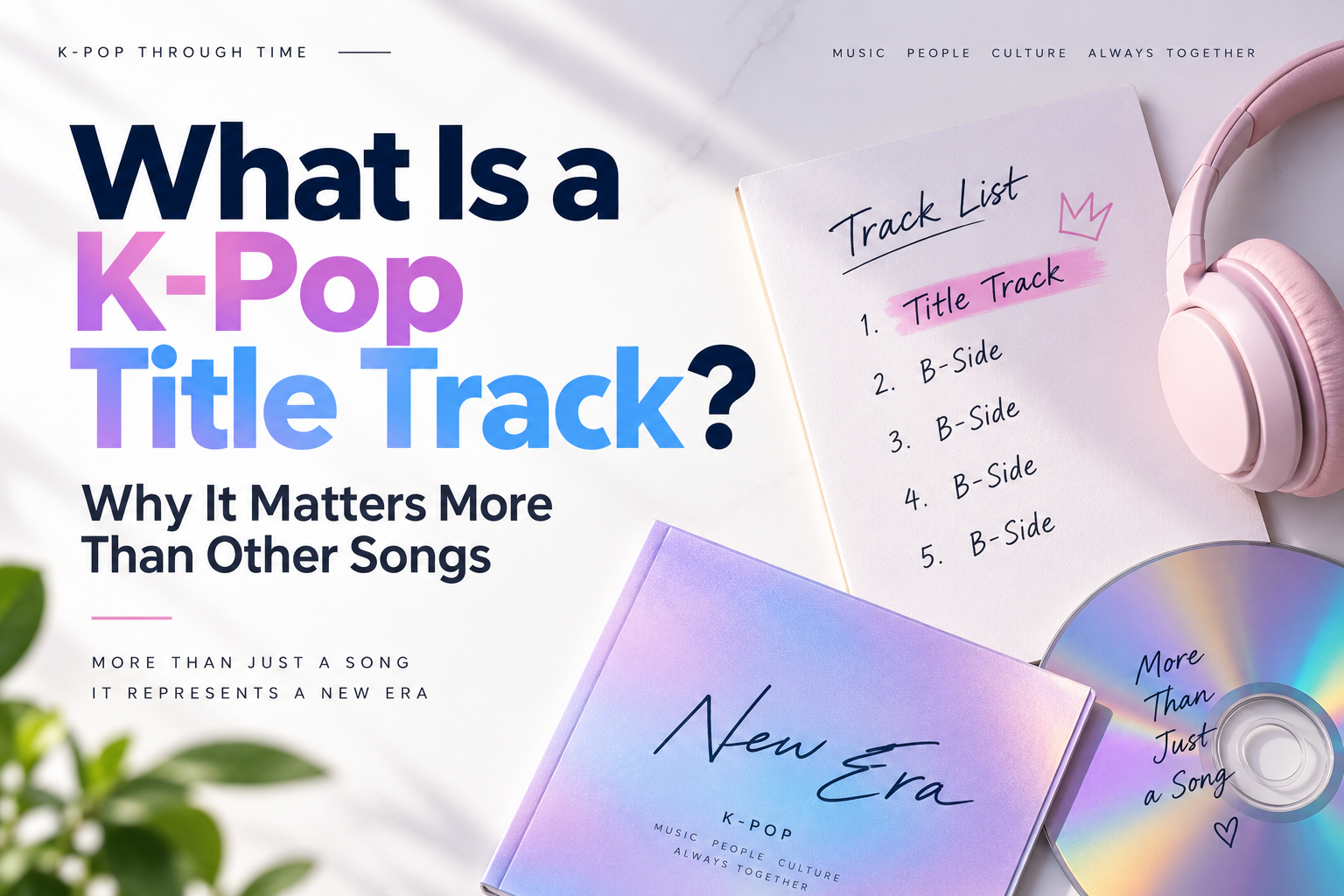
Track Lists Create Another Moment of Anticipation
Revealing an album’s track list can generate a new wave of discussion.
Fans look at song titles.
They notice songwriting credits.
They identify familiar producers.
They look for member participation.
They wonder which songs will be promoted.
A piece of information that might be treated as routine elsewhere becomes another stage of the comeback campaign.
This repeated release of information keeps attention focused on the upcoming music.
Album Preorders Begin Before the Music Arrives
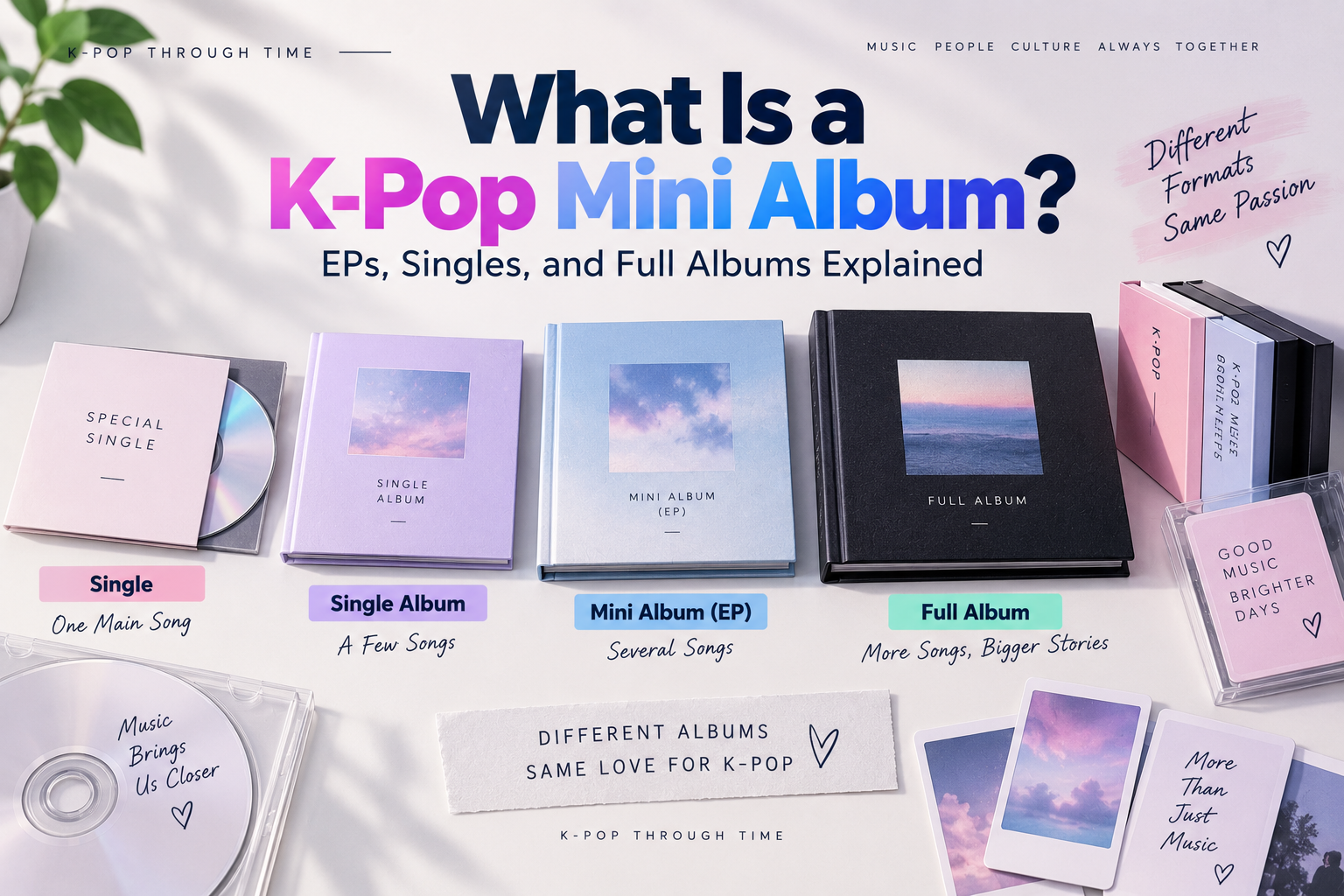
Physical albums remain an important part of K-pop culture.
Preorders may open before fans have heard the full album.
Different versions can feature different photographs, packaging, inclusions, or design concepts.
This means the comeback campaign is also connected to collecting culture.
Fans are not only waiting to stream a song.
Some are deciding which album version to purchase or whether to collect multiple versions.
We will explore this physical-album and photocard culture in a separate guide because it has become a major part of the K-pop economy and fan experience.
The Music Video Teaser Raises the Stakes
As release day approaches, music video teasers often provide the clearest preview yet.
A short clip may reveal part of the choreography.
A fragment of the chorus may appear.
The visual setting becomes clearer.
Fans begin comparing the teaser with earlier concept photos.
At this point, anticipation can become intense.
The promotional campaign has moved from hints toward the actual music.
Release Day Is the Beginning, Not the End
When the song and album finally arrive, one phase of waiting ends.
Another begins.
The music video is released.
Songs become available on streaming platforms.
Physical albums reach buyers.
Media coverage increases.
Fans begin discussing favorite tracks.
Performance stages appear.
Short-form clips spread.
Charts and sales numbers begin updating.
For a K-pop comeback, release day is not simply the conclusion of the campaign.
It is the beginning of the most visible promotional period.
Fans Become Active Participants
This is where K-pop differs significantly from a simple one-directional marketing campaign.
Fans do not only receive promotional content.
They respond to it.
They share teasers.
Translate information.
Create discussions.
Organize streaming.
Buy albums.
Vote.
Make fan art.
Post reaction videos.
Create dance covers.
Explain references to other fans.
Build guides for newcomers.
The comeback becomes partly shaped by the community surrounding it.
Digital Fandom Changed the Scale
This participatory culture existed before today’s social platforms, but digital communication dramatically expanded its scale.
A teaser released in Seoul can be discussed almost immediately by fans across different continents.
Translations appear quickly.
Clips spread across platforms.
Fans coordinate activities across time zones.
The global development of K-pop fandom therefore changed what a comeback could become.
It transformed a domestic promotional cycle into a potentially worldwide event.
Social Media Made Every Stage Visible
In earlier eras, fans often depended more heavily on television, official fan clubs, magazines, and entertainment news.
Today, much of the comeback process unfolds directly on digital platforms.
Announcements can reach international fans instantly.
Behind-the-scenes videos extend the life of the release.
Short clips can circulate independently of the original promotional material.
This is part of the broader story of how social media changed K-pop.
The comeback did not disappear in the digital era.
It became more continuous.
A Comeback Creates a Shared Timeline
Perhaps the most important thing to understand is that a comeback gives fans a shared sequence of moments.
The announcement.
The first concept photo.
The track list.
The teaser.
Release day.
The first performance.
The first reactions.
The album arrival.
The promotional stages.
Fans in different countries may experience these events at nearly the same time.
That shared timeline creates a sense of participation.
People are not simply listening to a new song.
They are experiencing its arrival together.
What Comes Next
So far, we have looked at what a K-pop comeback means and why preparation begins long before release day.
But the most visible part of the cycle starts after the music arrives.
Artists move onto promotional stages.
Music shows become important.
Charts and sales attract attention.
Fans stream, vote, purchase, and celebrate milestones.
In PART 2, we will explore what happens after release day—music shows, performances, fan participation, charts, album sales, and why the first weeks of a K-pop comeback can feel like a competition as well as a celebration.
Release Day Changes the Energy of a Comeback
Before release day, the comeback is built around anticipation.
After release day, it becomes about reaction.
Fans can finally hear the full songs.
The music video is available.
Choreography begins appearing in full performances.
Physical albums reach buyers.
Reviews, reactions, translations, and discussions spread online.
And the artist begins presenting the new era to the public.
For many K-pop releases, the first days and weeks after release are especially intense because several promotional systems begin operating at the same time.
The Comeback Stage
One of the most recognizable moments is the comeback stage.
This is often among the first opportunities for audiences to see the new song performed as a complete stage production.
The choreography is no longer hidden in teaser clips.
Stage outfits reveal another interpretation of the concept.
Camera work highlights particular movements and members.
Expressions, formations, lighting, and set design add new visual layers to the song.
A music video shows what the release can look like in a highly edited cinematic environment.
A performance stage shows how the era works in motion.
Why Music Shows Matter
South Korean television music programs have played an important role in the development of idol promotion.
During an active promotional period, artists may appear on music shows to perform new songs.
For international fans, these programs can initially seem unusual.
Why perform the same title track repeatedly?
Because the performances are not necessarily identical.
Styling can change.
Camera work changes.
Stage design may change.
Members may add small variations.
Different performances give fans new material to watch and discuss.
Music shows also connect K-pop to a long-established promotional system in the Korean entertainment industry.
One Song Can Produce Many Performances
A single title track may generate numerous official performances during its promotional cycle.
This repetition helps the song become familiar.
But it also emphasizes performance as part of the product.
Fans may compare outfits.
They may notice improvements or differences in live delivery.
They may focus on individual members.
They may share particular moments from one stage.
A song therefore continues producing new visual content after its official music video has already been released.
Stage Styling Extends the Concept
The visual concept introduced before release does not end with the album photographs.
Stage styling can extend it for weeks.
Different outfits may use the same colors, themes, silhouettes, or visual references while changing enough to make each performance feel fresh.
Hair and makeup also contribute.
This creates continuity without requiring every stage to look identical.
The comeback becomes a visual system rather than a single image.
Performance Is Part of K-Pop’s Identity
This helps explain why choreography occupies such an important place in K-pop.
For many idol releases, a song is designed to be heard and seen.
Group formations matter.
Transitions matter.
Facial expressions matter.
Camera awareness matters.
The relationship between music and movement can become so strong that hearing a particular section of a song immediately reminds fans of its choreography.
This is one reason K-pop developed into such a powerful visual culture.
The Fancam Changed How Performances Are Watched
A television performance traditionally presents the group as a whole.
Fancams changed that viewing experience.
A fancam may focus on one member throughout a performance, allowing viewers to watch details that the main broadcast camera might miss.
This can highlight dance technique, expressions, stage presence, and individual interpretation of choreography.
Fancams also create additional pieces of content from a single performance.
One stage can therefore generate many different viewing experiences.
Performance Clips Travel Beyond the Original Audience
A person does not need to watch an entire music show to encounter a comeback performance.
A short clip may appear on a social platform.
A dance challenge may introduce the chorus.
A fancam may circulate widely.
A reaction creator may discuss the choreography.
A performance moment can become a meme.
This allows individual pieces of a comeback to travel independently.
Someone may discover the artist through a ten-second performance clip and only later listen to the complete song.
The Role of Short-Form Video
Short-form platforms changed how easily choreography can spread.
A recognizable movement can be recreated by fans, dancers, other idols, and creators around the world.
Some artists release challenge-friendly content as part of their promotional strategy.
But not every successful song needs a viral dance challenge.
The larger point is that the comeback now exists in multiple formats.
Full song.
Music video.
Television stage.
Fancam.
Dance practice.
Short clip.
Challenge.
Behind-the-scenes video.
Each format reaches audiences differently.
Dance Practice Videos Reveal Another Layer
Dance practice videos have become a familiar part of K-pop content.
Without elaborate music-video editing or stage design, viewers can focus more directly on choreography and group formations.
These videos can be especially interesting because they reveal how much precision is required to create a polished stage.
Spacing matters.
Timing matters.
Synchronization matters.
Small movements affect the overall picture.
For fans interested in performance, the practice room can be almost as fascinating as the stage.
Fans Do More Than Watch
Once promotions begin, fandom participation becomes highly visible.
Fans may:
stream songs,
watch music videos,
purchase albums,
vote through eligible platforms,
attend performances,
share promotional material,
translate content,
create fan projects,
and discuss results.
Not every fan participates in all of these activities.
Some simply listen to the music.
Others become deeply involved in organized promotional efforts.
K-pop fandom contains many different levels of participation.
Streaming Became a Form of Participation
Streaming platforms changed music consumption around the world.
In K-pop fandom, streaming can also become a coordinated activity.
Fan communities may share guides or goals related to particular platforms.
They may encourage repeated listening or viewing within platform rules.
The motivation can be emotional as well as numerical.
Fans may feel that helping a song perform well is a way to support the artist.
This transforms listening from a purely private activity into something that can also feel collective.
Numbers Become Part of the Conversation
Views.
Streams.
Album sales.
Chart positions.
Followers.
Preorders.
Awards.
These numbers frequently appear in discussions surrounding K-pop releases.
They can provide useful information about audience activity and commercial performance.
But they can also create pressure.
Fans may compare one comeback with another.
Groups may be compared across generations or markets.
A celebration of music can quickly become a debate about statistics.
Understanding this tension is important when examining modern K-pop fandom.
Not Every Number Means the Same Thing
Different platforms measure different behaviors.
A video view is not the same as an album sale.
An album sale is not the same as a unique listener.
A chart may use its own methodology.
A social-media trend measures something different again.
Therefore, large numbers should not automatically be treated as interchangeable proof of popularity.
Context matters.
Methodology matters.
Market matters.
Time period matters.
This is especially important when comparing artists from different eras.
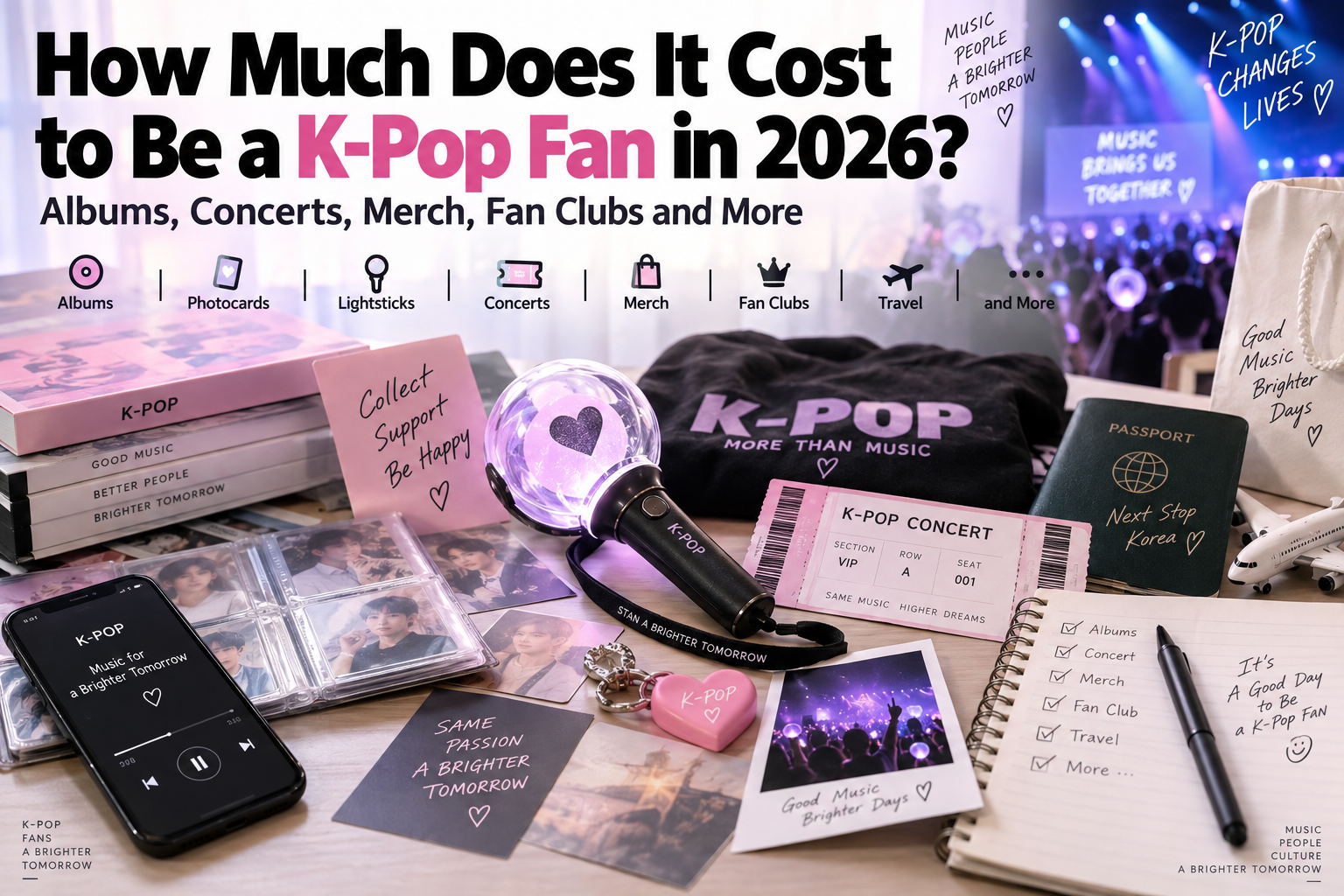
Physical Albums Remain Remarkably Important
One of the interesting characteristics of K-pop is the continuing importance of physical albums in a digital music era.
Many fans listen primarily through digital services yet still purchase physical releases.
Why?
Because a K-pop album can function as more than a container for recorded music.
It may also be a designed object.
Packaging, photography, photobooks, photocards, posters, stickers, and other inclusions can make ownership itself part of the fan experience.
This has helped create a distinctive collecting culture around K-pop.
Multiple Versions Change the Buying Experience
A release may be available in more than one physical version.
Versions can differ in cover design, photographs, concepts, or included items.
Collectors may choose a favorite version.
Some fans may purchase several.
Others may decide that one album is enough.
The important point is that album design has become integrated into the comeback strategy.
The physical product extends the visual identity introduced through teasers and concept photographs.
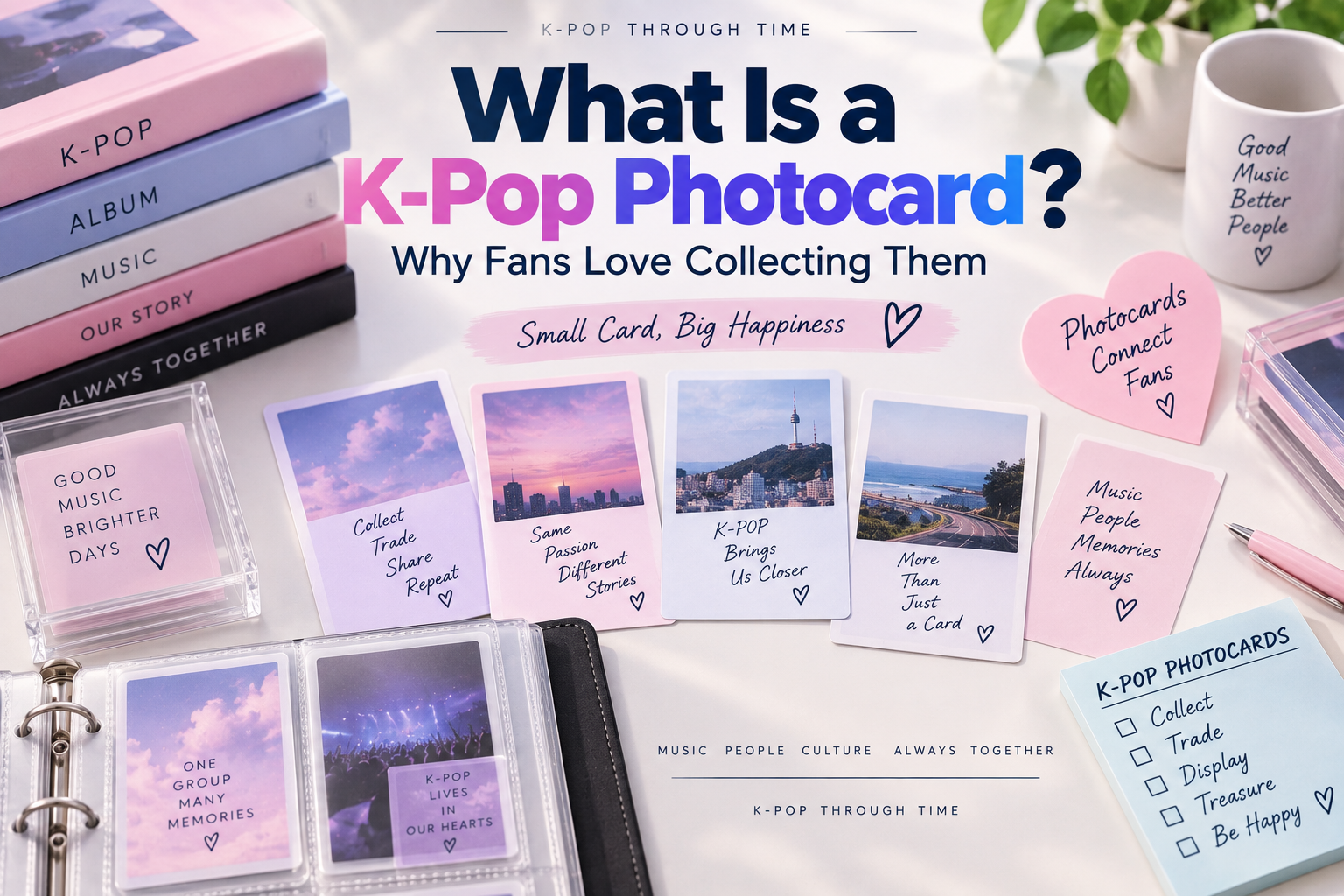
Photocards Created Their Own Collecting Culture
Among the most recognizable K-pop album inclusions are photocards.
These small collectible cards typically feature individual artists and are often distributed in ways that create an element of surprise.
A buyer may not know exactly which card will be inside an album before opening it.
This encourages trading and collecting among some fans.
Over time, photocard culture developed into a substantial part of the broader fan economy.
It deserves its own article because it connects album design, collecting, community, resale markets, and fan identity.
Buying an Album Can Become a Social Experience
Fans may film album unboxings.
They compare inclusions.
Trade photocards.
Visit stores together.
Discuss different versions online.
Display collections.
A physical purchase therefore creates additional activity long after the music has been downloaded or streamed.
This helps explain why physical albums remain culturally significant within K-pop even when the actual songs are easily available digitally.
Music Shows Can Add a Competitive Element
Many Korean music programs do more than provide performance stages.
They can also recognize songs or artists through weekly ranking and award systems.
The specific criteria and weighting can vary by program and can change over time.
Rather than memorizing one formula, it is more useful to understand the broader effect.
Promotional activity becomes connected to measurable performance.
Fans may therefore pay attention to digital results, sales, voting, broadcasts, or other factors relevant to a particular program.
The Meaning of a “First Win”
For a newer group, earning a first music-show win can become an emotional milestone.
It may represent recognition after months or years of training and promotion.
Artists sometimes react emotionally.
Fans celebrate.
Clips spread online.
The moment becomes part of the group’s history.
For established artists, additional wins may carry different meaning.
But the broader system helps explain why music-show results attract so much attention during comeback periods.
Competition Can Strengthen Community—and Create Conflict
Shared goals can bring fans together.
People organize.
Translate instructions.
Share information.
Celebrate achievements.
Work across countries and time zones.
But competition can also create tension.
Comparisons between fandoms may become hostile.
Statistics can be used as weapons in online arguments.
Pressure to stream, vote, or purchase can make entertainment feel like work.
These are two sides of the same participatory culture.
Fans Are Not Obligated to Participate
This point is easy to forget.
Enjoying K-pop does not require buying multiple albums.
It does not require streaming all night.
It does not require voting.
It does not require collecting photocards.
It does not require defending an artist in online arguments.
Fans can participate at whatever level feels appropriate.
Listening to a song because you enjoy it is enough.
Understanding organized fandom behavior is useful for understanding K-pop culture, but participation remains a personal choice.
International Fans Changed the Comeback Clock
K-pop comeback activity now unfolds across time zones.
A release scheduled according to Korean time may reach fans during the morning, afternoon, evening, or middle of the night elsewhere.
International communities quickly translate announcements and content.
Global streaming services make music available across many markets.
Social platforms allow discussions to happen almost simultaneously.
The comeback is therefore no longer experienced only as a Korean promotional event.
It can become a synchronized global media moment.
Language Barriers Became Smaller
K-pop expanded internationally even though much of its music and content remained primarily Korean.
Fan translation communities played an important role in reducing language barriers.
Later, official subtitles and multilingual promotional strategies became increasingly common across many forms of content.
The result is that a fan thousands of kilometers from Seoul can follow much of a comeback almost in real time.
This accessibility helped strengthen global K-pop fandom.
Time Zones Can Even Become Part of Fan Culture
International fans learn to convert Korean Standard Time.
They wait for midnight releases.
They set alarms for teasers.
They watch livestreams at unusual hours.
A promotional calendar created in Seoul can influence the daily routine of fans around the world.
This is a small but revealing example of how geographically dispersed K-pop fandom has become.
The Comeback Extends Beyond Music Shows
Promotions may include much more than television stages.
Artists can appear in interviews.
Variety content.
Radio programs.
Online shows.
Livestreams.
Dance challenges.
Behind-the-scenes videos.
Fan events.
Magazine features.
Brand collaborations.
Different releases emphasize different channels, but the general goal is similar:
keep the artist and the new music visible while the comeback is active.
Behind-the-Scenes Content Extends the Story
Fans increasingly see not only the polished result but also parts of the process.
Recording footage may show vocal sessions.
Dance videos may show rehearsals.
Music-video footage may reveal production sets.
Members may discuss preparation.
These materials can deepen the audience’s emotional connection to the comeback because viewers see some of the work behind the final product.
The polished stage gains a backstage story.
The Artist’s Workload Can Be Intense
The amount of content surrounding a comeback can make the process look exciting.
It can also require substantial labor.
Recording, rehearsals, filming, travel, performances, interviews, fan communication, and promotional schedules may occur within compressed periods.
This is one reason the K-pop system should not be understood only through glamorous final images.
The entertainment industry depends on sustained work from artists and many professionals behind them.
The Company Is Managing Attention
From a business perspective, a comeback is partly an exercise in attention management.
Release information too early and excitement may fade.
Reveal too little and audiences may not notice.
Schedule promotional material effectively and each new piece can renew interest.
The campaign attempts to build momentum toward release and then maintain it afterward.
This connects the comeback directly to the business of K-pop entertainment companies.
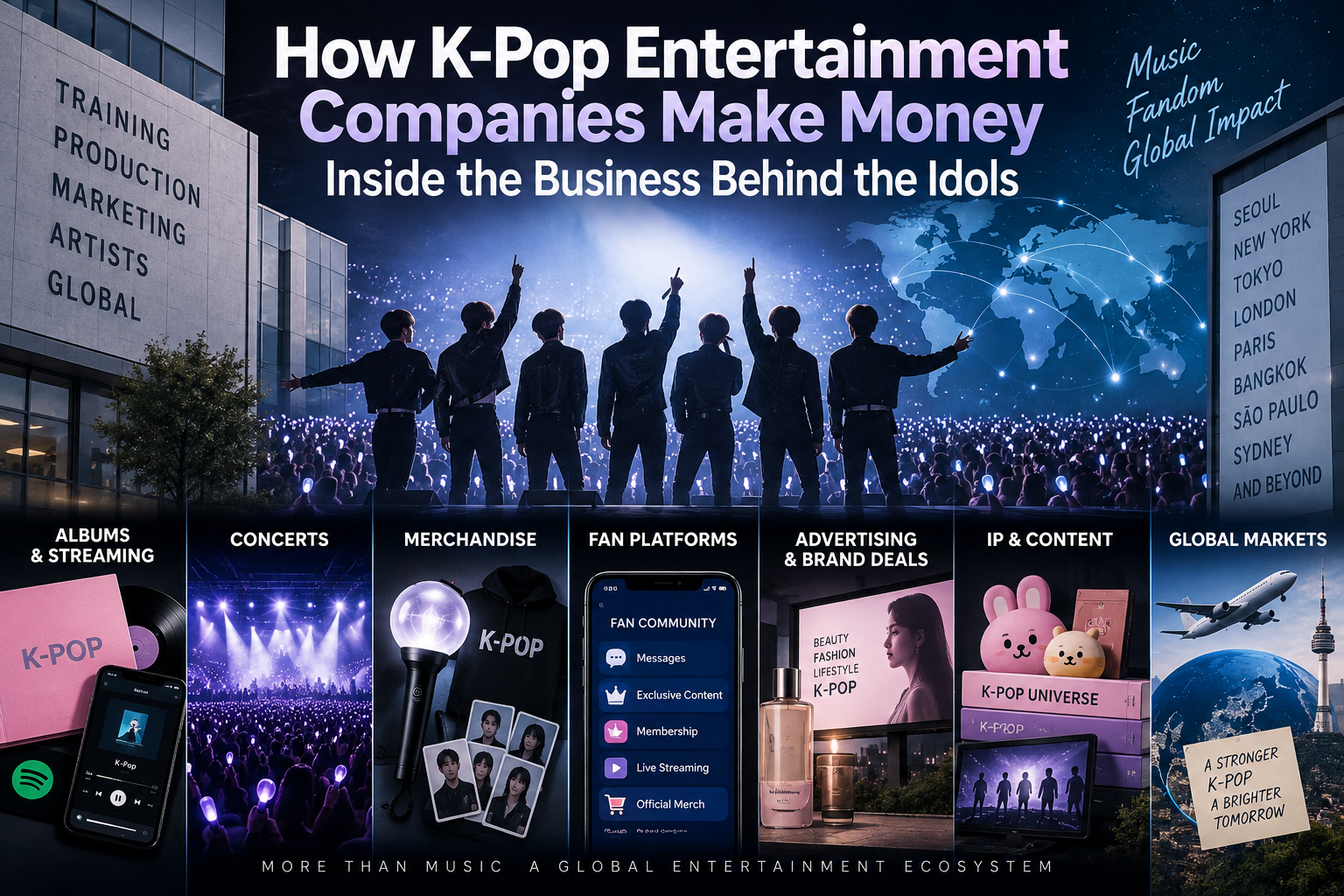
One Comeback Supports Many Parts of the Industry
A successful release can generate activity across multiple areas.
Recorded music.
Physical albums.
Video production.
Broadcasting.
Live performances.
Merchandise.
Fan platforms.
Advertising.
Touring.
Brand partnerships.
Media appearances.
Not every comeback activates all of these equally.
But the release provides a central event around which many commercial and cultural activities can gather.
The Promotion Eventually Slows
A comeback cannot remain at maximum intensity forever.
Music-show appearances may end.
The flow of promotional content becomes less frequent.
Artists move toward other schedules.
Fans return to a more ordinary rhythm.
This period is sometimes experienced as the end of an era.
But within the K-pop system, the end of one promotional cycle often creates anticipation for the next.
The Cycle Begins Again
Eventually, another rumor appears.
A company confirms new music.
A date is announced.
A logo changes.
A mysterious image appears.
Fans begin asking questions.
What is the concept?
What will the song sound like?
When will the teaser arrive?
And the cycle starts again.
This repeating rhythm helps keep K-pop culture continuously active.
What Comes Next
A comeback combines music, performance, promotion, business, and fandom.
But why has this system become so effective at turning a release into a cultural event?
And what does it mean for the relationship between artists, companies, and fans?
In PART 3, we will examine the larger significance of the comeback system—its business logic, creative possibilities, pressures, global influence, and why it became one of the defining structures of modern K-pop.
Why the Comeback System Became So Powerful
A K-pop comeback works because it brings many different parts of the industry together around one moment.
Music provides the center.
Visual design gives the release an identity.
Choreography turns songs into performances.
Teasers create anticipation.
Albums create physical objects to own.
Music shows provide repeated stages.
Social media distributes content globally.
Fans transform promotion into participation.
Each element can exist independently.
The comeback system connects them.
That connection is one reason a new K-pop release can feel much larger than the arrival of a song.
The Comeback Creates a Beginning
Music is constantly available online.
That convenience creates a challenge for artists: how do you make one particular release feel important?
The comeback provides an answer.
It creates a clear beginning.
There is a date.
A countdown.
A visual identity.
A sequence of announcements.
A moment when fans know something new has started.
This gives the release a sense of occasion.
Scarcity of Information Creates Anticipation
Before a comeback, information is often revealed gradually.
Fans may initially know very little.
Then a logo appears.
Later, concept photographs.
Then a track list.
Then a teaser.
Each piece answers some questions while creating new ones.
This gradual reveal can make information itself valuable.
The audience is not simply waiting for music.
It is following a developing story.
A Comeback Turns Time Into Part of the Product
This is one of the most interesting features of the system.
The experience begins before the music is released and continues afterward.
The waiting matters.
The reveal matters.
Release day matters.
The first performance matters.
The promotional period matters.
Even looking back at an old comeback can remind fans of where they were when those events happened.
The product is therefore not only an album or song.
It can also be a period of time remembered as an era.
Each Era Helps Build an Artist’s Identity
Over several years, an idol group’s history may become organized around its comebacks.
Fans remember particular hairstyles.
Album covers.
Songs.
Choreography.
Stage outfits.
Visual concepts.
Tour performances.
Achievements.
The differences between these eras help create a larger artistic identity.
A group can change repeatedly without losing the continuity of its career.
In fact, transformation itself may become part of that identity.
Concepts Allow Creative Experimentation
The comeback structure gives artists and creative teams opportunities to explore different ideas.
One release may emphasize electronic production.
Another may draw from R&B.
Another may use rock influences.
Another may lean toward retro sounds.
The visual direction can change with the music.
This flexibility connects to one of K-pop’s broader musical characteristics: genre mixing.
K-pop has often been willing to combine styles rather than remain inside a single musical category.
Reinvention Also Creates Expectations
Creative flexibility can become pressure.
If every comeback is expected to feel new, teams must repeatedly find ways to surprise audiences.
A concept that feels too similar may be criticized as repetitive.
A dramatic change may alienate listeners who preferred the previous direction.
Artists and companies therefore balance familiarity and novelty.
The audience wants to recognize the group.
It also wants to discover something new.
Comebacks Are Business Investments
Behind the creative excitement is financial risk.
Music production costs money.
Music videos cost money.
Photography, design, styling, choreography, promotion, manufacturing, staffing, and distribution all require resources.
The scale varies enormously between artists and companies.
A major entertainment company and a small agency do not operate with identical budgets.
But in both cases, releasing music is also an investment.
Companies hope that attention will translate into sustainable business.
One Release Can Generate Multiple Revenue Paths
The song itself is only one part of the commercial picture.
A comeback may contribute to:
digital listening,
physical album sales,
merchandise,
fan events,
concert demand,
advertising opportunities,
brand partnerships,
media exposure,
and future touring.
This helps explain why the business behind K-pop entertainment companies cannot be understood only through streaming revenue.
The comeback can support an entire ecosystem of activity.
Physical Albums Combine Commerce and Identity
K-pop’s physical-album culture is particularly revealing.
Fans can listen digitally while still wanting a physical object connected to the era.
The album may function as music product, photo collection, design object, collectible, and memory.
Different versions and randomized inclusions can increase the collecting dimension.
For some fans, this is enjoyable.
For others, it raises questions about consumption and pressure.
Both perspectives are important.
Collecting Can Strengthen Fan Communities
Photocards and album inclusions do more than encourage purchases.
They also create social activity.
Fans trade.
Compare collections.
Help one another find particular items.
Attend events.
Join online communities.
The object becomes a reason for interaction.
This demonstrates a recurring feature of K-pop:
commercial products can also become tools for community formation.
But Consumption Can Become Competitive
The same system can create pressure to buy more.
Sales records receive attention.
Different versions encourage collecting.
Random inclusions may encourage additional purchases.
Fans may feel that buying albums is a way to support an artist’s success.
When fandom identity becomes connected to purchasing power, enjoyment can become complicated.
A fan should never need to prove loyalty through spending.
This tension is part of understanding K-pop as both culture and industry.
Fan Labor Has Real Value
Fans contribute enormous amounts of unpaid activity to the K-pop ecosystem.
They translate.
Promote.
Create guides.
Organize projects.
Share clips.
Build databases.
Moderate communities.
Explain references.
Create artwork.
Produce videos.
Coordinate events.
This work can help an artist reach audiences that official marketing might never reach directly.
The global history of K-pop fandom cannot be separated from this fan labor.
The Boundary Between Fan and Promoter Can Blur
Traditional marketing imagines a company promoting a product to consumers.
K-pop often creates something more complicated.
Fans may voluntarily promote the release to other potential listeners.
They may create tutorials explaining how to participate in voting.
They may organize streaming parties.
They may purchase advertising.
They may translate interviews before official translations become available.
The fan remains a consumer.
But the fan can also become a distributor of attention.
Social Media Accelerated Everything
This system became dramatically more powerful when social media reduced the distance between Seoul and international audiences.
A teaser can become global within minutes.
A performance clip can cross languages without requiring a full television broadcast.
A fan in another country can participate on release day almost as quickly as a fan in Korea.
This is why the history of the comeback system is closely connected to how social media changed K-pop.
Digital platforms did not create every feature of comeback culture.
They amplified its speed and reach.
The Algorithm Became Part of Promotion
Modern music discovery is influenced not only by companies and fans but also by platforms.
Recommendation systems can expose songs, performances, and short clips to people who were not actively searching for them.
A dance clip may reach someone who does not follow K-pop.
A music video may appear after another artist’s video.
A short performance may spread because viewers repeatedly engage with it.
This means the promotional environment now includes systems that neither artists nor fans completely control.
Global Audiences Changed Promotional Strategy
As international audiences became more important, comeback promotion expanded beyond domestic media.
Artists may communicate through global platforms.
Content may include subtitles or multilingual elements.
International media appearances can become part of promotion.
Release timing may consider audiences across different markets.
Tours can extend the life of an album far beyond its initial promotional period.
K-pop’s promotional system therefore increasingly operates across both Korean and global media environments.
The Meaning of Success Became More Complicated
Success once might have been discussed primarily through domestic recognition, broadcasts, album sales, or Korean charts.
Today, conversations may also include global streaming, international charts, social engagement, overseas touring, and fandom size.
But these measures do not always tell the same story.
An artist can be strong in one market and less visible in another.
A song can be widely streamed without producing the largest physical sales.
A group can have a dedicated touring audience without dominating every online metric.
There is no single number that completely explains success.
Comparing Generations Requires Context
This is particularly important when discussing K-pop history.
A first-generation group did not operate in the same technological environment as a fourth-generation group.
Early artists did not have TikTok.
YouTube did not shape their debuts in the same way.
Global streaming platforms did not provide the same distribution.
Album markets changed.
Fan communication changed.
Therefore, comparing raw numbers across generations without historical context can be misleading.
K-pop’s first, second, third, and fourth generations developed under different conditions.
Faster Communication Increased Expectations
Digital platforms allow fans to receive updates instantly.
That convenience can create an expectation of constant communication.
Where is the teaser?
When will the schedule appear?
Why has the artist not posted?
When is the next comeback?
The gap between releases can become a subject of anxiety.
For companies and artists, maintaining attention in an always-online environment can therefore be demanding.
More Content Does Not Always Mean More Connection
K-pop fans today may receive enormous quantities of content.
Behind-the-scenes footage.
Short videos.
Livestreams.
Photos.
Interviews.
Messages.
Challenges.
Performance clips.
Yet quantity does not automatically create meaningful connection.
Sometimes a single memorable interview, performance, or song has greater emotional impact than dozens of promotional posts.
The challenge for the industry is not merely producing more content.
It is creating content that audiences actually value.
Comeback Pressure Can Affect Artists
The excitement surrounding a release should not hide the human side of the system.
Artists may face demanding schedules, physical preparation, public evaluation, online criticism, and expectations about commercial performance.
The need to present a polished image can add further pressure.
Fans do not see every part of an artist’s working conditions.
It is therefore useful to appreciate the final performance without assuming that the process behind it is effortless.
Commercial Results Are Not the Same as Artistic Value
A song that wins awards is not automatically more meaningful than one that does not.
A release with enormous sales is not automatically better music.
A viral song is not automatically an artist’s most important work.
Commercial measures describe particular forms of performance in a market.
Artistic value is a different question.
Keeping these ideas separate allows a more thoughtful understanding of K-pop.
Not Every Comeback Needs to Break a Record
Record-breaking language has become common in online fandom.
Fastest.
Biggest.
Highest.
Most viewed.
Most sold.
These achievements can be exciting.
But if every release must exceed the previous one, growth becomes an impossible permanent expectation.
A comeback can succeed in other ways.
It can introduce an artist to a new audience.
Develop a new musical direction.
Create a memorable performance.
Strengthen a fandom.
Or simply contain music people continue enjoying years later.
Some Comebacks Become Historical Turning Points
Certain releases become more important with time.
They may introduce a new sound.
Popularize a performance style.
Change an artist’s public image.
Reach a new international audience.
Influence other performers.
Or become strongly associated with a particular period in K-pop history.
Their significance may not be obvious on release day.
History often looks different in retrospect.
Comebacks Help Explain K-Pop’s Rapid Evolution
Because idol groups release new material in repeated cycles, K-pop can change quickly.
New sounds appear.
Visual trends shift.
Promotional methods evolve.
Platforms rise and decline.
Fan practices change.
Companies learn from one another.
A successful idea may influence later releases.
This repeated cycle makes the industry highly responsive to technological and cultural change.
The System Is Always Evolving
The comeback model itself is not fixed.
Music consumption continues changing.
Physical albums evolve.
Short-form platforms influence discovery.
Artists experiment with different release strategies.
Global touring has become increasingly important for many acts.
Some artists may follow long promotional cycles.
Others may use digital singles or alternative strategies.
The word comeback remains familiar, but what happens around a comeback continues to evolve.
Why International Fans Should Understand the Comeback
For a new international listener, all of this may initially seem unnecessarily complicated.
Why not simply release the song?
Because understanding the comeback reveals how K-pop works as a larger cultural system.
It connects:
music creation,
performance,
visual design,
entertainment companies,
media,
technology,
commerce,
and fandom.
Once you understand the comeback, many other parts of K-pop begin to make more sense.
It Connects the Story We Have Told So Far
The history of K-pop explains where the industry came from.
The generation system shows how it changed over time.
The trainee system explains how idols are prepared.
Entertainment companies reveal the business structure.
Fandom explains the audience.
Visual culture explains performance and image.
Social media explains global distribution.
Song production explains how the music is created.
Genre mixing explains why the sound can change so dramatically.
The comeback is where many of these systems meet.
What Should We Explore Next?
One part of comeback culture deserves a closer look.
The physical album.
Why do K-pop fans continue buying albums in the streaming era?
Why are there multiple versions?
How did photocards become collectibles?
Why do fans trade them?
And how did album packaging become part of K-pop’s visual and commercial identity?
These questions lead naturally to another important part of modern K-pop culture:
the rise of K-pop albums and photocard collecting.
Final Thoughts: A Comeback Is More Than a Release
A K-pop comeback begins before anyone hears the complete song.
It starts with preparation.
Then comes anticipation.
Images appear.
Teasers arrive.
Fans speculate.
The music is released.
Performances begin.
Albums are opened.
Photocards are traded.
Clips spread.
Numbers are discussed.
Fans celebrate.
Eventually, the promotional period slows.
But the era remains.
Years later, a photograph, an outfit, a chorus, or a dance movement can immediately bring fans back to that moment.
That is the real power of the comeback system.
It transforms a music release into a shared period of cultural activity.
And in doing so, it reveals something fundamental about K-pop itself:
K-pop does not only release music. It builds experiences around the moment music enters the world.